Academic Colonialism
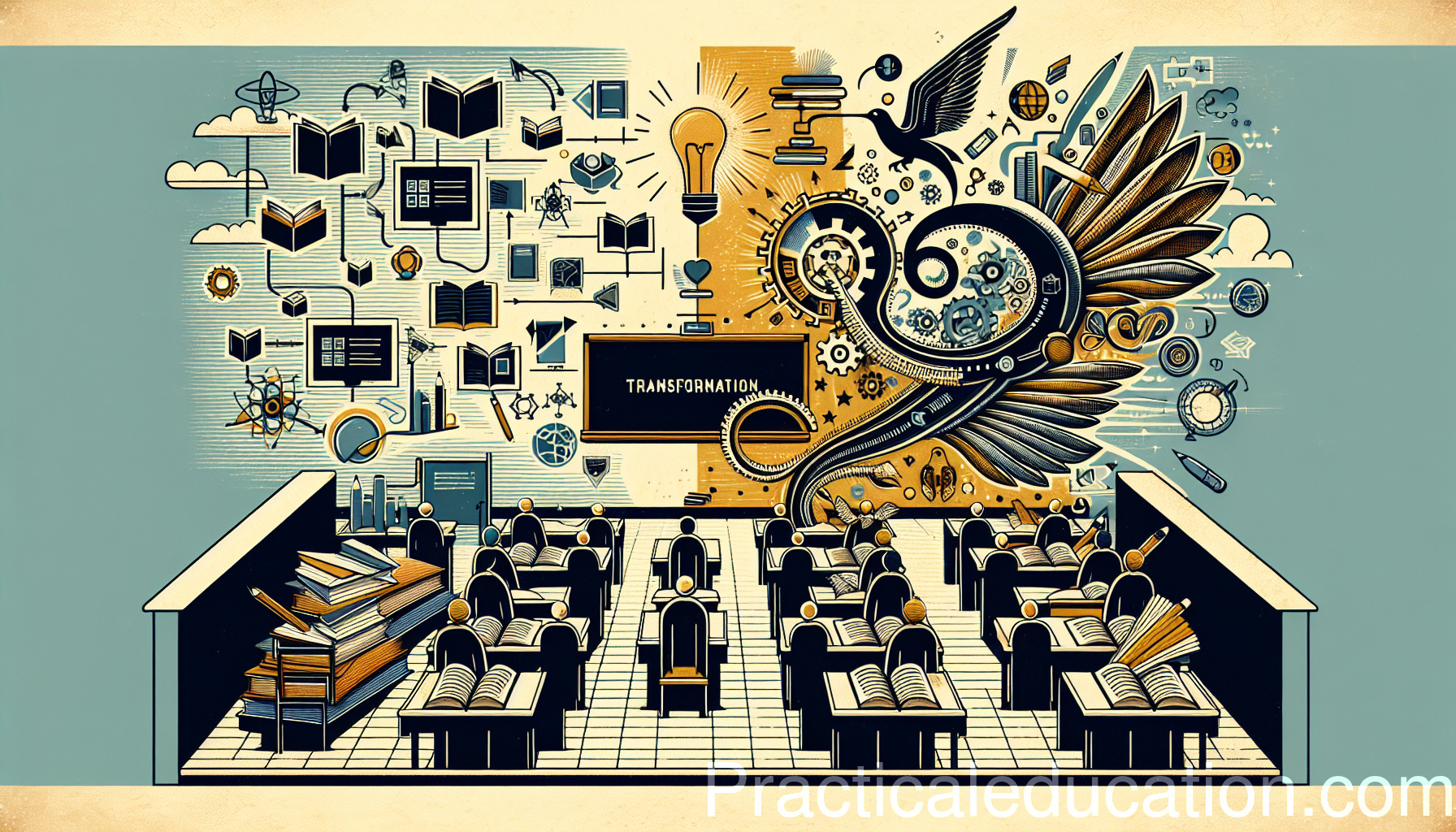
Education systems across the world still follow models imposed during colonial rule. Uniforms, bells, rankings, and submission are not local values—they’re colonial leftovers. We need an education that emerges from our cultures, not one imposed upon them. True knowledge cannot grow in borrowed soil. Liberation must start with what we teach.
The prevailing academic structures in many parts of the world bear significant similarities to their colonial predecessors, creating an education system that emphasizes obedience, conformity, and homogenization over critical thinking, creativity, and cultural relevance.This chapter proposes a radical rethinking of educational models to shed these outdated practices and foster learning that is rooted in local cultures and real-world applications.
The fundamentals of this new approach are threefold: moving beyond rigid structures, integrating practical skills into the curriculum, and prioritizing student-driven learning that reflects the varied socio-economic contexts in which learners exist.
Traditional education systems often emulate the colonial model through mechanisms such as uniforms, strict schedules dictated by bells, and hierarchical rankings.
These practices impose a framework that prioritizes uniformity and compliance rather than encouraging the individuality and diversity of thought essential for navigating the complexities of modern society.
Such a framework does not respect or honor local values, traditions, or knowledge systems but instead serves to perpetuate the ideology that a Western-centric view of learning is superior.
The first step in dismantling this academic colonialism is to recognize that true educational reform must begin in the context of local narratives, values, and needs.
The integration of practical skills into the curriculum presents an immediate path toward achieving a relevant and empowering educational experience.
The knowledge economy demands that learners acquire competencies that directly translate into income-generating skills, autonomy, and entrepreneurial spirit.
Curricula should not merely revolve around abstract theories but instead promote hands-on experiences that engage students in real-world problem-solving.
For instance, mathematics can be taught through financial literacy, where students explore budgeting and investment principles.
Science education can include community-based projects that address local issues, fostering a sense of ownership and applying theoretical concepts in meaningful ways.
Important to this shift is the recognition that student agency should be at the center of learning experiences.
Current educational paradigms often provide students with limited input regarding what and how they learn.
To address this, educational institutions can adopt a flexible model where students have the freedom to choose projects, select areas of study, and collaborate across disciplines.
This approach not only nurtures inherent interests but also fosters critical thinking and adaptability, skills essential for success in a fast-evolving global economy.
Curriculum designers must implement frameworks that allow for cross-cultural collaborations, enabling students to interact and learn with peers from diverse backgrounds.
This model acknowledges that while knowledge and skills can be universal, the context and application are distinctly local, thus providing a richer learning experience.
The implications for educational institutions are significant.
Schools must transform from institutions focused on rote memorization and standardized assessments into vibrant centers of creativity and exploration.
Resources should be realigned to support experiential learning, encouraging partnerships between schools, community organizations, businesses, and local governments.
By embedding education within the local economic ecosystem, institutions can cultivate an environment where learning leads to tangible outcomes, thereby promoting both personal and communal development.
Educational leaders must prioritize developing curricula that resonate with students’ lived experiences and aspirations while also maintaining high standards of academic rigor.
Adopting a global mindset in educational reform demands that we evaluate both Western and Eastern pedagogical philosophies.
Western education is characterized by a focus on critical inquiry and individualism, while Eastern methodologies often emphasize collective learning and deep understanding.
A synthesis of these approaches can yield a learning experience that values individual expression within a communal framework.
Such a model encourages learners to draw upon their cultural backgrounds while equipping them with the skills needed in a globalized world.
As education systems design curricula reflective of both local and global relevance, they can produce graduates who are not only knowledgeable but also adaptable and culturally competent.
Moreover, the digital landscape offers expansive opportunities to transcend geographical limitations, allowing for the exchange of ideas and practices that can address the unique challenges faced by different regions.
Universities and educational organizations must leverage technology to democratize access to quality education, ensuring that learners from all backgrounds can participate in collaborative projects that span cultures and borders.
Online platforms can facilitate access to diverse educational resources, enabling students to engage with experts and practitioners globally, fostering a learning community that learns from local innovations while sharing best practices.
In conclusion, overcoming the remnants of academic colonialism requires a deliberate and robust effort to redefine education in a manner that is culturally relevant and practically oriented.
It calls for an educational philosophy that prioritizes student-led inquiry, incorporates local realities, and empowers learners to cultivate skills that are marketable in their respective contexts.
This transformation may not happen overnight; however, by implementing localized, adaptive curriculum designs that embrace the richness of diverse cultural landscapes, we can begin to craft educational systems that induce true learning and mastery.
Knowledge, when rooted in context, leads to ownership and self-sustaining autonomy.
True educational liberation begins at the intersection of local culture and real-world applicability.
"Education must be as local as the culture it serves; only then can it truly cultivate the seeds of mastery and ownership." — (Eric Bach)