The Curriculum of Control
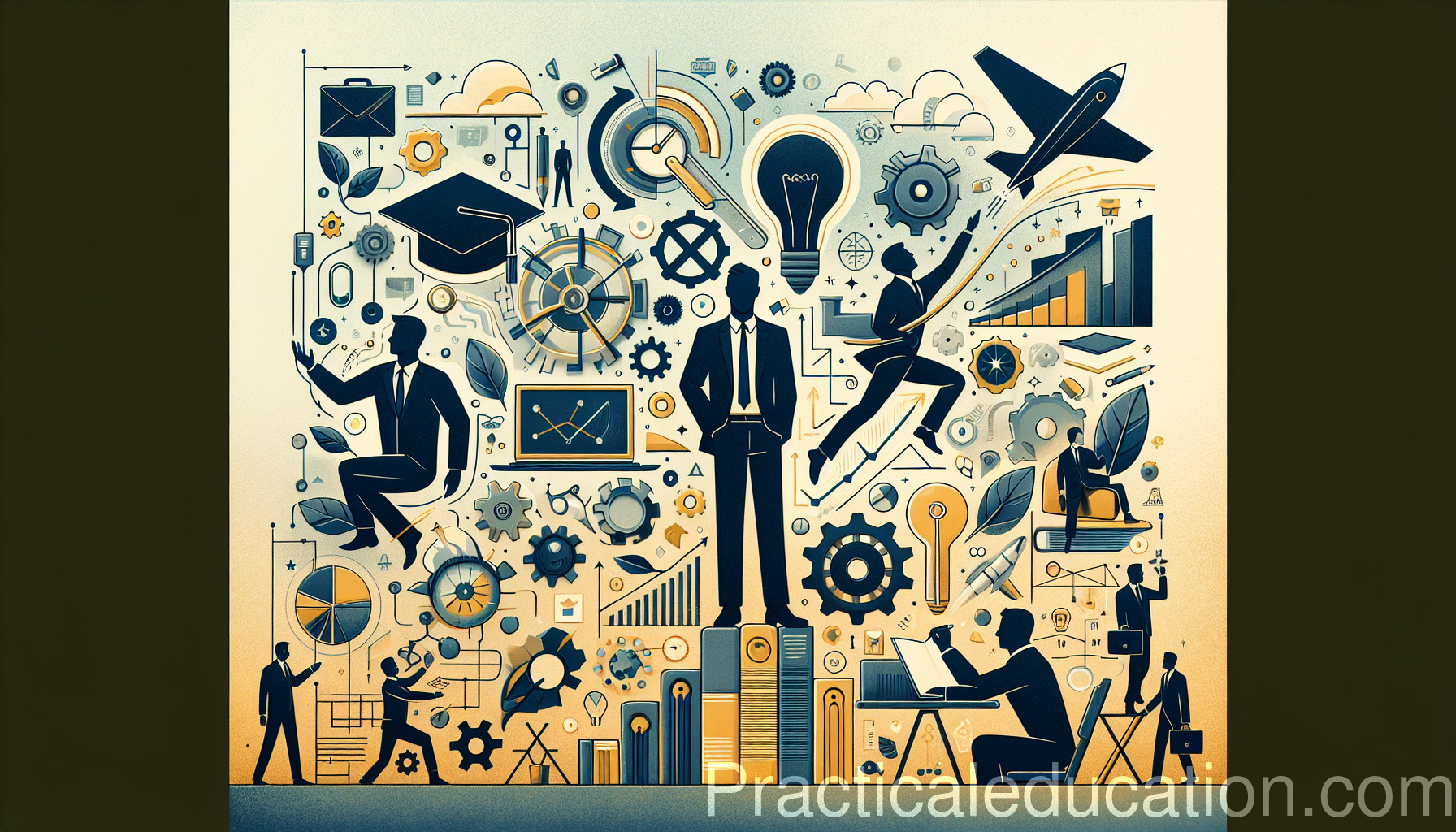
The real syllabus is obedience, uniformity, and delayed independence. Hidden between math and history is a subtle message: don’t question, don’t deviate, don’t accelerate. But today’s world rewards the opposite. Control must give way to creativity—or education will become a fossil.
The Curriculum of ControlThe prevailing educational model, steeped in traditions that prioritize obedience and uniformity, operates under the premise that compliance is synonymous with learning.
Within this framework, curricula are structured to reinforce a narrow set of skills and behaviors that inevitably lead to delayed independence and a lack of critical thinking.
Such an approach, while perhaps useful in an industrial era that valued conformity, is now a significant impediment to preparing students for a world characterized by rapid change and unpredictable challenges.
A radical rethinking of the curriculum is needed—one that aligns learning with autonomy, creativity, and real-world applicability, fostering not only individual agency but also entrepreneurial mindsets.
At the core of this discussion lies the recognition that the traditional curriculum is not merely a collection of subjects, but rather a structure that conveys implicit messages about knowledge and authority.
Students are taught not to question the material presented to them; their success is measured by their ability to absorb information and regurgitate it in examinations.
This paradigm engenders a passive approach to learning, stymying initiative and creativity.
In stark contrast, the contemporary landscape demands learners who are agile thinkers, capable of navigating complex scenarios, and innovating in their fields of interest.
To dismantle the archaic notions of control embedded in the curriculum, education must pivot towards a model that celebrates exploration, questioning, and deviation from the norm.
Curriculum design must fundamentally shift from content-centric to learner-centric.
Instead of enforcing a standardized set of knowledge, it should cultivate environments that allow students to engage with real-world problems, drawing upon their interests and experiences.
This approach necessitates the integration of interdisciplinary projects that require collaboration across domains, mirroring the interconnected nature of the global economy.
An emphasis on experiential learning—where students tackle genuine challenges faced by communities or businesses—facilitates the development of critical problem-solving skills, resilience, and adaptability.
Educational institutions need to partner with local organizations, innovators, and global experts to foster these rich learning ecosystems, ensuring that the curriculum is relevant and immediately applicable.
Moreover, practical education should entail a framework that prioritizes financial literacy and entrepreneurial skills.
In a global economy where traditional career paths are continuously reshaped by technological advancements and societal needs, equipping students with the capacity to generate income sustainably is essential.
Incorporating modules on entrepreneurship into the curriculum will provide students with not only the skills to launch their ventures but also the confidence to navigate the uncertainties of the future job market.
Financial education, taught through practical application rather than theoretical lectures, will empower students to understand their economic environment, make informed decisions, and attain ownership over their lives and careers.
In redefining the role of the teacher, we must recognize that educators should not be merely transmitters of knowledge, but facilitators of learning.
Professional development programs must evolve to support teachers in becoming mentors who guide students through inquiry-based learning processes.
This constructivist approach allows students to own their educational journeys, utilizing teachers as resources rather than authority figures dictating knowledge.
Creating space for student voice and choice will engender a culture of trust and respect, where educators and learners engage in mutual exploration of ideas.
In this way, education becomes a collaborative endeavor rather than a top-down directive.
Culturally, this radical shift necessitates an inclusive curriculum that respects and reflects the diversity of student backgrounds and perspectives.
Global education must feel relevant to students in various sociocultural contexts; hence, it should incorporate cross-cultural perspectives and global issues.
Lessons drawn from diverse traditions, including Eastern philosophies that emphasize critical thinking and lifelong learning, can enrich the curriculum and promote a deeper understanding of global citizenship.
Such curricular inclusivity fosters empathy and broadens students’ worldviews, preparing them for participation in a global economy that values collaboration across borders.
Finally, the implications for educational institutions in this restructured system are profound.
Institutions must be flexible and adaptable, shifting away from rigid formats and duration-based systems of credit.
Instead, they should embrace competency-based education, granting learners the agency to progress as they demonstrate mastery of skills.
Not only does this align with real-world experiences where success is based on ability rather than time spent, but it also nurtures a culture of lifelong learning.
By prioritizing skill acquisition and practical knowledge over outdated credentialing systems, educational institutions can better prepare students for meaningful participation in society.
In summary, the traditional curriculum entrenched in obedience, uniformity, and delayed independence must give way to an education model that embraces creativity, critical thinking, and the pursuit of personal agency.
This shift toward practical, student-driven learning that emphasizes ownership and real-world relevance will not only enhance the educational experience but also produce individuals equipped to thrive amidst the complexities of the modern world.
Education must evolve, shedding outdated practices to cultivate an adaptable, proactive ethos that empowers students to forge their pathways to success.
"Control must give way to creativity, or education will become a fossil." — Eric Bach.