What Is School For?
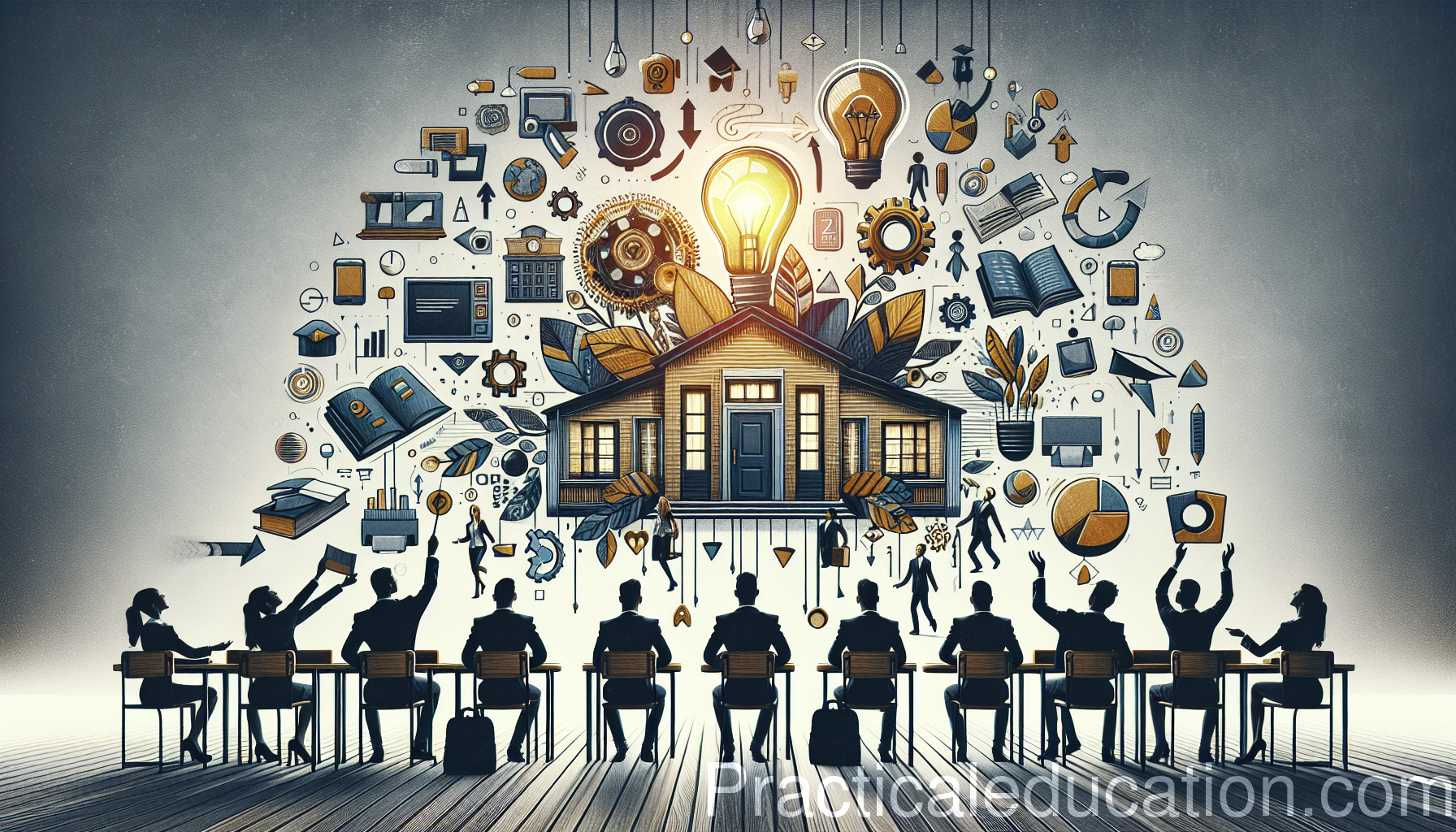
Let’s not tiptoe around the question. If 16 years of schooling doesn’t teach you how to manage money, get a job, start a business, or even cook dinner, then what is it for? If you can name 100 battles but can’t manage anxiety or taxes, something’s broken. This isn’t education—it’s a tragic misdirection. We must ask the most dangerous question: What is school actually for?
What Is School For?Let’s not tiptoe around the question.
If 16 years of schooling doesn’t teach you how to manage money, get a job, start a business, or even cook dinner, then what is it for?
This dissonance highlights a significant misalignment within the current educational paradigm, wherein the academic model prioritizes the memorization of information over the acquisition of practical skills.
Traditional education systems have consistently been rooted in a narrow understanding of what knowledge constitutes value, often negating essential life competencies that align with the realities of adult life.
The prevailing educational framework operates on archaic assumptions: that knowledge is primarily academic, that credentials from reputed institutions are the hallmark of success, and that compliance and disposition to authority are indicators of readiness for the workforce.
Each of these assumptions warrants critical examination.
When students are encouraged to engage solely with a legacy of historical events or theoretical knowledge, without practical application, they finish their formal education without the necessary tools to truly engage with the world.
This results in financial illiteracy, workplace unpreparedness, and emotional unwellness — a complex crisis that stems from an education that does not address real-life challenges.
To dismantle this antiquated framework, a new educational paradigm must be established, one that posits practical, student-driven learning as the core of the instructional process.
Central to this idea is the proposition that education should be regenerative, focusing not only on knowledge acquisition but on transforming knowledge into actionable skills that foster ownership, income generation, and personal autonomy.
This approach advocates for a curriculum that is intensive in practical learning experiences, integrated projects, and real-world problem-solving — all structured around student interest and inquiry.
For educational institutions, this shift necessitates a radical rethinking of curriculum design.
Courses should be structured around interdisciplinary, project-based learning that allows students to explore complex real-world problems within their communities.
Instead of isolated subjects, education should intersect with the businesses, politics, and cultures that define the student’s context.
For instance, a unit on economics could incorporate financial literacy, local entrepreneurship, and even civic responsibility, enabling students to construct a cohesive understanding of how their society operates and their role within it.
Additionally, educators must transition from traditional modes of instruction to facilitators of learning, adept at guiding students through experiential processes.
Teaching methodologies should emphasize collaborative learning and critical thinking, equipping students to navigate uncertainties and embrace failure as part of the learning experience.
This approach aligns with growing global educational trends emphasizing skills such as adaptability, strategic thinking, and creativity as essential for future success.
Ultimately, educational institutions must also undergo structural transformation to support this evolved vision.
Schools should be designed as community hubs, offering resources and mentoring beyond the confines of classroom walls.
Partnerships with local businesses, nonprofits, and government entities can enhance the learning experience, providing students with opportunities for internships, apprenticeships, and collaborative projects that develop both skills and professional networks.
This ecosystem promotes lifelong learning, where students are not only consumers of knowledge but active contributors to societal progress.
Involving a global mindset is paramount.
As education increasingly operates within an interconnected world, strategies must be culturally relevant and adaptable across diverse contexts.
Western frameworks that emphasize standardization can be balanced with Eastern methodologies focused on depth of knowledge and holistic understanding.
Such a synthesis can cultivate a cohort of learners who can adapt to and thrive in a variety of environments, equipped with the essential skills needed to navigate the complexities of the modern economy.
Furthermore, the implications of this student-driven model extend beyond immediate entrepreneurial skills to encompass emotional intelligence, social responsibility, and ethical leadership.
Students educated within this framework are well-positioned to foster community resilience, social justice, and sustainable practices.
Programs that prioritize real-life mastery also encourage students to participate in civic engagement, understanding that their contributions are vital to the health of their communities.
This reframing of the educational purpose calls into question the revered status of traditional credentials.
In a practical education model, success is measured not by the accumulation of degrees but by the demonstrable ability to solve problems, innovate, and create value.
While credentials still hold some weight in professional contexts, their role must evolve to reflect competence and capability rather than mere completion of a prescribed educational journey.
What’s essential, however, is that learners emerge not only prepared for careers but as informed citizens capable of critical thought, ethical deliberation, and community service.
By embedding practical skills and real-world engagement into the fabric of education, we ensure that schooling is a meaningful contributor to personal and societal well-being.
This transformation is not an easy course to navigate; it requires commitment from educators, institutions, and communities alike.
By questioning what school is actually for, we begin to dismantle the myths surrounding education and pave the way for an innovative, practical curriculum that reflects the demands of contemporary society.
As we seek to redefine educational success, let us remember that the ultimate goal is alignment between schooling and the complexities of real life — an aspiration rooted in practicality, agency, and empowerment.
“Education should be a conduit for life's practicalities, not a gatekeeper to credentials.” (Eric Bach)