Fear of the Hand-Raise
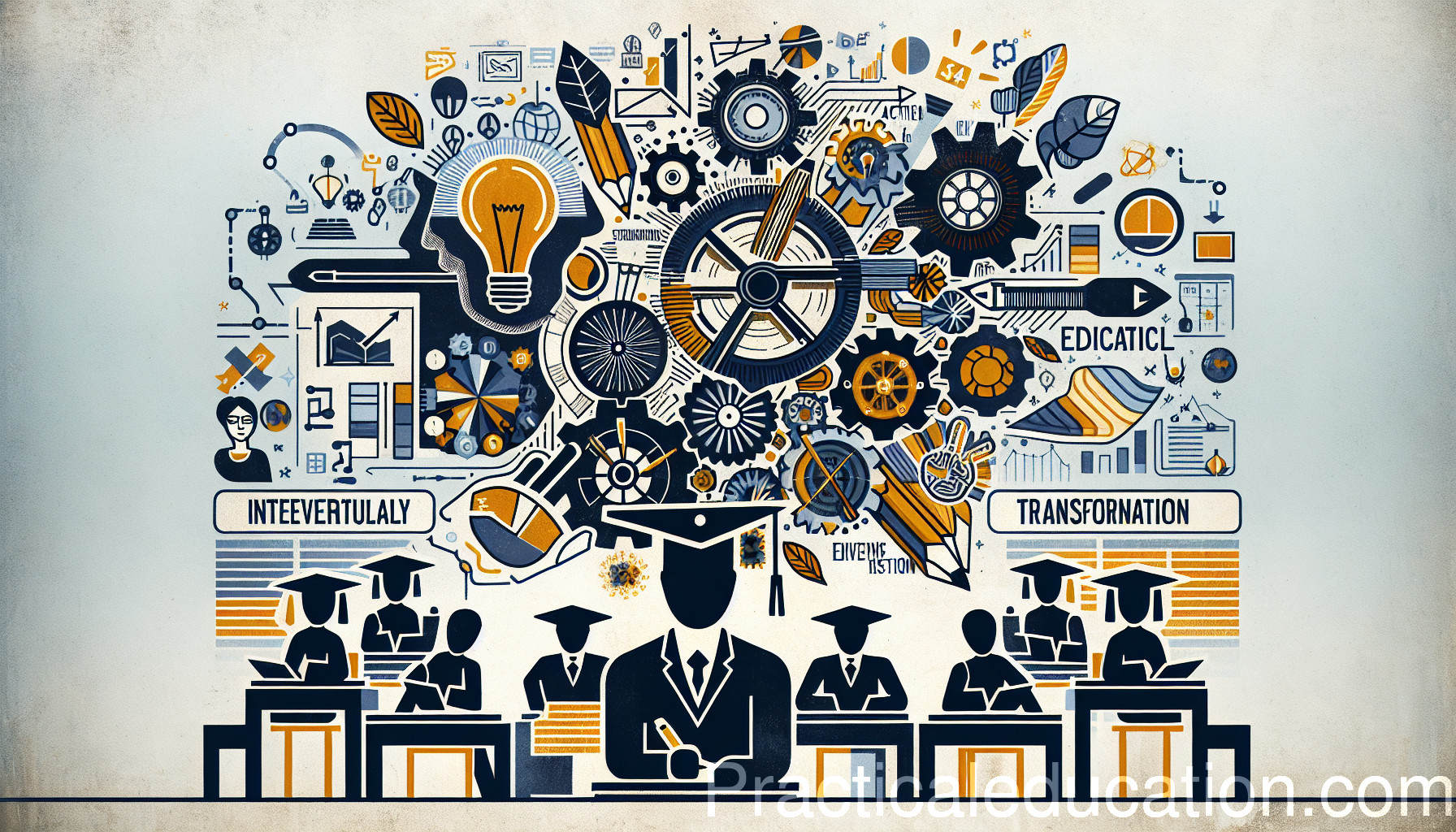
Why are students afraid to be wrong? Because school makes mistakes public, humiliating, and permanent. But all innovation starts in failure. We must teach courage over correctness. Raise hands, raise questions, raise hell.
Fear of the Hand-RaiseEducational systems have long been predicated on the principles of correctness and compliance, often to the detriment of creative exploration and learning autonomy.
As it stands, the traditional model instills a fear of failure.
This fear manifests in students being reluctant to raise their hands in classrooms, not out of a lack of interest or engagement, but because they perceive their potential mistakes as public displays of incompetence.
The psychological ramifications of this model are profound: it conditions students to equate learning with performance and success with perfection rather than exploration and growth.
Hence, when a student refrains from participating in discourse or asking questions, they are not simply adhering to silence; they are protecting themselves from an educational system that regards error as a sign of inadequacy.
The prevalent focus on correct answers over inquiry inhibits the developmental process of learning itself.
Mistakes are not mere stepping stones but essential components of innovation.
Every breakthrough in science, art, and business has emerged not from a flawless trajectory, but from a series of iterative failures that were ultimately harnessed into productive insight.
Therefore, the challenge lies in reconstructing educational frameworks to foster a culture where mistakes are not stigmatized but celebrated as vital learning experiences.
This requires a systemic shift in curriculum design and pedagogical methodologies centered on encouraging inquiry, creativity, and solution-oriented thinking.
To address fear of being wrong, educational institutions must create environments where vulnerability is not only accepted but embraced.
This starts with educators themselves, who should prioritize a teaching philosophy that values questions over answers.
When instructors are open about their own mistakes and share learning experiences from their failures, they model a behavior that encourages students to engage bravely with uncertainty.
This pedagogical pivot entails training teachers to facilitate discussions where exploratory dialogue takes precedence.
Educators must learn to recognize teachable moments within failures, encouraging student-led analyses of what went wrong and how it can be mitigated in the future.
The curriculum must align with this renewed focus.
Hands-on projects should replace static textbooks, allowing students to explore real-world problems through experiential learning.
Applied subjects, such as entrepreneurship or social innovation, can provide students with frameworks to engage with failure productively.
Such subjects emphasize critical themes of adaptability, concern for the community, and collaboration.
Allowing students to fail within real-world contexts builds resilience and equips them with the tools necessary to navigate an unpredictable future.
For instance, students working on business ventures could analyze failures in their initial models, thereby distilling lessons that inform better iterations of their projects.
Global learning systems should incorporate diverse pedagogical philosophies to enrich the approach to mistake-making.
Western educational trends often stress individualism and competition, while Eastern methodologies may emphasize collective learning and reflective practices.
By amalgamating these principles, a more holistic educational strategy emerges.
Students from a multitude of cultural backgrounds can engage in shared experiences that teach them the value of collective problem-solving.
Through global collaboration platforms, students can interact with peers around the world, gaining exposure to different perspectives on failure and innovation.
This cross-fertilization not only broadens individual student experiences but also cultivates a sense of global citizenship.
Student experiences must evolve from passive recipients of knowledge to active participants in their educational journeys.
Education must democratize learning, allowing students to propose curriculum changes based on their interests and the societal challenges they perceive.
In this context, raising hands to ask questions must be dissociated from the fear of being wrong and instead be associated with a commitment to inquiry and collaboration.
Schools should adopt learning models that actively seek student input, ensuring that education remains dynamic and relevant.
It is essential that educational institutions prioritize building spaces that encourage dialogue over doctrine, creating communities of learners who feel empowered to challenge ideas and assumptions.
This ethos fosters an educational environment that prioritizes courage over correctness.
A significant aspect of this transformation involves rethinking assessment strategies to prioritize growth and reflection rather than rote correctness.
Traditional testing often does not account for the process of learning; students may excel in tests while failing to develop critical skills.
Implementing self-assessments and personal project portfolios can encourage students to navigate their educational journeys with a focus on growth, reflecting the lessons learned rather than merely demonstrating knowledge through standardized formats.
These assessments would not only prepare students for the realities of the workforce but also for personal forces of change in their lives.
Furthermore, instilling a culture that values curiosity over compliance prepares students for the demands of an ever-changing global economy.
Work dynamics increasingly favor adaptability and entrepreneurial mindsets.
As automation and artificial intelligence reshape job landscapes, skills such as creative problem-solving, resilience, and collaboration will become ever more essential.
Education must therefore pivot from esthetic credentialing to fostering competencies that directly enhance students' capabilities to thrive in their professional landscapes.
In doing so, learning becomes less about memorizing information and more about mastering the art of navigating complexities and uncertainties.
In conclusion, fear of incorrectness in education hinders the genuine exploration that could lead to profound intellectual and social contributions.
Shifting the focus from correctness to courage fundamentally alters the educational landscape, equipping students with the skills necessary for both personal and professional success.
The paradigmatic shift outlined in this chapter challenges existing norms and proposes a learning model that is aligned with real-world dynamism.
Such a model promotes inquiry, cultivates resilience, and nurtures a generation unafraid to raise their hands—ready to question, create, and innovate in the face of uncertainty.
"Learning thrives where mistakes live, and innovation begins where fear ends." — Eric Bach.