Tyranny in a Syllabus
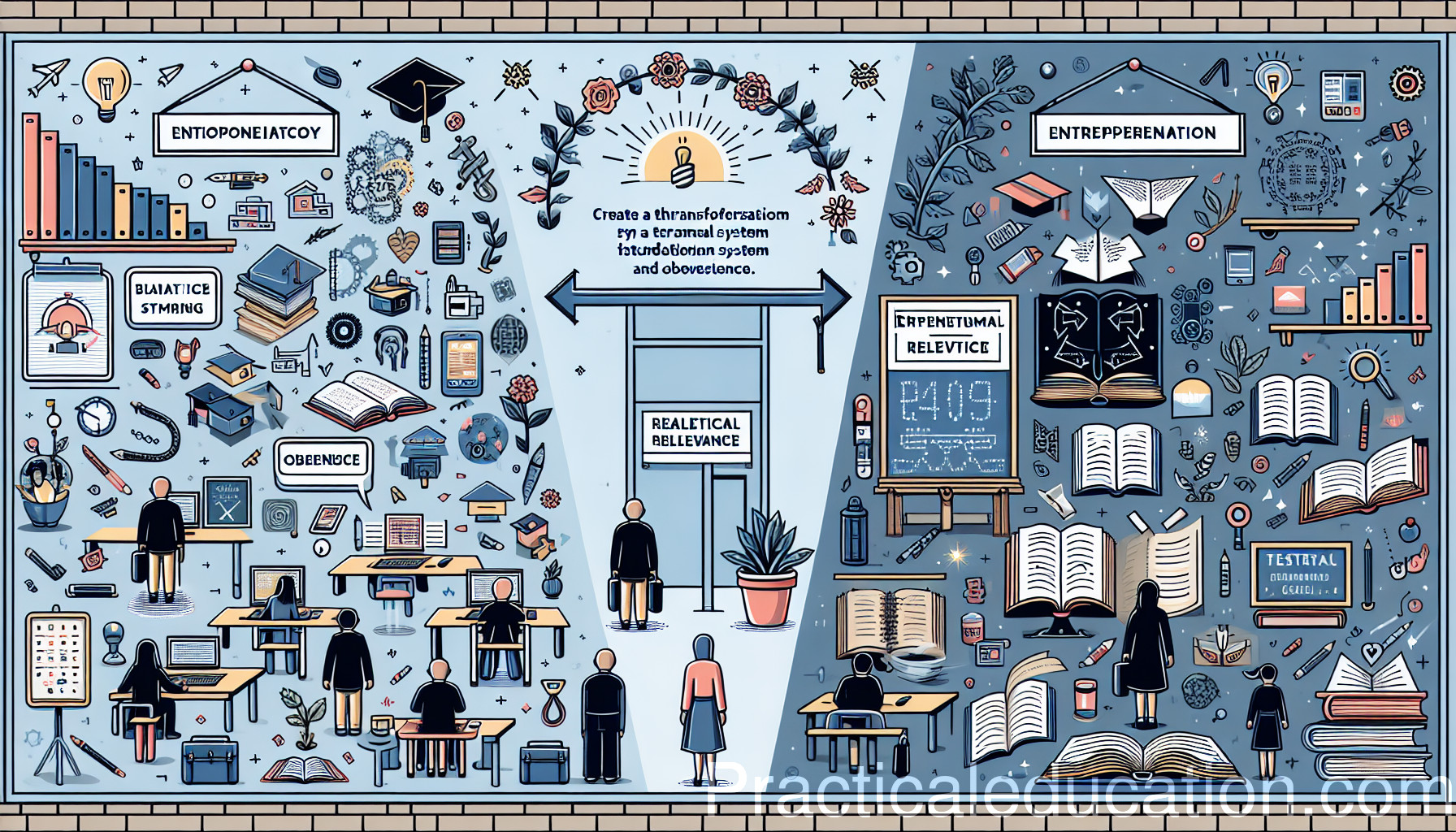
Today’s syllabus isn’t a roadmap—it’s a cage. Mandated topics, test-oriented pacing, and enforced neutrality make teaching robotic. It’s not about what students need—it’s about what the system demands. We must redesign learning plans that breathe, adapt, and empower. Tyranny has no place in the curriculum.
The structure of contemporary syllabi in educational systems around the world reflects a pervasive tyranny—both in its rigidity and in its disconnection from the tangible needs of students and society.Today's syllabus functions not as a roadmap to self-discovery and mastery but rather as a cage that confines educators and students within predetermined constraints.
The result is an environment where teaching becomes mechanical and uninspired, oriented solely toward the fulfillment of standardized tests and administrative mandates rather than the genuine development of learners.
This chapter outlines an innovative approach to curriculum design that shifts focus from traditional constraints toward empowering frameworks that foster autonomy, adaptability, and real-life applications.
To dismantle the prevailing myths that underpin the current educational paradigm, we must first confront the notion that a standardized syllabus benefits all learners uniformly.
This assumption disregards the unique backgrounds, skills, and aspirations of individual students.
Instead of serving as a one-size-fits-all template, curricula should embrace a modular approach that allows for personalization and relevance.
A free-market style of education would enable students' interests and evolving market demands to shape their learning paths.
The fundamental principle here is that education should be student-driven, allowing learners to determine their trajectories in alignment with their ambitions, rather than adhering to an externally imposed structure.
Another critical flaw in the traditional syllabus is its focus on memorization and rote learning, reinforcing a compliance-oriented mentality that valorizes obedience over critical thinking.
This is manifested in the overemphasis on test scores as the primary measure of success and competency.
Such a metric fails to encompass the diverse range of skills and knowledge relevant to today’s rapidly changing global economy.
A reimagined syllabus should prioritize competencies over compliance, incorporating assessment methods that evaluate a student’s ability to apply knowledge in practical contexts.
Simulations, projects, and peer assessments can serve as valid measures of learning, allowing students to demonstrate their mastery of concepts in ways that reflect real-world situations.
Moreover, the traditional curriculum often insulates students from real-world challenges and opportunities, leading to a disconnect between academic learning and workforce requirements.
The real world demands adaptability, problem-solving, and entrepreneurial acumen.
To prepare students for active participation in this landscape, the curriculum must integrate real-world experiences and collaboration with industry stakeholders.
Partnerships with local businesses, nonprofits, and community organizations can infuse curricula with relevance and urgency, as students engage in projects that have meaningful implications for their communities.
Such collaborations not only provide practical experience but also foster an understanding of social responsibility and ethical decision-making.
Cultural and geopolitical considerations must also inform curriculum redesign.
Education should not merely reflect local norms but prepare students to thrive in a globalized world, where cross-cultural competencies are essential.
Incorporating global perspectives into syllabi enables students to appreciate diverse viewpoints and develop critical thinking skills that are attuned to international contexts.
For example, case studies that involve multinational enterprises can teach students about complex interactions within global markets, enriching their understanding of economics and cultural sensitivity.
Integrating Eastern philosophies—such as systems thinking and holistic approaches—can complement Western methodologies, creating a curriculum that is robust and inclusive.
Furthermore, educational institutions must adopt a flexible organizational structure that supports adaptive learning environments.
This involves redefining roles within the educational landscape, empowering educators to act as facilitators rather than mere conveyors of information.
Teacher training programs should emphasize skills in mentorship, coaching, and interdisciplinary collaboration.
By cultivating an environment of continuous professional development, educators can remain responsive to changes in both student needs and the external environment.
Simultaneously, learners benefit from varied instructional styles and perspectives, enhancing their educational experience.
The implications of shifting towards such an empowered educational model extend to the global learning system.
Nations that embrace this more dynamic approach to education will likely foster a workforce that is not only adept at acquiring knowledge but also skilled in its application.
This human capital will be essential for navigating the complexities of the contemporary economy, where innovation, creativity, and adaptive thinking are prized.
Nations that resist this change risk stagnation as their workforces remain tethered to obsolete methods of learning and assessment.
In conclusion, the tyranny imposed by today's syllabus can be effectively dismantled through a holistic approach to education that prioritizes relevance, adaptability, and student agency.
A modern educational framework must reject the conventional wisdom of standardized, rigid curricula in favor of a modular, customizable system.
The proper education is one that fosters ownership of learning, equips students with practical skills, and prepares them for the intricacies of a globalized economy.
The focus must shift from compliance to competency, ensuring that learners emerge not just as recipients of information but as capable contributors to society.
"Education must liberate minds, not bind them to outdated structures" (Eric Bach).