Keep Only What Prepares for Real Life
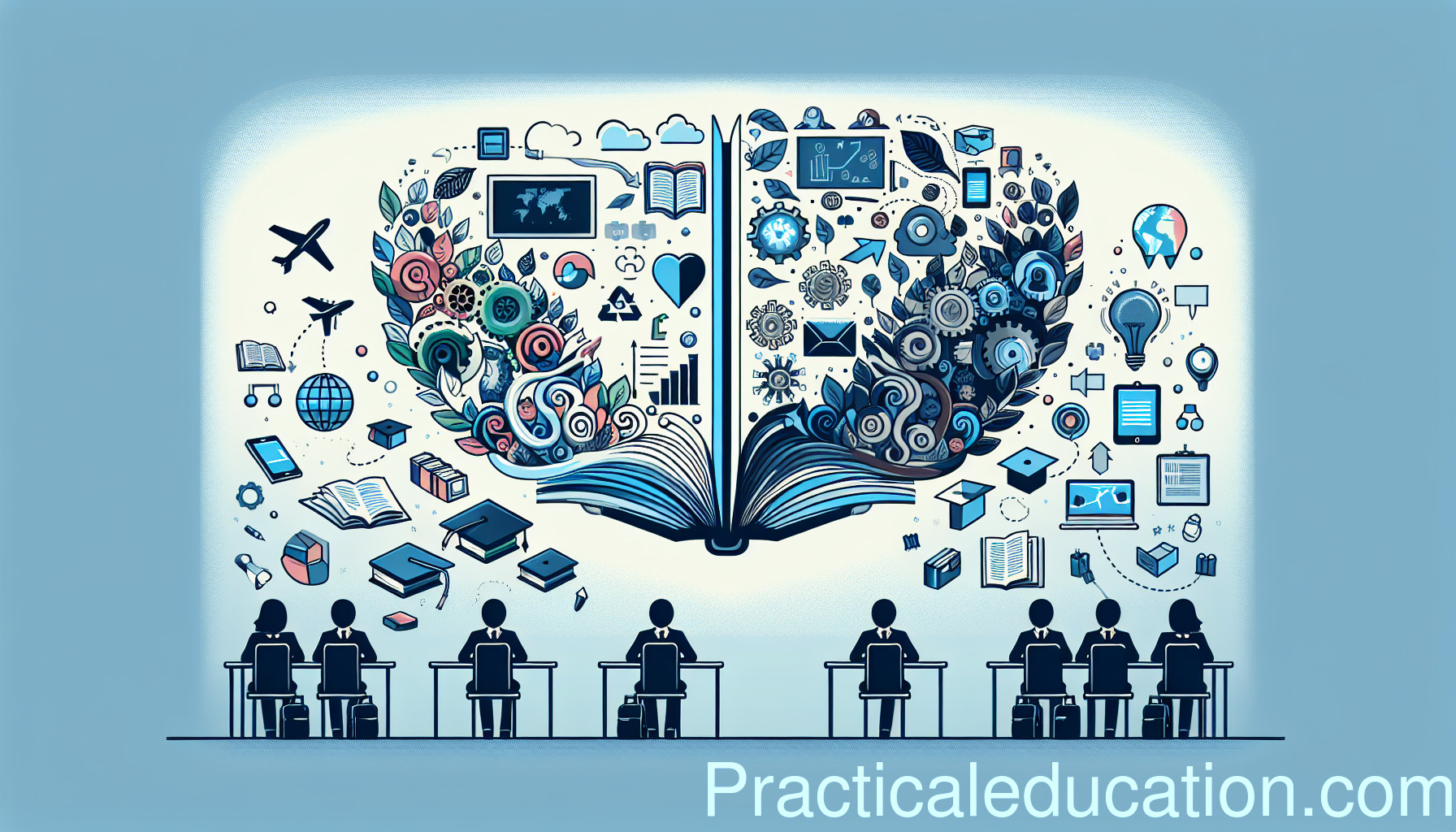
The new curriculum begins with life itself: law, taxes, health, relationships, negotiation, money, failure, resilience, and reinvention. Add business, psychology, leadership, storytelling, branding, emotional intelligence, and AI. Teach every student how to think, how to build, and how to be human. No more Latin roots unless it teaches you how to pitch an idea or buy a home. The new school must make people powerful—not just informed.
The traditional academic model, rooted in a system of rote memorization and compliance, has increasingly come under scrutiny as rapidly changing professional landscapes demand more from learners.The prevailing curriculum often emphasizes irrelevant knowledge, standardized assessments, and credentials that do not necessarily correlate with skills demanded in today’s workforce.
Therefore, it is essential to reframe educational priorities by anchoring them in real-life applicabilities, emphasizing practical knowledge over obsolete paradigms.
This chapter posits that a new educational framework must be established, one that begins with life itself and emphasizes skills essential for autonomy, resilience, and meaningful engagement in a complex world.
The proposed curriculum focuses on aspects of personal and professional life that students will inevitably face: law, taxes, health, relationships, negotiation, money management, failure, resilience, and reinvention.
Each of these components is not merely supplementary; they are foundational to both personal fulfillment and economic participation.
For instance, understanding tax obligations is not just a responsibility but a crucial component of financial literacy that impacts one’s ability to build wealth.
Similarly, the ability to negotiate effectively can be pivotal in both personal interactions and professional advancement.
By designing a curriculum that genuinely prepares students for real-life challenges, educators can foster a generation of individuals equipped to navigate, adapt, and thrive in diverse circumstances.
Furthermore, integrating subjects traditionally deemed ancillary, such as psychology, leadership, storytelling, branding, and emotional intelligence, into the core curriculum enhances the capacity for critical thinking and interpersonal interactions.
These elements are vital in cultivating a holistic understanding of oneself and others, providing students with tools to understand not only their own motivations and emotional states but also those of the people they will encounter throughout their lives.
The modern workforce increasingly values soft skills alongside technical abilities; thus, embedding these competencies into the educational experience facilitates a well-rounded, competent learner.
A comprehensive understanding of artificial intelligence, an increasingly relevant and powerful tool, must also be incorporated into the curriculum.
Familiarizing students with AI can enhance their technical prowess and foster an entrepreneurial mindset.
This approach encourages learners to conceptualize how they can leverage technology to solve real-world problems, establishing a bridge between theoretical knowledge and practical application.
In this context, education becomes an engine not merely for personal achievement but for innovation and societal advancement.
To dismantle the myth that education should prioritize theoretical knowledge, educational institutions must engage with the realities of the global economy.
Curricula should be designed to encourage entrepreneurship, leveraging the principles of Western execution methodologies while furnishing students with Eastern depth, logic, and adaptability.
A blend of these educational philosophies can empower learners to think critically and innovate in a manner that respects cultural contexts and market needs.
For instance, including case studies from diverse regions can highlight different approaches to problem-solving and innovation, enriching students’ perspectives and equipping them with a globalized understanding of economics and culture.
The shift toward a practical, student-driven curriculum necessitates a reevaluation of assessment methods.
Standardized testing often fails to capture the breadth of a student’s capabilities and reinforces a one-size-fits-all approach.
Instead, assessments should reflect real-world scenarios where students can demonstrate their knowledge and skills in applicable contexts.
Portfolio assessments, project-based evaluations, and peer reviews encourage learning through practical engagement and collaboration, fostering a deeper grasp of content and mastery of real-world skills.
This shift in evaluation recognizes and values diverse talents and learning styles, further empowering students to take ownership of their education.
Student experience plays a critical role in this reimagined educational model.
It is imperative to create an environment where learners feel empowered to explore their interests and pursue their passions.
A curriculum centered explicitly around the students’ needs and aspirations invites agency and autonomy, allowing individuals to shape their educational journeys and learn in ways that resonate with their unique perspectives.
A strong mentorship framework can supplement this experience, wherein educators serve not merely as content deliverers but as guides who facilitate exploration, critical thinking, and real-world engagement.
Moreover, a global mindset must inform the application of this educational model.
In an interconnected world, students should understand diverse economic, cultural, and geopolitical contexts.
Collaborating on projects with peers from different regions, engaging in exchange programs, or studying global case studies will enhance learners’ appreciation for various viewpoints.
This exposure fosters adaptability and equips students to approach problems with a well-rounded perspective, essential for navigating today’s multifaceted global issues.
In conclusion, the new educational approach proposed here seeks to cultivate people who are not only informed but powerful.
By focusing on practical knowledge applicable to real-life situations, integrating soft skills, and fostering a global mindset, we enable students not simply to survive in the world but to lead, innovate, and make impactful contributions.
This radical rethinking of education is essential for preparing future generations to meet the complexities of contemporary life with competence and confidence.
“The purpose of education is not to prepare students for tests but to prepare them for life.” — Eric Bach