No One Asks “Why?”
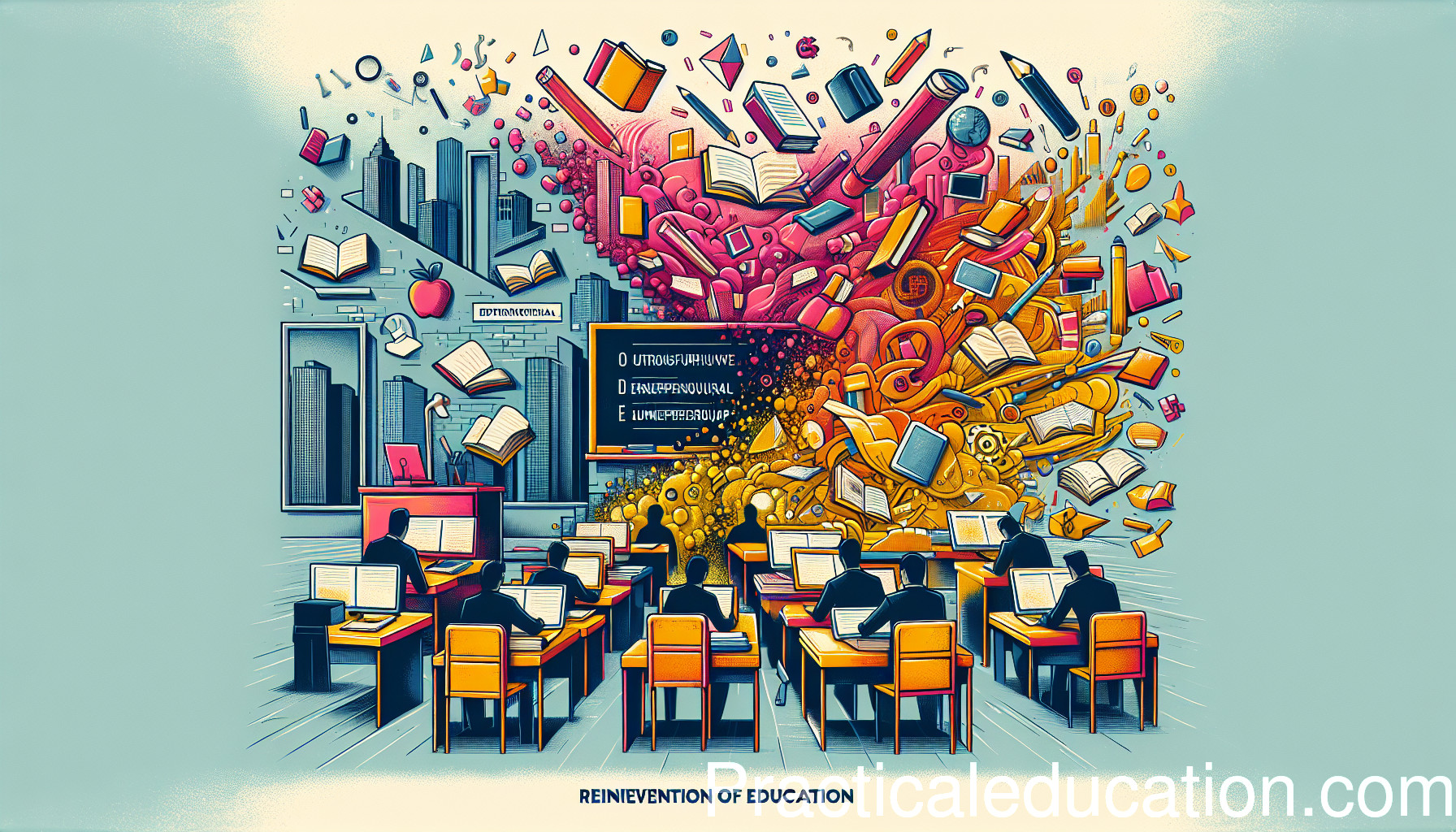
Why do we need this formula? Why memorize this list? Why sit in rows and copy? Schools don’t like why. “Because it’s on the test” is the ultimate intellectual insult. A real education starts with why—and never stops asking it.
Education has historically been built upon a model of compliance, rote memorization, and standardization.This framework prioritizes uniformity over individuality and promotes a passive learning style that values the regurgitation of facts over the application of knowledge.
At the crux of this model lies a deeply entrenched aversion to questioning — especially why certain content is relevant or necessary.
The phrase "Because it's on the test" epitomizes this limitation, encapsulating a mindset that stifles inquiry and marginalizes genuine understanding.
A radical rethinking of educational frameworks is essential, transitioning to a system where the act of questioning, particularly "why," serves as the foundation of learning and knowledge acquisition.
The notion that students should passively absorb information presents a significant barrier to meaningful education.
This approach ignores the reality that in an interconnected global economy, the ability to critically evaluate, adapt, and innovate is paramount.
In competitive and dynamic environments, individuals equipped solely with facts and formulas lack the tools necessary to navigate complex problems.
Thus, adopting a paradigm that prioritizes inquiry, starting from the very first question — why?
— promotes not only deeper understanding but also cultivates a skill set aligned with entrepreneurial thinking and real-world application.
Integrating the question of "why" necessitates a fundamental redesign of curricula.
Educational institutions should prioritize conceptual understanding and problem-solving over mere content delivery.
This shift can be accomplished by scaffolding learning around themes that resonate with students’ interests and societal challenges.
For instance, a curriculum centered on environmental sustainability could encourage students to explore the complexities of climate change, investigate potential solutions, and develop actionable projects.
Such a design fosters not only academic mastery but also equips students with tools for entrepreneurship and civic engagement.
Moreover, the significance of a "why" centered approach extends to pedagogical methodologies.
Traditional teaching methods that emphasize passive reception must give way to inquiry-based learning environments where questions drive the educational experience.
Classrooms should facilitate dialogue, encouraging students to ask questions, challenge assumptions, and explore diverse perspectives.
This interactive learning model positions students as active participants in their education, empowering them to seek out the relevance of what they learn.
Educators should act as facilitators, guiding students in their exploration of knowledge rather than simply delivering information in a one-dimensional format.
The implications of this paradigm shift stretch beyond individual classrooms and affect educational institutions on a systemic level.
Schools must embrace a holistic approach that values student agency.
This entails fostering environments where students take ownership of their learning journeys, shaping their educational paths based on their interests and aspirations.
Educational leaders should cultivate collaborative, interdisciplinary programs that support a continuous inquiry cycle, allowing students to iteratively refine their understanding and application of knowledge across varied contexts.
This adaptability is crucial in an era characterized by rapid technological advancement and shifting employment landscapes.
Furthermore, adopting an inquiry-based model has global ramifications.
Different cultures approach education and knowledge acquisition in varied ways, with some emphasizing memorization and hierarchy while others encourage debate and critical thinking.
Integrating the principles of an inquiry-driven education system would not only bridge these cultural divides but would also promote a more interconnected understanding of global issues.
For instance, initiatives like project-based learning can stimulate cross-cultural collaborations, where students from diverse backgrounds work on shared challenges, fostering a sense of community and collective problem-solving.
This approach prepares students to engage meaningfully with global challenges, whether they stem from economic disparities or environmental crises.
In examining educational systems worldwide, it is imperative to recognize the pressing need for adaptability.
The most successful economies leverage a workforce that possesses the capacity to think critically, innovate, and adapt.
Educational institutions must align their practices with this requirement, bridging the gap between academic knowledge and real-world capabilities.
The integration of technology into learning experiences exemplifies this shift, providing opportunities for students to engage in simulations, online collaborations, and access to diverse resources.
Educational systems can draw from both Western and Eastern philosophies, merging entrepreneurial execution with holistic, contextual understanding to develop well-rounded learners equipped for future challenges.
Students should increasingly be considered as stakeholders in their education — not only in their immediate learning environments but also in larger educational ecosystems.
Encouraging students to engage with local businesses, community leaders, and international organizations can cultivate practical skills and real-world relevance.
Programs integrating internships, apprenticeships, or mentorship opportunities can support this initiative, allowing students to apply their learning in authentic contexts while also expanding their professional networks.
This intersection of education and experience not only enhances student engagement but also fosters the development of a skilled workforce that can immediately contribute to society and the economy.
In sum, by embracing an educational model grounded in the continuous questioning of "why," we can dismantle the entrenched myths about education that have persisted for centuries.
The transition to a questioning-centered approach creates opportunities for deeper learning, critical thinking, and real-world mastery.
Curricula, pedagogies, and institutional structures must be reconfigured to promote inquiry, ownership, and adaptability.
This transformation is not merely an abstract goal; it is a fundamental requirement for equipping students with the skills and mindset necessary to thrive in a complex, globalized world.
In this new paradigm, education is not about passive absorption of facts; it is about forging pathways to understanding through inquiry.
To quote Eric Bach, "True education begins when we start to question the value of what we are taught."