Break the Wall Between School and Society
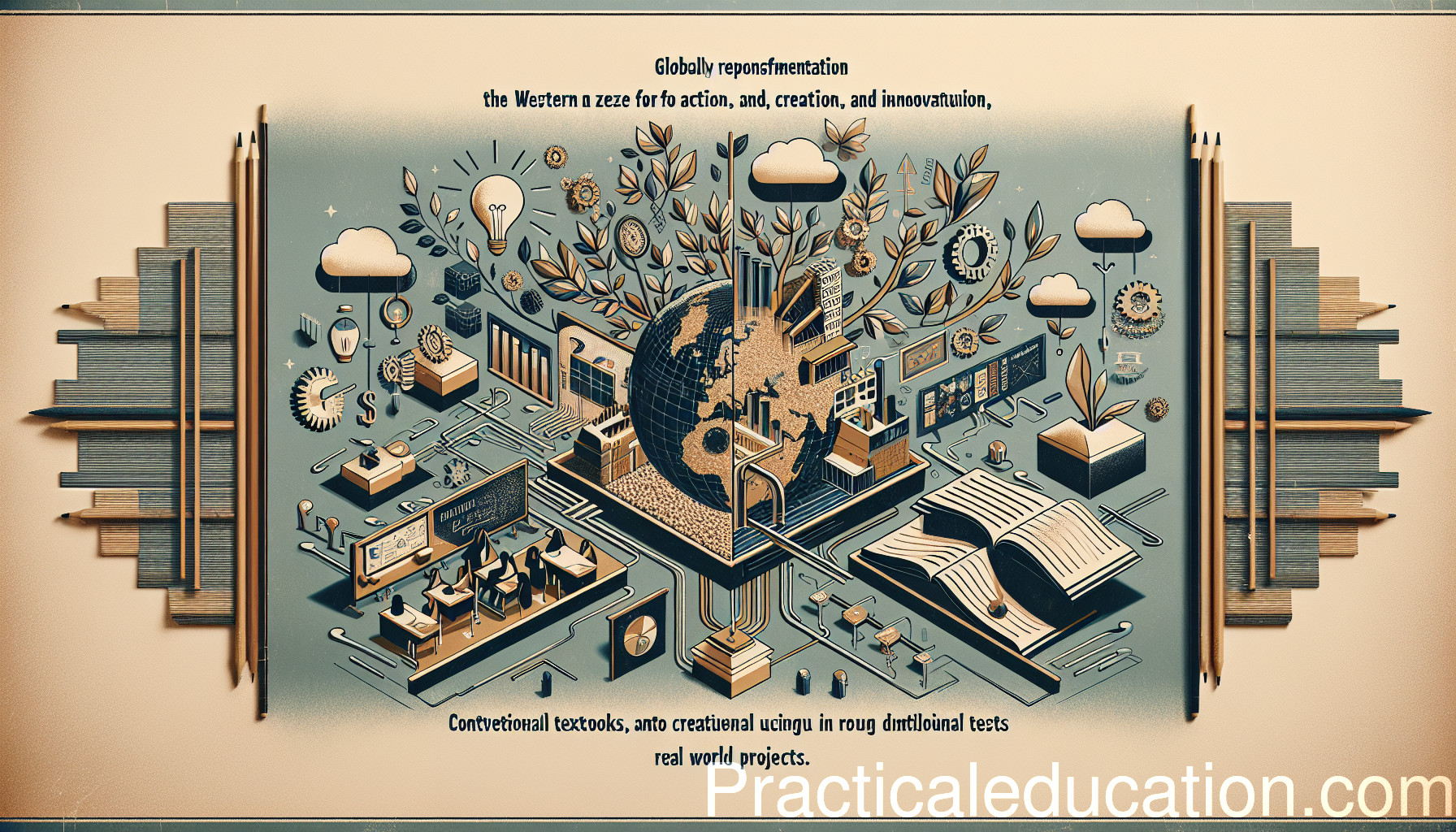
Invite community leaders, startup founders, therapists, hackers, investors, and artists into the school. Let students solve real problems in their city. Make education an ecosystem, not an institution.
The traditional model of education has long been criticized for its reliance on rote memorization, standardization, and compliance.It operates on the premise that knowledge is best transmitted through structured curricula delivered by authority figures within the confines of classroom walls.
However, this approach often neglects the dynamic, multifaceted realities of the world students will inhabit once they leave school.
In advancing a model of education that bridges the gap between school and society, it becomes essential to construct a learning ecosystem that values experiential engagement, problem-solving, and collaboration with diverse community stakeholders.
The primary myth underpinning traditional education is that academic knowledge is a standalone entity, separate from its applications in real-world contexts.
This perspective is increasingly untenable in a world where the complexities of socio-economic challenges and technological advancements require a more integrative approach.
By dismantling the rigid structure of conventional academia and replacing it with a systemic and interconnected model, education can be reframed as an ecosystem rather than an isolated institution.
This reconfiguration must involve active participation from community leaders, entrepreneurs, artists, and other stakeholders who reflect the diverse fabric of society.
By inviting these figures into the educational realm, students are afforded the opportunity to engage directly with the multifarious dynamics of their communities.
Practical education demands that students confront real problems in their cities, enhancing their learning through active participation in creating solutions.
This requires an intentional shift in curriculum design to prioritize project-based learning, where students identify, analyze, and tackle genuine societal issues.
For instance, collaboration with local non-profits might allow students to engage in social entrepreneurship, developing initiatives that address food deserts or mental health awareness in their neighborhoods.
Through these experiences, students not only acquire knowledge but also develop an entrepreneurial mindset that enables them to perceive challenges as opportunities for innovation and growth.
Educators must cultivate partnerships with industry leaders and community organizations, which can evolve into platforms where students can access mentorship, resources, and networks.
Such collaboration serves to broaden the educational experience beyond textbooks and tests, giving students the agency to question, investigate, and take ownership of their learning.
Thus, curriculum design must move away from prescriptive content toward a framework that facilitates inquiry, synthesis, and application.
By developing real-world tasks within the curriculum, schools can create learning environments that are relevant and responsive to the needs of both students and their communities.
The implications of this educational overhaul extend to various dimensions of student experience.
A more integrated approach encourages autonomy and critical thinking, as students become not merely passive recipients of information but active contributors to their learning trajectories.
They learn to navigate the complexities of interpersonal relationships, appreciate diverse perspectives, and harness collaborative skills.
This reflects an educational philosophy that is more aligned with the realities of adulthood, preparing students not only for employment but also for civic engagement and community improvement.
Furthermore, when education is perceived as an ecosystem, the role of educational institutions shifts from being purveyors of knowledge to facilitators of connections and opportunities.
Schools can reimagine themselves as hubs of innovation, inviting interdisciplinary interactions that foster creativity and problem-solving.
This model encourages continuous learning throughout a person's life, wherein education does not stop at graduation but evolves in tandem with societal progress.
Institutions must leverage technology to facilitate these collaborations, ensuring education remains accessible, adaptable, and relevant across geographic and cultural boundaries.
From a global perspective, this integration is particularly significant as societies increasingly grapple with unprecedented challenges such as climate change, social inequality, and geopolitical tensions.
A globally minded educational framework that encourages cross-cultural collaboration equips students to approach these complex issues with empathy and creativity.
By participating in projects that engage with diverse cultural norms and practices, students develop a holistic understanding of global citizenship and the interconnectedness of humanity.
Ultimately, dismantling the traditional barriers between education and society not only enriches the learning experience for students but also enhances community well-being.
As students take ownership of their learning and contribute meaningfully to their environments, a reciprocal relationship emerges that benefits both the educational institutions and the communities they serve.
This relationship can transform schools into spaces where social learning thrives; an operational ecology promoting engagement and responsibility.
In summary, breaking down the wall between school and society is not merely an educational reform but a strategic necessity for preparing students to succeed and make significant contributions in an interconnected world.
Education must be about more than acquiring knowledge; it should cultivate the capacity for critical engagement with that knowledge in a context that seeks tangible outcomes.
This not only aligns with the demands of modern economies but also resonates deeply with the collective aspirations of society to innovate and improve collective living conditions.
“Education must transcend memorization and compliance; it should ignite curiosity and challenge students to solve the very problems that define their lives.” — Eric Bach.