East Meets West in Every Classroom
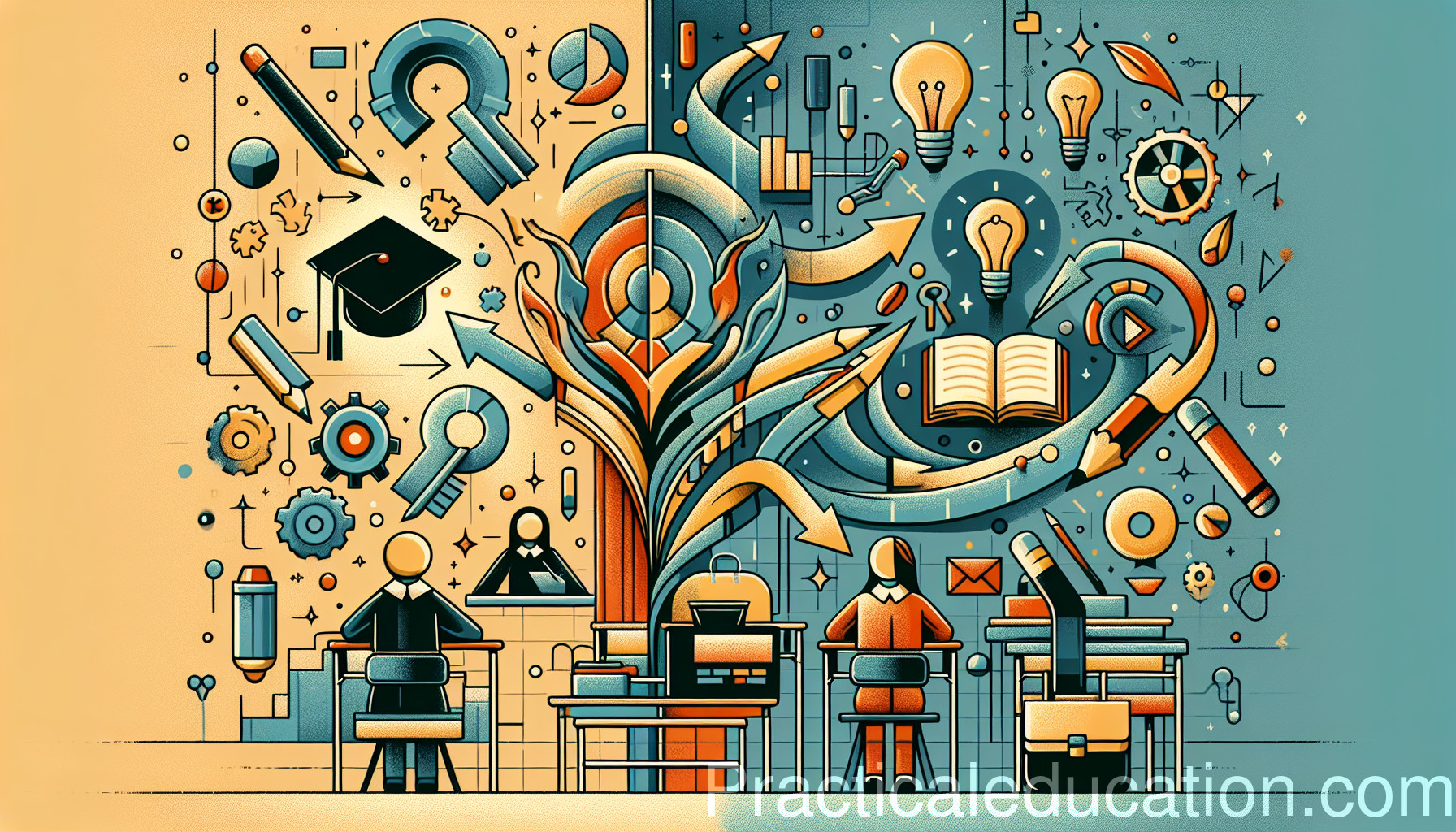
From China’s innovation culture to America’s branding power, from India’s technical rigor to Africa’s entrepreneurial agility—the global classroom is already here. We must teach East and West together, not apart. Synthesis beats supremacy.
To reconcile disparate educational philosophies globally, we must first acknowledge that the traditional academic framework—characterized by rote memorization, hierarchical obedience, and the pursuit of credentials—no longer meets the demands of our interconnected world.The future of education should prioritize practical learning experiences that foster income-generating skills, autonomy, and real-world mastery.
The blending of East and West in educational practice offers a framework for achieving this synthesis.
China's innovation culture, recognized for its emphasis on collective creativity, can significantly enhance individualistic educational approaches found in Western systems.
In China, the focus on collaborative problem-solving encourages a group-oriented dynamic where students engage with intellectual challenges collectively rather than in isolation.
Conversely, in the West, particularly in entrepreneurial hubs like Silicon Valley, there exists a robust belief in individual initiative and branding—a concept that can often overshadow communal learning.
By integrating these two approaches, we create an educational environment where students are not only encouraged to innovate and think independently but also to work collaboratively, drawing on the strengths of both individual and collective efforts.
This synthesis of Eastern and Western educational philosophies carries implications for curriculum design.
Curricula ought to incorporate problem-based learning that reflects real-world scenarios, allowing students to address actual challenges while collaborating with peers.
Instead of compartmentalized subjects that emphasize theoretical knowledge, interdisciplinary projects can be the vehicle for students to apply various skills and knowledge domains.
For instance, a project that involves students in creating a business plan could incorporate math for financial analysis, writing for professional proposals, and technology for digital marketing.
Educational institutions must recalibrate their missions to support this integrated approach.
Leaders in education should shift from a compliance-driven model, where memorization reigns supreme, to a model that emphasizes adaptability and lifelong learning.
Faculty development programs must train educators to facilitate rather than dictate.
This means equipping them to guide students through complex problem-solving tasks and encouraging interdisciplinary collaboration, reflective of both Eastern collectivism and Western individualism.
The role of educators will evolve from mere transmitters of knowledge to facilitators and mentors who foster an environment of inquiry and resilience.
The student experience should center around empowerment and ownership of one's learning journey.
An effective educational environment acknowledges that students today are digital natives, equipped with tools and resources that can be leveraged for learning outside the traditional classroom setting.
Empowering students to explore their interests through self-directed learning projects can amplify engagement.
This might include internships with local businesses, participation in innovation workshops, or online collaborations with global peers.
By allowing students to pursue their passions in a structured yet flexible framework, we align education more closely with real-world dynamics where adaptability is crucial.
Moreover, global learning systems must embrace diversity in educational practice—reflecting local contexts while adhering to shared global objectives.
The rapid growth of online learning platforms illustrates a burgeoning landscape where educational resources are not confined to geographical boundaries.
This provides opportunities for students everywhere to access a multitude of teaching styles and content, from India's technical rigor in engineering disciplines to Africa's entrepreneurial spirit in launching startups.
Educational policies that transcend nationalism and support cross-border collaboration can foster environments where Eastern depth in learning complements Western execution in business and innovation.
The necessity for recognition of local cultures in curriculums is paramount.
Education is not one-size-fits-all; curricula must be adaptable to the cultural, economic, and social contexts of learners.
For instance, incorporating indigenous knowledge systems into curricula can harmonize modern educational practices with age-old wisdom, thus presenting a fuller picture of human experience.
This adaptation supports the broader goal of building global citizens who are culturally aware and economically empowered.
To facilitate a faster transition to this global educational model, stakeholders must leverage technology effectively.
The rising use of artificial intelligence and data analytics in educational spheres holds potential for personalized learning pathways that reflect individual student needs and aspirations.
By deploying these tools thoughtfully, we can offer tailored educational experiences that foster agency and relevance, allowing students to thrive in various settings and industries.
Finally, engaging with various economies provides concrete lessons on how education can directly impact market needs.
For example, countries with burgeoning tech industries must align educational outputs with the skills these industries demand.
Collaborative partnerships between educational institutions and industries, particularly in rapidly developing economies, can provide a practical framework for equipping students with necessary competencies that are immediately applicable in the workforce.
Such partnerships also enhance the relevance of education by ensuring that students are learning the skills necessary for future employment, thus contributing to testing and demonstrating the efficacy of a synthesized educational approach.
In summary, by blending Eastern and Western educational philosophies, we move toward a model that honors collaboration and individuality, practicality and theory, local relevance and global applicability.
Curriculum designs can shift to focus on real-world problem-solving, educators can transition from knowledge gatekeepers to facilitators, while institutions can adopt a more flexible, empowering approach that recognizes the diverse cultural contexts of learners.
Ultimately, the synergy between East and West in the classroom serves as a powerful vehicle for fostering active, engaged learners who are equipped to navigate the complexities of a globalized world.
“Learning without borders breeds mastery; education must unify, not divide.” — Eric Bach.