Breaking the Ivory Towers
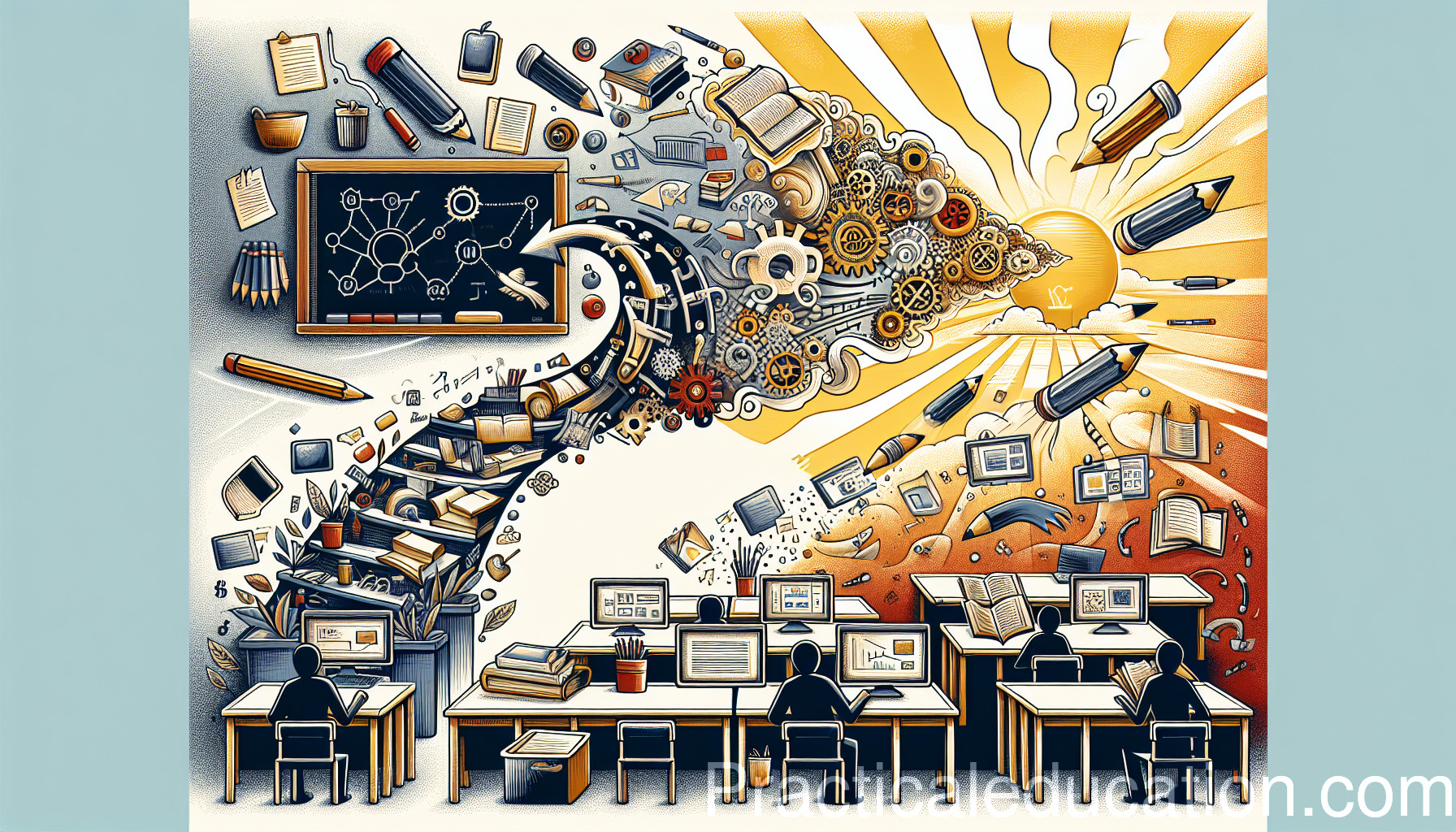
Academia was never meant to be a fortress—but it became one. Built on elitism, inaccessible jargon, and disciplinary walls, it excluded the very innovation it claimed to protect. Fusion starts by smashing these towers. Let’s bring knowledge back to the people—and forward into the future.
The traditional academic model has long operated on an antiquated premise: that knowledge is best attained through memorization, adherence to authority, and the pursuit of credentials.Designed in an era where information was scarce and specialized expertise was a virtue, this model has become fundamentally misaligned with the needs of a rapidly evolving world.
Today, the ownership of knowledge should no longer reside within the confines of academia's ivory towers; it must be decentralized and made accessible for practical application.
This chapter advocates for a paradigm shift that dismantles entrenched educational myths and promotes a system rooted in practicality, profitability, student autonomy, and mastery of real-world skills.
Fundamentally, we must reconsider how knowledge is defined and acquired.
Instead of viewing learning as a linear path characterized by examinations and grades, we should recognize it as a multidimensional process where students engage in meaningful projects that address real-world problems.
This shift redefines the purpose of education from a passive consumption of knowledge to an active creation of value.
Students should not only learn concepts but also apply them in ways that generate tangible outcomes, transforming their learning experiences into entrepreneurial ventures, social initiatives, and innovative solutions.
Curriculum design within this new framework must prioritize skills that have immediate relevance in various sectors, from technology to healthcare, agriculture to the arts.
Traditional subjects should be integrated into multidisciplinary projects that require students to solve complex problems collaboratively, underpinned by real economic and social conditions.
For instance, a project focused on sustainable urban development could encompass elements of environmental science, economics, and social policy, compelling students to draw from multiple disciplines while producing a viable solution.
Such a curriculum fosters critical thinking and creativity rather than rote memorization, allowing students to gain a holistic understanding of issues and develop practical solutions.
Educational institutions must transition from being gatekeepers of knowledge to facilitators of learning experiences.
This demands a radical restructuring of current hierarchies and pedagogical practices.
Teachers should act as mentors and guides, enabling students to take ownership of their learning paths rather than simply transmitting information.
This mentorship model encourages students to pursue inquiries that resonate with them personally, aligning their studies with their individual goals and aspirations.
As students cultivate these interests, they gain practical knowledge that translates into marketability and income-generating opportunities.
Moreover, this educational revolution necessitates the adoption of technology to broaden access to knowledge and expertise.
Online platforms, collaborative tools, and open educational resources can democratize learning, facilitating connections among students, educators, and industry leaders across geographical barriers.
Such innovations not only foster a global mindset—promoting understanding across diverse cultures—but also enhance adaptability to local contexts.
By utilizing technology effectively, institutions can create learning environments that are inclusive and responsive, taking into account the varied socio-economic realities of learners worldwide.
The implications of these changes extend far beyond individual classrooms.
As educational systems realign with principles of practical and student-driven learning, entire communities can benefit.
When students engage in projects that have local significance, they contribute to their immediate contexts, driving economic development, social change, and innovation.
This approach links education directly to the fabric of society, reinforcing the idea that learning is not an isolated activity but rather a communal endeavor with widespread impact.
In adopting a practical, profit-oriented educational model, it is vital to recognize the economic dimensions at play.
The need for practical skills in the global workforce is growing; businesses increasingly demand employees who can think critically and act competently in real-world situations.
A curriculum that emphasizes entrepreneurship, problem-solving, and collaboration not only prepares students for existing job markets but also equips them with the skills necessary to create new markets and opportunities.
By fostering a generation of learners who can innovate and adapt, we pave the way for sustainable economic growth and resilience in the face of global challenges.
This educational reform challenges inherited elitism and seeks to make knowledge accessible to all, irrespective of socio-economic background.
By integrating real-world applicability into learning, we cultivate a culture that values diverse perspectives and experiences.
Global education systems can learn from each other, blending Western entrepreneurial spirit with Eastern emphasis on adaptability, ensuring that individuals are prepared for the complexities of an interconnected world.
Furthermore, as we deconstruct the barriers of traditional academia, we open the door to lifelong learning.
Education should not be confined to childhood or young adulthood; it must be regarded as a continuous, evolving process.
By emphasizing adaptability and practical skills, we empower individuals to engage with new challenges throughout their lives.
This reflects the realities of an ever-changing economic landscape, where learning will become synonymous with professional and personal growth at all stages of life.
In striving for a future where education is both practical and empowering, we must remain vigilant against the pitfalls of bureaucracy that can stifle innovation.
It is essential to create spaces where experimentation is encouraged and where failure is viewed as a learning opportunity rather than a setback.
Embracing a culture of innovation in educational systems means valuing initiative and creativity, allowing students to explore and navigate the complexity of the real world without the fear of punitive measures for missteps.
By breaking down the ivory towers of traditional academia, we shift towards a model of education that is relevant, impactful, and essential for the future.
When students are given the tools to learn actively and collaboratively, they emerge not just as job seekers, but as innovators and leaders who can navigate and shape the future landscape.
This is education redefined—a system that encourages ownership, income, autonomy, and mastery of the skills required to thrive not just in the classroom, but in life itself.
“Education must evolve from a passive collection of facts to a dynamic process of creation, empowering learners to build their own futures.” — Eric Bach.