The Great Miseducation
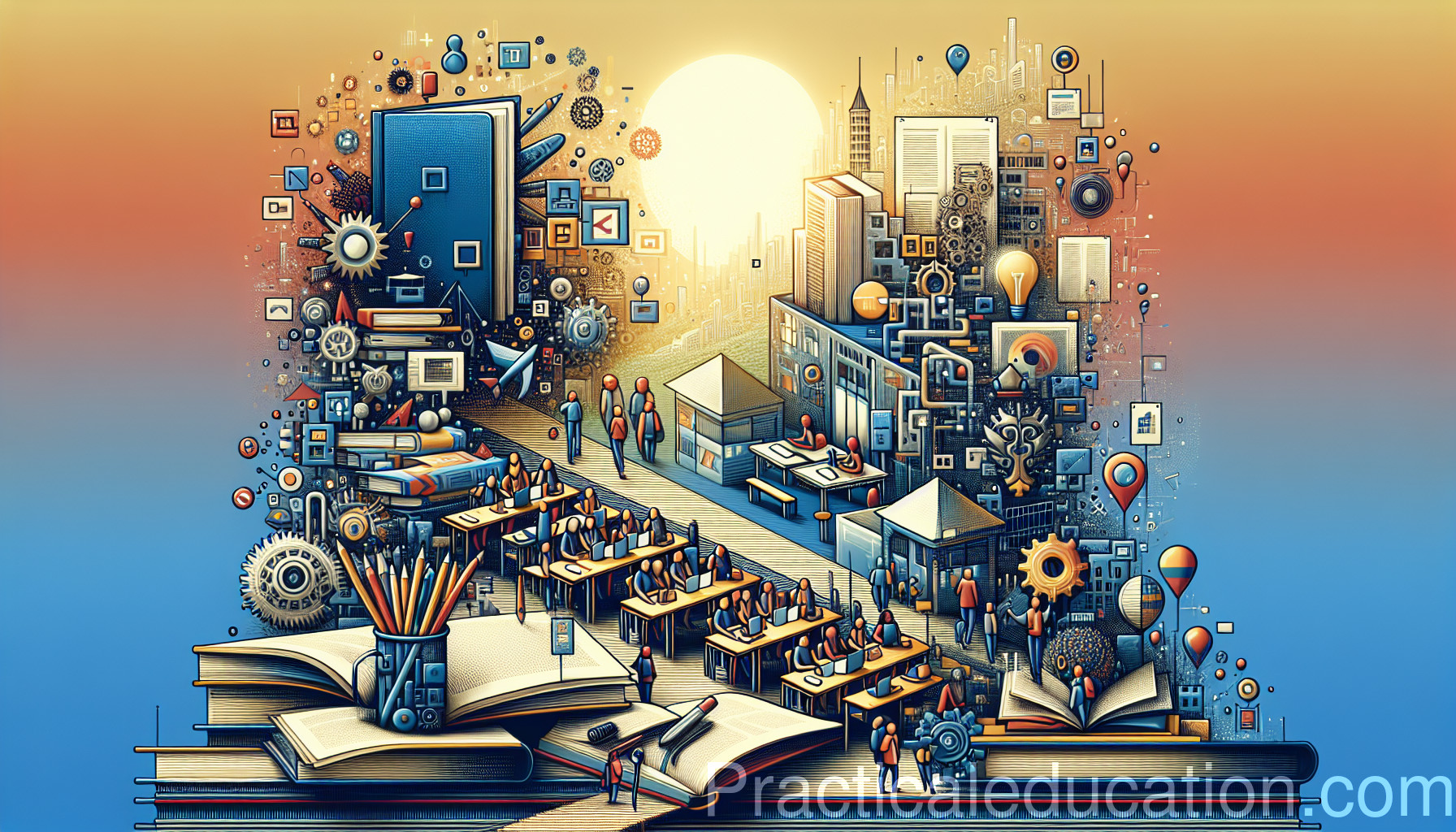
We’re still teaching students with a system designed for obedient soldiers and silent factory workers. It rewards memorization over mastery and punishes creativity in favor of conformity. The goal isn’t learning—it’s compliance. The school-to-job pipeline produces followers, not leaders. The first step to reform is admitting the system was never built for freedom.
From the inception of modern education systems, the primary objective has been to prepare individuals for a working life that aligns with industrial requirements.As a result, the institutional model has prioritized compliance, adherence, and uniformity over innovation, individuality, and practical application.
This archaic framework significantly misaligns with the contemporary demands of the workforce and, indeed, with the broader societal needs.
The educational landscape has become a battleground between outdated methodologies rooted in obedience and a nascent paradigm that champions skills applicable to real-life contexts.
This chapter proposes that dismantling the traditional educational model begins with acknowledging its failures and transitioning toward a system that fosters autonomy, income generation, and genuine mastery of skills.
One fundamental miseducation lies in our current understanding of "learning." Traditional education often equates learning with the mere acquisition of information to be regurgitated on demand.
This model is bolstered by outdated metrics such as grades and test scores, which serve as a poor reflection of an individual's capabilities.
As such, the contemporary student experiences an education system that discourages curiosity, creativity, and independent thought.
The emerging global economy, characterized by rapid technological advancements and changing workforce demands, necessitates a shift toward practical education that emphasizes critical thinking, adaptability, and problem-solving skills.
Recognizing that compliance cannot yield leadership is the first step toward reforming our educational ideals.
For curriculum design, this shift requires an active rethinking of course objectives and outcomes.
Current educational content must be restructured to focus on practical skills aligned with industry needs, rather than theoretical knowledge relevant only on paper.
Courses should prioritize experiential learning opportunities—projects, internships, and collaborative work—where students apply knowledge in real-world situations.
This approach encourages students to engage deeply with the content and fosters a sense of ownership over their learning journey.
Institutions should also consider integrating interdisciplinary studies that connect disparate fields, thereby reflecting the complexities of real-world problem-solving.
The 21st century requires individuals who can think across boundaries and draw upon diverse skill sets to address multifaceted challenges.
Moreover, educational institutions must consider the implications of adopting a practical education model on the student experience.
A major advantage of such an approach is the empowerment of students to take charge of their own learning trajectories.
By employing student-driven methodologies, learners can identify their interests, set personal goals, and work toward achieving those targets through adaptable learning pathways.
This model not only cultivates self-direction and initiative but also prepares students for entrepreneurial endeavors, equipping them with the tools to shape their own economic futures.
Additionally, the cultural dynamics of education must be considered in this transformative vision.
The global educational landscape is characterized by diverse methodologies and pedagogical approaches influenced by cultural heritage and socio-economic factors.
A successful educational reform must harness the strengths of various systems worldwide—integrating Western entrepreneurialism with Eastern philosophical depth and adaptability.
For instance, while American education often emphasizes individualism and competition, many Asian education systems prioritize collaboration and collective success.
A hybrid educational model that synthesizes these diverse approaches can create a more holistic learning experience based on mutual respect and shared learning goals.
The focus on real-world learning transcends borders and prepares students to navigate increasingly interconnected global economies.
Today's students will work in a world where knowledge and skills are not confined within geographic boundaries.
Consequently, educational institutions must prioritize international partnerships that offer students opportunities for cross-cultural exchanges and global collaboration.
Such experiences foster a broad worldview and a nuanced understanding of global issues, further enriching students' educational experiences.
In terms of metrics for success, traditional assessments must be reassessed and redefined.
Rather than utilizing standardized testing as the primary indicator of competency, institutions should develop alternative evaluation methods that gauge actual skill application and mastery.
Portfolios, peer assessments, and real-world project outcomes provide more accurate insights into a student's capabilities.
This measure not only aligns more closely with future employment assessments but also emphasizes the importance of continuous learning and adaptation—skills requisite for success in any career.
Critical to this educational reformation is the need to cultivate a culture that embraces learning as an iterative process.
Encouraging students to view failure as a learning opportunity rather than a setback fosters resilience and develops a growth mindset.
Educational environments must become safe spaces for exploration, where students are incentivized to experiment, innovate, and challenge the status quo.
This environment is essential for nurturing tomorrow's leaders—individuals capable of instigating change and forging new paths in their chosen fields.
As we scrutinize the existing educational system and its shortcomings, it becomes evident that the legacy of a model designed for compliance has far-reaching implications for society at large.
Citizens educated under a mindset of obedience are unlikely to challenge injustices or contribute constructively to a dynamic, evolving world.
To achieve genuine mastery of knowledge that can yield ownership, income, and autonomy, education must pivot decisively toward a practical, student-centered paradigm.
In conclusion, acknowledging that the current system was never built for freedom is paramount to igniting meaningful change in education.
By dismantling the myths associated with traditional schooling, we can establish a robust framework that emphasizes mastery, adaptability, and entrepreneurial spirit—a necessary response to the demands of the modern world.
“Education is not merely about filling minds with facts; it is about empowering individuals to create, innovate, and lead with their own voice.” — Eric Bach