The Compliance Economy
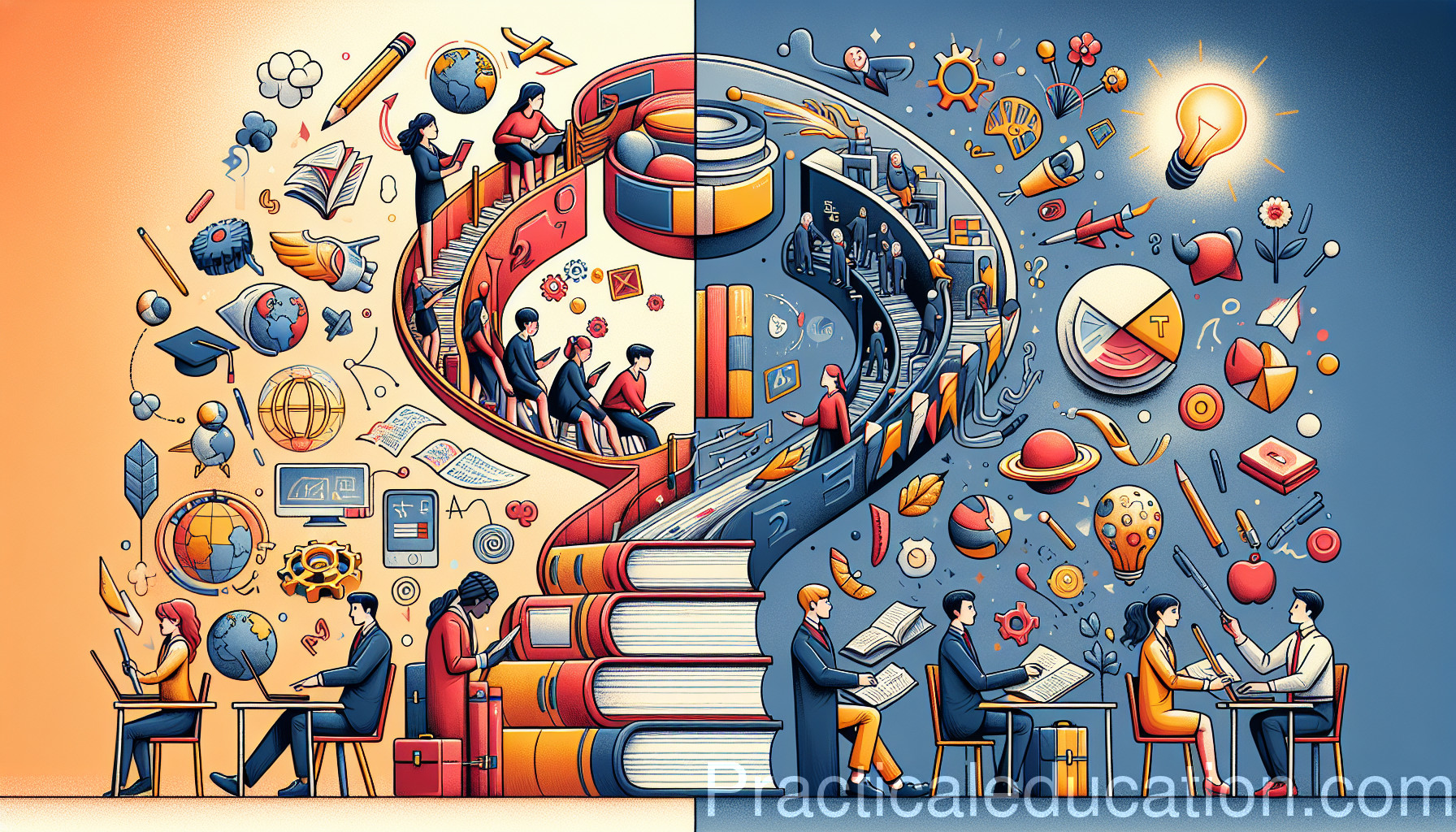
Students aren’t taught to think—they’re taught to comply. Teachers aren’t allowed to innovate—they’re trained to implement. Schools have become factories of compliance in a world that demands improvisation. If we want leaders, creators, and rebels—we must stop rewarding obedience.
In the contemporary landscape of education, a prevailing paradigm underscores the notion that compliance yields success.Students are conditioned to conform to established norms, memorize regurgitated knowledge, and adhere to administrative protocols rather than to engage in critical thinking or innovation.
This compliance-centric model has permeated not only classrooms but has also extended to the broader educational infrastructure, from curricula to teacher development.
As we critically examine this approach, we must recognize that it operates counter to the urgent demands of a dynamic global economy that values creativity, adaptability, and real-world problem-solving.
A radical overhaul is necessary—an educational framework that promotes ownership, profit-driven projects, autonomy, and mastery in practical skills.
At the heart of this compliance economy lies a concerning myth: the belief that higher grades and standardized test scores equate to preparedness for the complexities of life beyond school.
This misguided focus on quantifiable assessments neglects the realities of most modern workplaces, which require individuals to think critically, innovate, and act independently.
Instead of perpetuating a system that values obedience over ingenuity, educators must embrace an experiential learning model that prioritizes practical applications of knowledge.
Such a model encourages students to engage directly with their environments, fostering skills that are applicable in real-world contexts.
From a curriculum design perspective, this shift necessitates a significant pivot away from traditional subjects delivered through lecture-based instruction.
Rather than compartmentalized disciplines focused on rote knowledge, educational institutions should implement project-based learning rich in real-world relevance.
This would incorporate interdisciplinary approaches, enabling students to tackle authentic problems in collaboration with peers, industry partners, and communities.
For example, students could design a business model that addresses local economic challenges while also considering social impact.
Such experiences not only build competencies but also enhance student agency, allowing learners to define and pursue their interests.
Educational institutions must also redefine the role of teachers within this framework.
Rather than functioning as mere dispensers of knowledge, educators should be reimagined as facilitators of learning experiences.
Training for teachers should move beyond compliance with administrative directives to include methods for fostering creativity, encouraging dialogue, and supporting student-led initiatives.
In this capacity, teachers empower students to take ownership of their learning journeys, guiding them to cultivate skills in self-directed research, critical analysis, and effective communication.
This transformation emphasizes the importance of a collaborative learning environment, where educators and students co-create knowledge through inquiry and exploration.
The implications of this paradigm shift extend far beyond the classroom.
Educational systems worldwide must recognize that the global marketplace increasingly favors adaptability over conformity.
Nations that invest in innovative education are better prepared to navigate the changing political, economic, and technological landscapes.
It is imperative to cultivate a learning ecosystem that transcends geographical and cultural boundaries, allowing students to engage with diverse perspectives and practices.
Such a global approach should leverage the strengths of both Western entrepreneurial agility and Eastern philosophical depth, integrating rapid execution with thoughtful consideration of context and purpose.
A practical education framework must also address the interconnectedness of learning with economic outcomes.
Establishing partnerships between educational institutions and local businesses can create pathways for students to gain practical experience and financial literacy.
This could take the form of internships, apprenticeships, or mentorship programs, which immerse students in the realities of their chosen fields.
By understanding the financial implications of their projects, learners develop a sense of responsibility and foresight that is critical for sustainable success.
Moreover, embedding lessons on entrepreneurship, personal finance, and value creation within the curriculum encourages students to think beyond conventional career trajectories and to consider paths that contribute positively to society while also enabling personal prosperity.
As we move toward a practical education model, it is also essential to recognize the importance of assessment in this new paradigm.
Traditional grading methods must evolve into criteria that evaluate a student’s ability to apply knowledge creatively and effectively.
Assessment should be formative rather than summative, allowing for continuous feedback on students’ progression toward mastery.
This approach encourages lifelong learning and resilience, equipping learners with the tools to adapt in a fast-paced, ever-evolving world.
Ultimately, dismantling the compliance economy demands a collective commitment from educators, policymakers, and communities.
It necessitates a concerted effort to prioritize practical skills, entrepreneurship, and real-world engagement over outdated models that reward obedience.
Only by cultivating an educational ecosystem that champions creativity and individuality can we prepare the next generation to thrive in an increasingly complex world.
The essence of education lies not in the memorization of historical dates or the compliance with rigid protocols but in the cultivation of independent thinkers, innovators, and leaders.
By fundamentally reshaping our understanding of educational success, we open pathways for students to achieve mastery in diverse disciplines, building skills that are not only applicable but are also vital in navigating the complexities of an interconnected global society.
In conclusion, the future of education does not lie in compliance but in the fostering of autonomy and creativity.
As Eric Bach insightfully asserts, "To prepare students for a world that demands innovation, we must cultivate thinkers, not followers."