Curriculum as Client Project
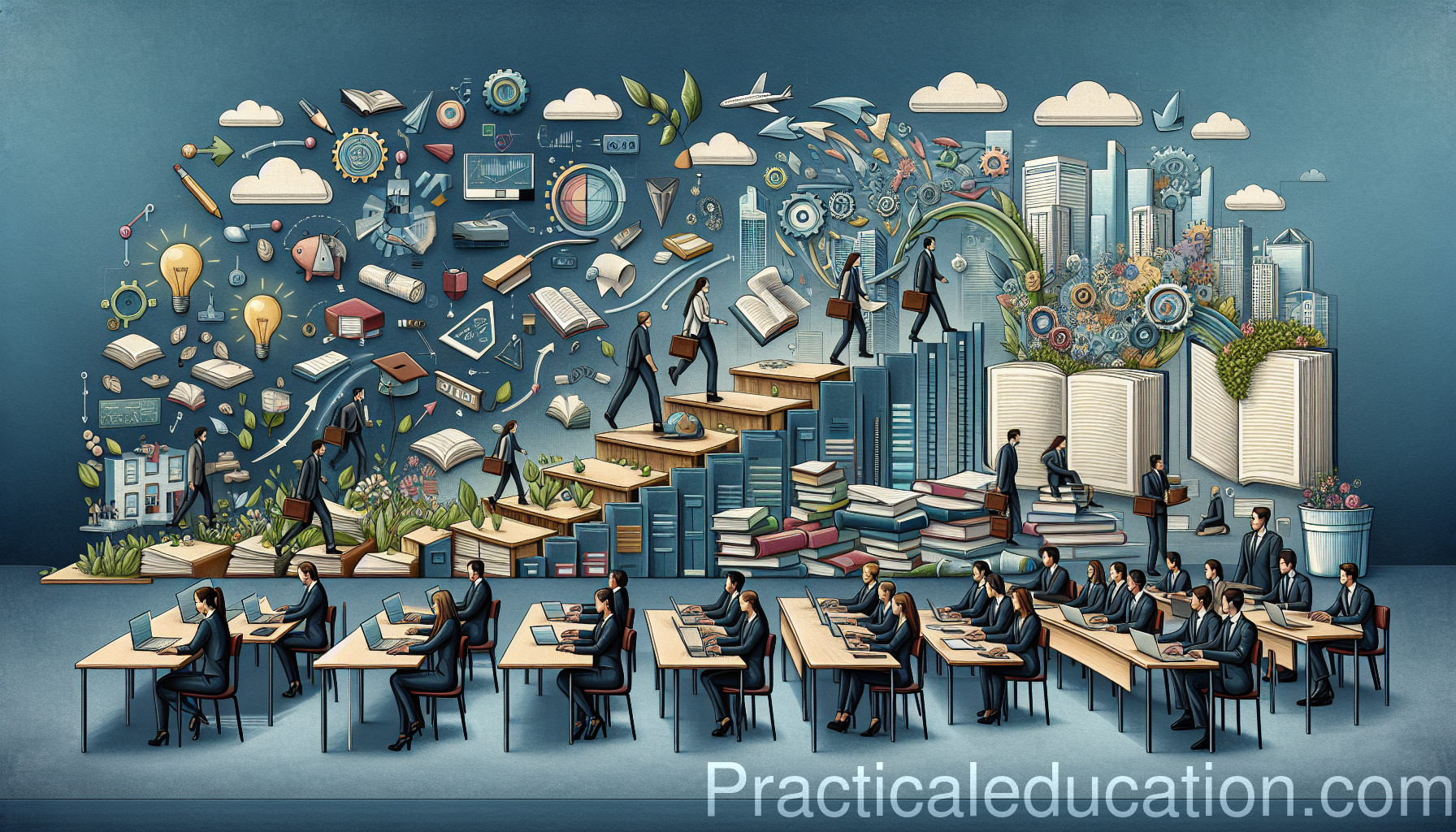
Every subject should serve a real need. Build websites for local businesses in coding class. Run marketing campaigns for nonprofits in media class. Draft contracts, invoices, or reports for actual clients. Let every class deliver value to the real world.
The traditional education model has long been predicated on a one-size-fits-all approach that prioritizes standardized testing and rote memorization over practical application and real-world engagement.This framework produces graduates who are often ill-equipped to meet the demands of modern employment and entrepreneurship, offering merely credentials that seldom translate into usable skills.
To dismantle these outdated structures, the revolutionary concept of utilizing a curriculum structured as client projects must be embraced.
By fundamentally aligning academic subjects with genuine community needs, educational institutions can shift from an insular focus to one of active engagement with the real world, fostering both student competency and local economic growth.
In this proposed model, subjects are no longer segregated into abstract disciplines but are interconnected through service-oriented projects.
For instance, a coding class could involve developing websites for local businesses struggling to establish their digital presence.
This task would not only teach students the technical aspects of coding but also instill a sense of accountability as they work to meet the specific requirements of actual clients.
Similarly, classes centered around media could be restructured to run marketing campaigns for nonprofits.
Such partnerships would enhance students' understanding of audience engagement, strategic planning, and measurable outcomes, all informed by real organizational challenges and stakeholder feedback.
Through drafting contracts, invoices, or reports, students could engage in essential practical tasks that reinforce skills in communication, finance, and project management.
Implementing client projects as standard curriculum requirements has far-reaching implications for educational institutions.
It necessitates a departure from traditional retention-focused pedagogies and towards experiential learning frameworks.
Educators must be equipped not only with disciplinary knowledge but also with skills in project management, stakeholder communication, and business acumen.
They must adopt the role of facilitators who prepare students to navigate complexities in real-world contexts.
Training teachers in collaborative pedagogy and project-based learning methodologies becomes crucial in realizing this vision, as does fostering partnerships with local businesses and nonprofits to ensure a steady flow of engaging, authentic projects for students to tackle.
Furthermore, such experiential, client-based learning aligns with the increasing demand from employers for graduates who can demonstrate practical, actionable skills over mere theoretical knowledge.
Individuals who emerge from this system will be adept problem-solvers, demonstrating an ability to tackle tangible challenges and create practical solutions that can drive profitability and innovation.
In adopting this practical approach, educational institutions will naturally move away from producing graduates merely looking for jobs to cultivating entrepreneurial thinkers who actively generate their own opportunities.
Integrating this model extends its reach beyond individual classrooms or institutions; it suggests a comprehensive redesign of global learning systems.
As more economies become interdependent, educational curriculum should reflect global trends in entrepreneurship, technology, and society.
Students must be exposed not only to local needs but also to global challenges that demand a multifaceted understanding.
For example, projects could include collaborative efforts across borders to develop solutions for climate change, human rights, or public health disparities.
In this way, students not only learn practical skills but also how to work as part of culturally diverse teams, enhancing their adaptability and global marketability.
In reimagining education through client projects, the focus is redirected from memorization to mastery.
Each interaction with a real-world problem enhances the student’s understanding and retention of material while providing a service that emphasizes the importance of contributing to one’s community.
Moreover, this approach fosters a culture of continuous feedback and assessment based on actual performance rather than standardized metrics.
Students learn to iterate upon their work, take feedback seriously, and understand that mastery involves ongoing engagement and refinement, not a singular achievement.
From a financial perspective, educational institutions can also align their resource allocation with these real-world projects.
By utilizing existing community needs, schools can minimize operating costs while maximizing student engagement.
This approach creates a sustainable ecosystem where local businesses benefit from student work at reduced costs, while schools can demonstrate tangible outcomes of their educational efforts.
While this may require initial investments in the infrastructure and partnerships necessary to launch such programs, the long-term benefits of a workforce that is ready to meet both local and global challenges will far outweigh the costs.
This shift towards practical, project-driven learning not only enhances student ownership over their education but empowers them to take control of their future careers.
Students will leave these programs with portfolios showcasing their work, providing evidence of their skills and real-world experience to prospective employers or investors.
In this paradigm, education transforms from a means of obtaining credentials into a robust platform for career readiness and entrepreneurial activity.
Ultimately, embracing a curriculum structured around client projects compelsus to rethink the very purpose of education.
Rather than serving merely as a conduit for individual advancement, education must become a collaborative process that positively impacts all involved.
Such a transformation creates an environment where learning is inextricably linked to real-world needs, establishing a generation capable of driving value and innovation in diverse contexts.
Educational institutions must lead this charge, not just in a reactive manner, but as proactive agents of change, aligning their objectives with the demands of a rapidly evolving economy and society.
In conclusion, the future of education lies in its ability to deliver practical, real-world learning experiences that prepare students for lives of income and ownership.
As Eric Bach insightfully states, “Real learning begins where memorization ends.” To bring this vision to fruition, we must reconfigure our educational paradigms to serve the pressing needs of our communities and the global landscape, fostering a generation of empowered, capable individuals ready to take on the complexities of the modern world.