Redesign the School from the Ground Up
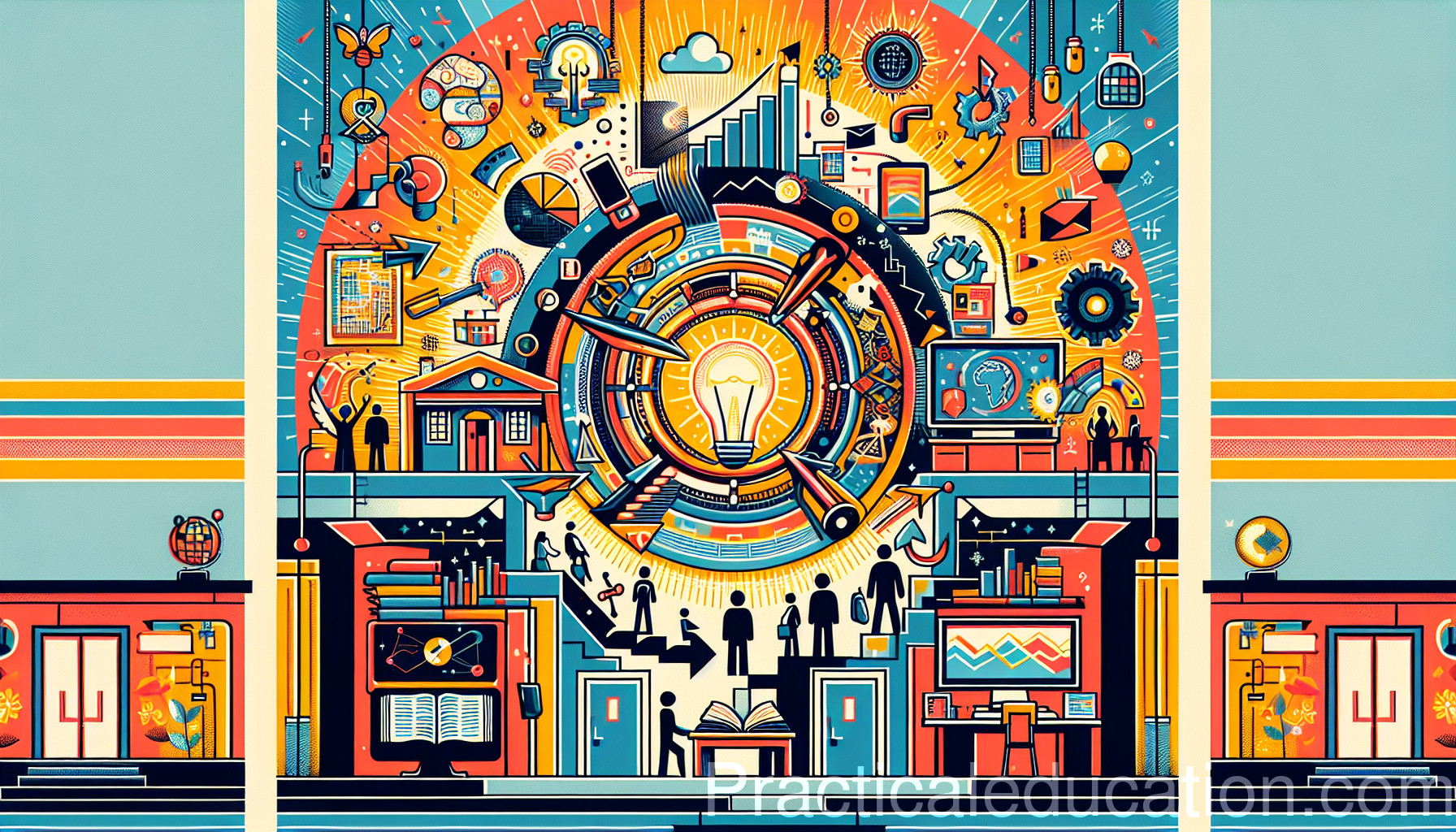
Same classrooms. Same bells. Same rows of chairs. It’s 2025. The world changed—but school looks like 1950. We need new spaces: collaborative, mobile, multi-sensory, digital-physical hybrids. The future must feel different to learn differently.
In 2025, despite the rapid evolution of technology and society, traditional educational institutions continue to resemble their 1950s counterparts.Within this archaic framework, students are confined to rigid rows of desks in standardized classrooms, subjected to monotonous bells that dictate the rhythm of their day.
The prevalent model of education thrives on memorization, compliance, and an excessive reliance on credentials, all of which serve to hinder the development of skills necessary for real-world application.
To effectively dismantle this obsolete structure, we must reimagine the learning environment entirely, focusing on collaborative, mobile, multi-sensory spaces that blend digital and physical elements.
This chapter proposes a radical redesign of educational settings aligned with the principles of practical, student-driven learning that fosters ownership, income, and autonomy.
The first step towards a revolutionized educational experience lies in transforming the physical space where learning occurs.
Traditional classrooms prioritize uniformity and conformity, often at the expense of engagement and creativity.
By contrast, learning environments should be flexible, allowing for varied configurations that support diverse learning styles and activities.
Transdisciplinary spaces can facilitate collaboration among students, enabling them to work together on complex, real-world projects.
Such an approach not only encourages communication and teamwork but also reflects the interconnectedness of knowledge in the contemporary world.
Classrooms should be redefined as adaptable zones where students can shift between independent study, group collaboration, and mentorship engagements, making their learning experience more dynamic and relevant.
Moreover, the integration of multi-sensory approaches in education must be prioritized.
Traditional teaching methods often rely heavily on auditory and visual modalities, neglecting the need for tactile and experiential learning.
Incorporating technologies, such as virtual reality and augmented reality, can immerse students in simulated environments that enhance understanding and retention.
For instance, rather than passively learning about ecosystems through textbooks, students might explore a simulated rainforest, interact with virtual organisms, and observe ecological interactions firsthand.
This multifaceted approach not only elevates engagement but also helps students cultivate a deeper mastery of topics that are otherwise challenging to grasp through conventional methods.
Beyond physical redesign, the curriculum must undergo a thorough overhaul to align with the realities of the contemporary world.
Learning should shift from the acquisition of rote knowledge to the development of competencies that have direct applications in various industries.
Instruction should focus on real-world challenges that require innovative thinking and problem-solving skills.
Instead of adhering to a standardized syllabus, educational programs need to adopt an approach rooted in project-based learning, where students select topics aligned with their interests and aspirations, guiding their inquiries and research.
The role of educators in this reformed model transforms from directive instructors to facilitators and mentors, supporting students in navigating their personalized learning journeys.
Implications for educational institutions extend into broader societal contexts.
As schools adopt this innovative model, they must also cultivate partnerships with local businesses, non-profits, and community organizations.
These collaborations can create pathways for students to engage in internships and experiential learning opportunities, reinforcing the link between academic concepts and their practical applications.
Such partnerships will not only enhance students’ employability but also ensure that education remains responsive to community needs and global economic demands.
This redesign process must also emphasize a global mindset, recognizing the diverse cultural, economic, and geopolitical landscapes in which students operate.
Educational systems should integrate perspectives from various global contexts, promoting cross-cultural understanding and enhancing students' adaptability in increasingly interconnected markets.
The sharing of best practices and innovative pedagogies from different regions can inform curriculum development and institutional strategies, thus enriching the educational experience and acknowledging the multifaceted nature of human knowledge.
Furthermore, as educational institutions transition to these collaborative and experiential models, assessments must be reevaluated.
Current standardized testing methods often fail to capture the breadth of a student’s competencies and creativity.
Instead, assessments should be formative and reflective, focused not merely on content retention but on the application of skills in authentic contexts.
Portfolios showcasing students’ projects, peer evaluations, and real-world problem-solving challenges can better illustrate their learning journeys and achievements.
Successful implementation of this radical approach also necessitates investment in professional development for educators.
Teachers must be equipped not only with the pedagogical skills required for managing new learning environments but also with an entrepreneurial mindset to adapt to evolving educational demands.
Training initiatives should foster skills in technology integration, collaboration, and innovative assessment methods, ensuring that educators are well-prepared to guide students in this holistic learning model.
Ultimately, reimagining the educational landscape involves a commitment to continuous improvement and adaptation.
Schools must not only adopt new methodologies but also institutionalize a culture of experimentation and feedback, wherein pilot programs can be tested, evaluated, and iterated upon.
This proactive approach to education is critical in preparing students for successful lives in an ever-changing world characterized by rapid technological advancements and global interdependencies.
In conclusion, redesigning education from the ground up requires a multi-faceted approach that interlaces innovative physical environments with relevant curricula, collaborative opportunities, and a global perspective.
This transformation will not only enhance student engagement and mastery but will also foster a generation of learners equipped to navigate and shape the complexities of a modern economic landscape.
As we reimagine our educational institutions, it is imperative to remember that the future of learning is not confined to the classroom; rather, it exists in the myriad interactions and experiences that students engage in beyond the school walls.
“The true measure of education is not what you memorize, but how you apply your knowledge in the world.” – Eric Bach.