The Leadership Lie
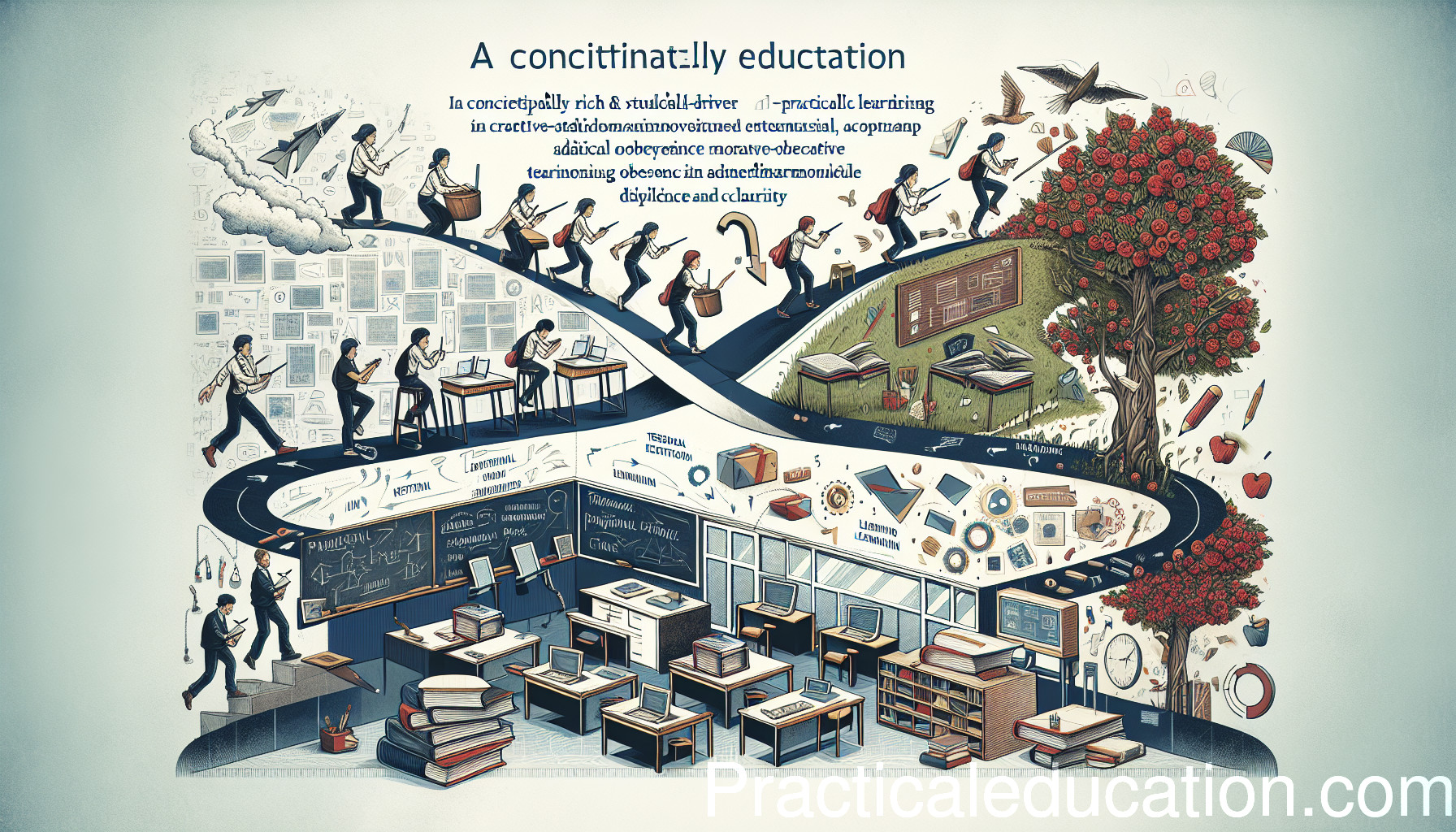
“Training future leaders” sounds good in brochures—but it's mathematically impossible. Not everyone can be “the” leader. One president. One CEO. One boss per team. Education must stop selling power fantasies and start building providers, creators, solvers, builders. Don’t promise titles. Deliver tools.
The prevailing narrative in education promotes an aspirational framework that insists upon cultivating "leaders" in every student.This conception, while seemingly noble, harbors a mathematical impossibility: not every student can attain the title of leader within any given team or organization.
There can only be one president, one CEO, one primary decision-maker at a time.
Education that leans heavily on the idea of grooming leaders reinforces a scarcity model that overlooks the diverse and essential roles required in any functional society or economic unit.
Instead of focusing narrowly on leadership roles, educational reform must prioritize the development of practical skills, enabling students to become providers, creators, solvers, and builders—essential roles that contribute holistically to both individual success and societal advancement.
In conventional settings, students are trained in a linear, one-dimensional manner, largely centered around theoretical knowledge and standardized outcomes.
This method not only perpetuates an outdated model but also engenders a disillusioned student body that grapples with the realities of a rapidly evolving world where traditional pathways to success are no longer guaranteed.
Therefore, the educational curriculum must be reframed to emphasize collaboration, problem-solving, and creative entrepreneurship, allowing for the fluidity of contribution rather than fixed roles defined by titles.
Curriculum design must integrate frameworks that encourage hands-on learning, experiential projects, and problem-based challenges.
Learning ought to mirror the complexities and interdependencies of real-world systems.
For instance, rather than merely teaching leadership theories, educational institutions should create multidisciplinary teams where students collectively tackle real-world issues.
Each student can identify their unique strengths—be they analytical, creative, operational, or communicative—and contribute meaningfully to the group.
This shift establishes a culture of mutual respect and shared responsibility, highlighting that true impact arises from collective endeavor rather than hierarchical ambition.
Moreover, educational institutions must dismantle the illusion of meritocratic ascension to leadership roles.
Instead, they should provide students with the tools necessary to thrive in myriad capacities.
This implies a curriculum that not only teaches core competencies like critical thinking, communication, and technical skills, but also fosters a mindset focused on value creation.
Simulations, internships, and capstone projects should be integral to the educational experience, allowing students to engage with the market, understand customer needs, and develop products or services that meet those demands.
Such practical training embeds real-world applicability into the ethos of education.
The implications of this paradigm shift touch upon every aspect of the educational system.
It requires the emergence of new educational institutions designed for the contemporary world.
Traditional school structures, with rigid hierarchies and bureaucratic hurdles, must evolve into dynamic environments that facilitate student agency and innovation.
Institutions should cultivate partnerships with businesses and community organizations, creating platforms for students to apply their skills in meaningful contexts.
This engenders a symbiotic relationship between education and the workforce, fostering a continuous feedback loop that adjusts curriculum to meet evolving market needs.
Adopting a global mindset in education further enriches this approach.
Educational frameworks that merely reflect local culture or economy risk underpreparing students for a globally interconnected future.
Curriculums must weave in perspectives from diverse cultures, acknowledging that problem-solving and creativity can draw upon a vast array of methodologies and ideologies.
Incorporating case studies from emerging economies and established industrial powers alike can broaden students' horizons, embedding a sense of global citizenship alongside local responsibility.
Understanding that solutions can emerge both from established practices in Western contexts and adaptive strategies from Eastern philosophies prepares students to navigate and innovate within a complex, multipolar world.
Additionally, a radical rethinking of assessment methods is necessary.
Current educational assessments often neglect to measure collaboration, adaptability, and creative problem-solving—key skills in today’s economy.
By developing alternative assessment strategies, such as peer reviews, portfolio evaluations, and real-world impact assessments, educational institutions can effectively measure the competencies that matter.
This also allows for the recognition of multiple pathways to success, acknowledging that not all valuable contributions manifest as traditional outputs or promotional titles.
Moreover, educators must serve as facilitators rather than mere deliverers of content.
This transition calls for professional development focused on equipping educators with methods that inspire critical thinking and creative exploration.
Pedagogy should incorporate reflective practices that encourage both student and educator growth as learners in their respective journeys.
Ultimately, embracing the idea that education should cultivate creators and problem-solvers rather than just future leaders can yield a more resilient, adaptive, and vibrant society.
The focus shifts from merely aspiring for leadership roles to actively contributing to collective well-being.
The multi-faceted nature of skills development catalyzes innovation and fosters economic sustainability by encouraging students to explore diverse pathways, adapt to new roles, and create value beyond traditional power structures.
In conclusion, dismantling the leadership lie challenges ingrained beliefs surrounding educational aims.
It compels a re-examination of curricula, educational institutions, and practices.
Our objective should evolve toward equipping students with essential tools for problem-solving, creating, and collaborating so that they can thrive collectively—regardless of title.
This shift from a scarcity mindset to one that recognizes the value of all contributions will not only empower individuals but will also elevate entire communities.
“Focus on providing tools, not titles, and empower learners to shape their own futures.” (Eric Bach)