From Factories to Foundries: The Final Break
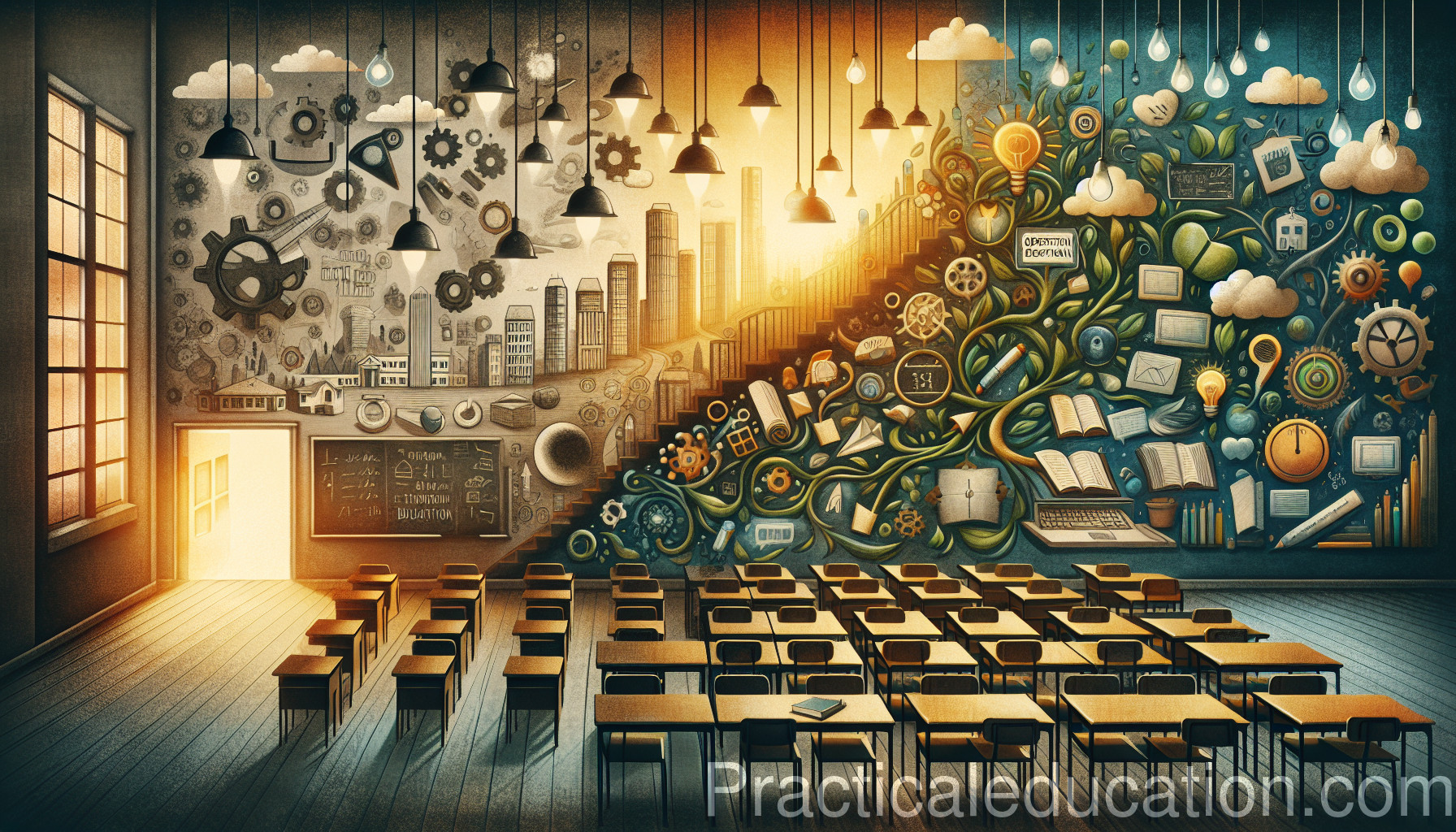
The old education model was a factory—standardized, mechanical, submissive. The new model is a foundry—a place of fire, forging, and form. We don’t produce workers. We craft creators. Practical Education is not an upgrade—it’s a revolution. Burn the old blueprints. Build from zero. Begin again—with courage, creativity, and common sense.
The traditional education model often resembles a factory: mechanistic in its approach, standardized in its output, and inherently submissive in its structure.This paradigm produces graduates who are equipped for compliance rather than innovation, fostering an environment where rote memorization and obedience are valued over intellectual curiosity and practical application.
A transformative paradigm is emerging; it challenges this outdated model and proposes a foundry model of education—an environment characterized by creativity, practical engagement, and real-world application.
This shift is not merely an upgrade; it constitutes a fundamental revolution in how we approach learning and development.
At the heart of this revolution is the recognition that education should be centered around the concept of ownership.
This ownership is dual-faceted: it empowers students to take control of their learning journeys and equips them with the skills, knowledge, and entrepreneurial mindset necessary to navigate the complexities of a global economy.
In a world where economic landscapes are in constant flux and information is at our fingertips, students must be cultivated as creators rather than consumers.
They need to learn to identify problems, devise solutions, and implement these solutions in ways that are both innovative and profitable.
Education that conforms to the factory model produces a workforce that is ill-prepared for the demands of modern society.
In contrast, the foundry model fosters adaptable thinkers who can pivot and respond to the evolving needs of various industries.
Curriculum design plays a crucial role in the effectiveness of this new educational model.
Traditional curricula often prioritize theoretical knowledge over applied skills, neglecting the necessity for experiential learning that simulates real-world conditions.
A practical curriculum must focus on project-based learning, inquiry-based strategies, and interdisciplinary approaches that mirror the complexities of actual work environments.
Students should have the freedom to choose learning projects that resonate with their interests and passions while simultaneously addressing relevant societal or market needs.
This student-driven approach not only fuels engagement but also cultivates critical thinking, collaboration, and problem-solving skills that are essential in today’s dynamic landscape.
Furthermore, educational institutions must evolve to support this paradigm shift effectively.
They should operate not as bureaucratic entities bound by outdated regulations but as collaborative ecosystems that engage students, industry professionals, and the community.
Such institutions could serve as hubs for innovation, where students work alongside mentors from diverse fields, gaining insights from real-world experiences.
The emphasis must be on creating incubators for ideas, providing resources for collaboration, and ensuring students have access to the tools necessary for experimentation and exploration.
Schools need to be less about delivering content and more about facilitating experiences that foster the development of new skills and entrepreneurial capabilities.
Moreover, the global context cannot be overlooked in this discussion.
The challenges and opportunities presented in different cultural, economic, and geopolitical environments call for an education system that is adaptable and context-sensitive.
By integrating a global mindset into the curriculum, students will learn to appreciate diverse perspectives, understand international market dynamics, and develop cross-cultural competencies.
Nonetheless, while the Western approach often emphasizes individualism and entrepreneurial spirit, it must integrate the Eastern emphasis on depth, logic, and adaptability.
The fusion of these methodologies could yield a generation of learners who not only create wealth for themselves but also contribute positively to their communities and the world at large.
This shift towards a foundry model also has implications for assessment.
Traditional forms of evaluation often focus on standardized testing that rewards memorization and regurgitation of information, a practice that perpetuates the factory model.
A new system of assessment should prioritize competency-based evaluations that measure students’ ability to apply knowledge in practical, real-world scenarios.
These assessments could take the form of portfolios, project completions, or presentations, allowing students to demonstrate mastery of skills rather than simple retention of information.
This more holistic view of learning encourages continuous improvement and real-time feedback, fostering a culture of growth rather than competition.
The transition from factory to foundry requires courage from educators, policymakers, and stakeholders.
The entrenched systems of the past offer comfort in familiarity, but they also stifle the creativity and innovation necessary for true progress.
Embracing a new educational paradigm means not only rethinking what is taught but also fundamentally changing how it is taught.
This approach demands a commitment to ongoing reflection, adaptation, and collaboration among all members of the educational community.
Furthermore, the implications reach beyond the classroom.
A society that embraces this foundry model of education will witness a profound shift in its economic landscape.
As individuals grow into creators with ownership over their futures, the potential for new ventures, innovations, and industries will expand.
This transformation has the capacity to reduce unemployment, drive economic growth, and elevate overall societal well-being.
When students learn to navigate their environments as entrepreneurs, they contribute to an economy that is more resilient and capable of adapting to unpredictable changes.
In conclusion, moving from a factory model to a foundry model of education dismantles the myths surrounding traditional schooling.
It shifts the focus from compliance and memorization to creativity and mastery, emphasizing practical, profitable, and autonomous learning experiences.
By embracing this revolution, educational institutions can prepare students not just to participate in the workforce but to shape and lead it.
The future of education lies in empowering students to become proactive creators of their destinies and driving forces for societal advancement.
“True education forges creators, not workers, cultivating ownership and ingenuity in every learner.” (Eric Bach)