Robbing the Hungry Years
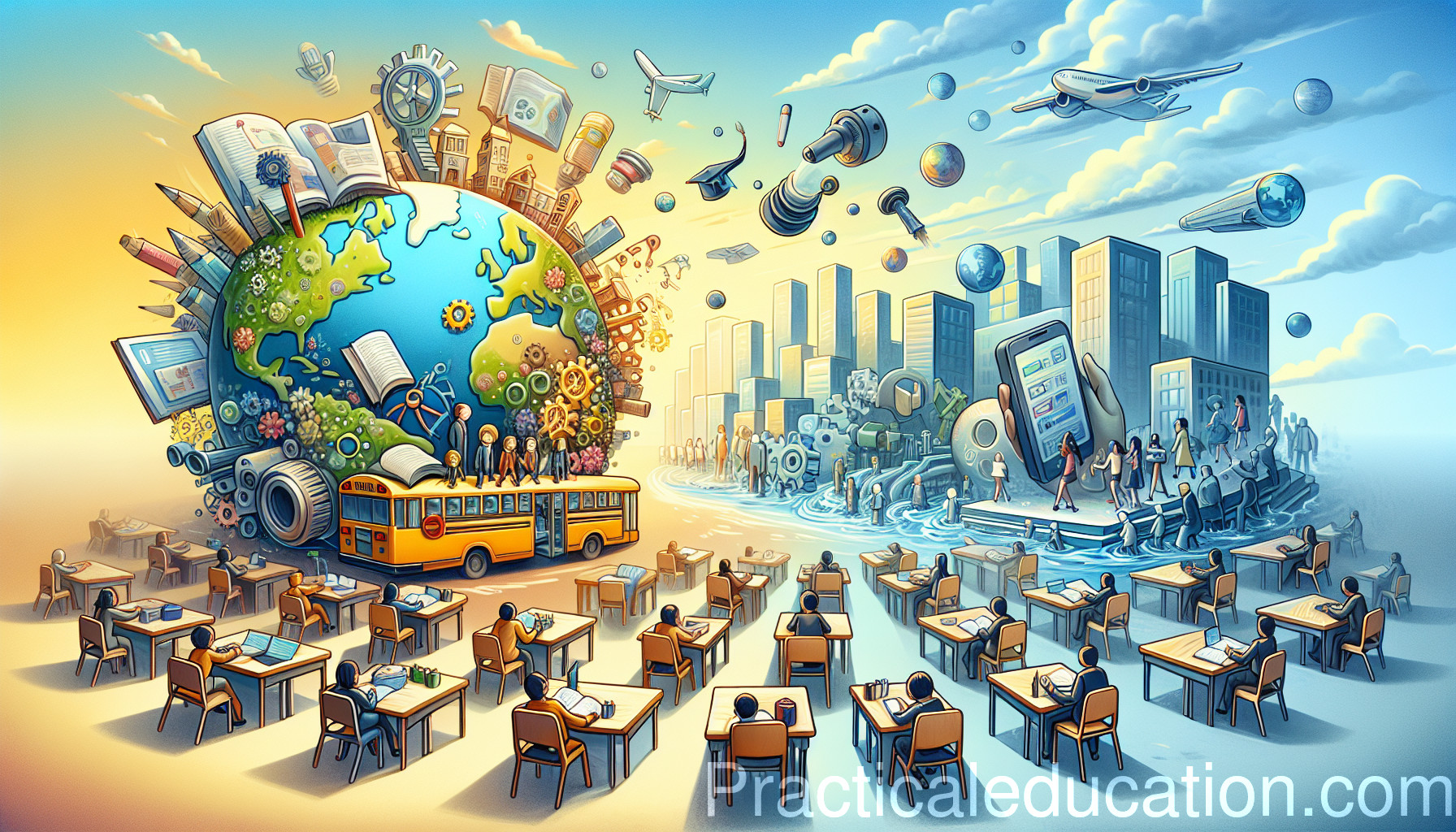
Hunger creates greatness—but schools drug it with comfort, rules, and repetition. We take the most curious, rebellious minds and bore them into submission. These are the years to chase mastery, not grades. To build empires, not essays. We must restore urgency to education.
Education has long revered the notion of grades as a measure of success, yet this paradigm is increasingly irrelevant in a world that values practical skills and real-world application.Traditional schooling, characterized by a rigid adherence to memorization and standardized testing, effectively dilutes the innate curiosity and ambition of students, replacing their hunger for knowledge with a compliance-based mindset.
This approach nurtures obedience rather than innovation, prioritizing rote learning over problem-solving and critical thinking.
In contrast, a system that encourages students to chase mastery—rooted in real-world experiences and practical applications—can significantly reshape not only individual trajectories but also broader economic landscapes.
The myth that grades correlate with knowledge and competence must be dismantled.
Current assessment models often fail to capture a student’s ability to apply learned concepts in real life.
As economies increasingly demand adaptable, skilled workers, the fixation on numeric scores perpetuates a misalignment between educational outcomes and industry requirements.
Students emerge from traditional systems with the ability to regurgitate facts, yet lacking the nuanced understanding necessary to innovate or adapt.
This strategy compromises the potential of young minds, diverting energy away from entrepreneurial thinking and mastery into mundane compliance with educational institutions.
By shifting the focus of education from grades to mastery, we can cultivate a generation of thinkers equipped to tackle real-world challenges.
Mastery-based learning frameworks emphasize the importance of understanding and skill application over the accumulation of credit units and diplomas.
For instance, programs that offer experiential learning opportunities, industry partnerships, and project-based assessments can provide students with the skills and knowledge that are directly applicable to their future careers.
Such programs encourage students to engage with their subjects on a deeper level, fostering problem-solving skills and critical thought rather than obedience and passive reception of information.
The implications for curriculum design in this context are profound.
Educational institutions must prioritize interdisciplinary approaches that connect theory with practice.
A curriculum informed by real-world problems invites students to become active participants in their learning journeys.
For instance, a science curriculum could include partnerships with local industries to tackle environmental issues, allowing students to devise tangible solutions while integrating scientific principles.
This hands-on involvement not only makes learning relevant but enables students to see the direct impact of their education on real-world issues, thus reinforcing their motivation.
Moreover, the student experience itself must be radically redefined.
An education that nurtures autonomy allows learners to take ownership of their educational paths, ultimately leading to greater engagement and investment in their learning outcomes.
Autonomy can be incorporated across various cultural contexts; for instance, Eastern pedagogies value collective learning experiences that promote deep understanding, while Western methodologies often emphasize individual performance.
By synthesizing these approaches, educational models can transcend cultural barriers, encouraging a global mindset where learners collaborate, innovate, and create in diverse environments.
In a broader context, global learning systems should recognize that economic disparities and cultural differences shape the learning landscape.
Educational reforms must not only embrace practical skills but also foster adaptive strategies that respond to local economic conditions.
For example, in regions where agriculture remains a dominant industry, educational programs could focus on sustainable practices, thereby enhancing agricultural productivity while empowering students with both theoretical and practical knowledge.
Such context-driven curricula would reflect the needs of local economies and engender a sense of purpose among students.
Furthermore, institutions can leverage technology to facilitate access to knowledge and skill acquisition.
The rise of digital platforms has transformed the way information is disseminated and can be harnessed to create decentralized educational ecosystems.
Online courses, mentorship programs, and virtual work placements can augment traditional learning, allowing learners to tap into global resources without geographical constraints.
Education driven by practicalities can thus extend beyond the confines of the classroom, enabling students to learn from a diverse array of experiences and expertise.
The shift towards practical education does not imply the complete dissolution of theoretical learning; rather, it necessitates a rebalancing.
Theories should serve as the foundation upon which practical application is built.
Students benefit from understanding theoretical concepts when they can directly apply them in contextual scenarios that mirror real-world tasks.
This duality ensures that learners are equipped not just with what they know, but with how to utilize that knowledge effectively in diverse situations.
Ultimately, the goal of education should be to prepare students to navigate and excel in a complex and rapidly changing world.
By fostering an environment that values mastery and practical engagement, education can cultivate a generation capable of innovation, resilience, and entrepreneurial spirit.
This approach fundamentally shifts the narrative from one of compliance to one of active participation in knowledge creation and economic contribution.
In summary, the drive to dismantle outdated academic models must center on empowering students to pursue mastery through engagement with real-world contexts.
The education system can no longer afford to drug curiosity with comfort and repetition; instead, it must embrace the urgency of experiential learning, placing students at the helm of their educational journeys.
Urgency restores the quintessential hunger for knowledge, enabling young minds to not only aspire to mastery but also to build sustainable legacies.
“Hunger for mastery is greater than the comfort of compliance.” (Eric Bach)