From Subject to Substance
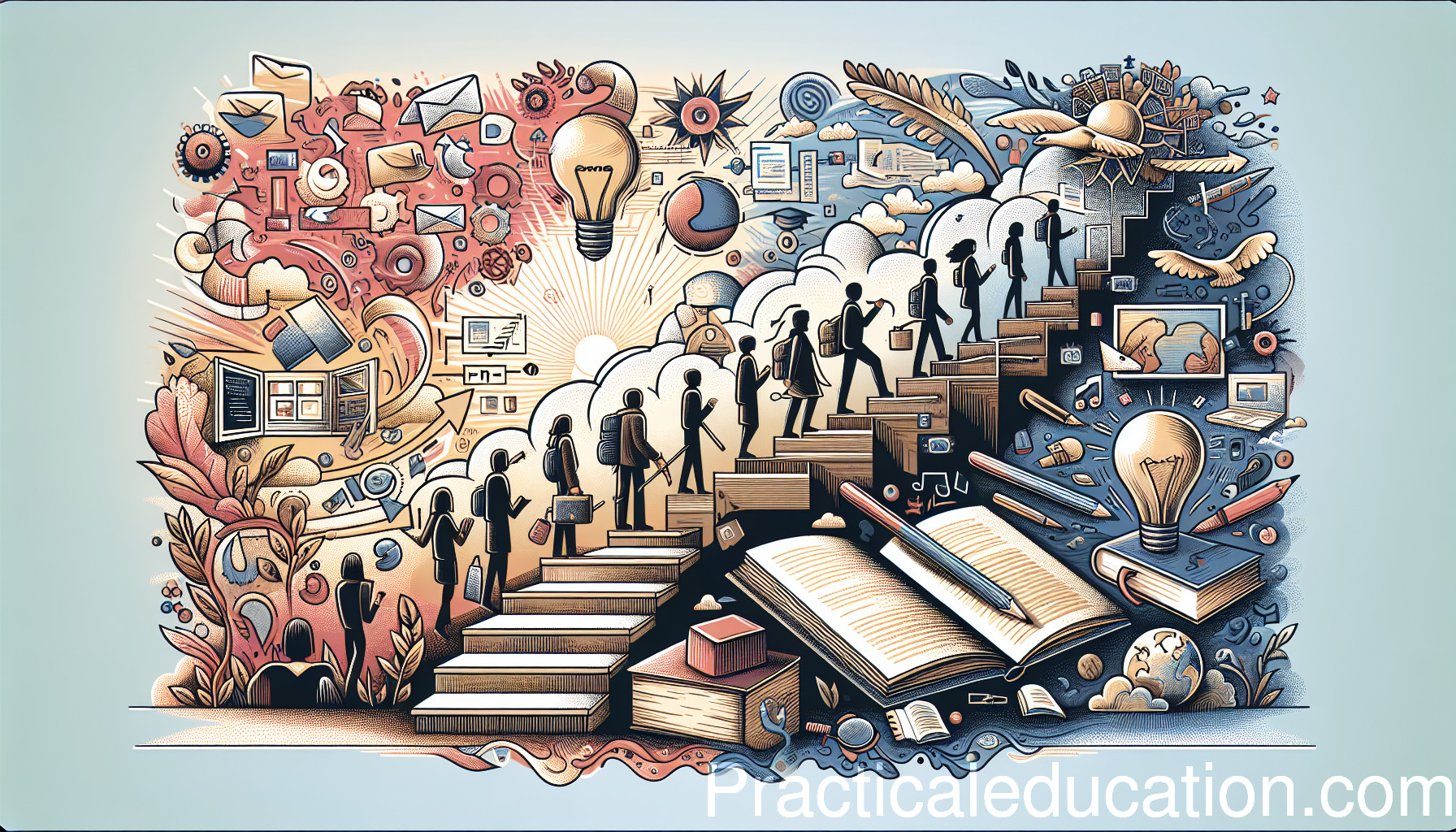
Why divide the world into “subjects” when real life doesn’t work that way? We don’t experience science without language, or politics without history. Every real problem is cross-disciplinary. It’s time for schools to stop teaching isolated topics and start teaching interconnected truth.
The divide of knowledge into discrete “subjects” represents a significant barrier to understanding real-world complexities.Traditional education systems categorize information, treating subjects such as mathematics, science, literature, and history as isolated silos.
This compartmentalization stands in sharp contrast to the way knowledge is applied in real life, where problems and challenges require a synthesis of various disciplines.
The premise of this chapter is that education must pivot from a traditional subject-based model to a cross-disciplinary approach that reflects the interconnectedness of knowledge and prepares students for the realities of the modern world.
The myth that learning is most effective when segmented into distinct subjects needs to be dismantled.
The world presents problems that do not fit neatly into predefined categories.
For example, addressing climate change entails scientific analysis, economic considerations, ethical questions, and political action, without solely relying on one discipline.
By adhering to a subject-centered curriculum, educational institutions inadvertently neglect the integrative thinking required in real-world applications.
Students are often left ill-prepared to navigate the complexities of life beyond school, developing a fragmented understanding rather than a cohesive framework for problem-solving.
In alignment with the mission of practical education, a paradigm shift is necessary to implement interconnected learning experiences that emphasize the synthesis of knowledge across disciplines.
This approach not only improves comprehension but also enhances retention and application of knowledge.
Curriculum design must prioritize themes rather than subjects, encouraging students to engage in projects that draw on multiple disciplines.
For instance, a project on sustainable urban development could incorporate principles from environmental science, business management, and social studies.
Such an integrative model fosters critical thinking, collaboration, and innovation, ensuring that learning is relevant and applicable to real-world contexts.
Educational institutions must embrace this paradigm shift by restructuring their curricula to support interdisciplinary learning.
This change requires rethinking assessment methods, as traditional examinations often incentivize rote memorization within isolated subjects.
Alternative assessment methods should focus on students’ ability to connect ideas across disciplines and apply their learning to tangible problems.
Portfolios, presentations, and collaborative projects would serve as effective measures of achievement, reflecting students’ comprehensive understanding and capacity for integration.
The role of educators must also evolve in this framework.
Traditionally viewed as content deliverers, teachers should become facilitators of knowledge, guiding students in their exploration of interconnected concepts.
This requires educators to be well-versed not only in their subject matter but also in the ways these subjects interact with others.
Professional development for teachers must therefore include training in interdisciplinary instruction and the application of real-world problem-solving techniques.
Schools should also promote collaborative teaching models where educators from different disciplines work together on curriculum design and classroom instruction.
This collaboration can enhance the depth and richness of students' learning experiences.
Implementing cross-disciplinary learning is not merely a domestic consideration; it holds global significance as educational systems worldwide grapple with similar challenges.
An understanding of interconnected knowledge equips students with the skills needed to adapt to diverse cultural, economic, and geopolitical contexts.
For instance, in regions facing economic challenges, students could engage in projects that require them to address issues of entrepreneurship, community development, and environmental sustainability using a mixture of insights from economics, social sciences, and ethics.
This broadens their perspective and enables them to contribute meaningfully to their communities within a globalized framework.
Moreover, this model of education aligns with the growing needs of the 21st-century workforce.
Employers increasingly seek individuals who can think critically and work collaboratively across disciplines.
By transitioning to an educational approach that transcends subject boundaries, institutions can better prepare students for careers that demand agility in thought and action.
Consequently, this shift would not only enhance individual career prospects but also invigorate economies by producing a workforce equipped to innovate and solve complex issues.
In practice, some educational systems have begun to test models that embrace interdisciplinary frameworks.
These pilot programs illustrate that students who engage with content that crosses traditional boundaries exhibit increased motivation and deeper understanding.
Students become more adept at recognizing and addressing complex problems when education mirrors the interconnected nature of the world.
The emphasis on interdisciplinary collaboration and real-world application fosters not only intellectual growth but also practical skills that are critical for future success.
In conclusion, the transition from a subject-based to a substance-based educational approach is not merely preferable, but essential for future generations.
The integration of disciplines cultivates a holistic understanding of knowledge, equipping students to confront real-world complexities and contribute meaningfully to society.
By fostering connections between disparate fields of study, educational institutions position themselves as catalysts for innovation and improvement in both individual lives and global contexts.
The future of education lies in transcending traditional categories in favor of learning that is fluid, interconnected, and deeply relevant.
“Knowledge is not a collection of isolated facts but a tapestry of interconnected truths.” — Eric Bach.