Dropouts by Design
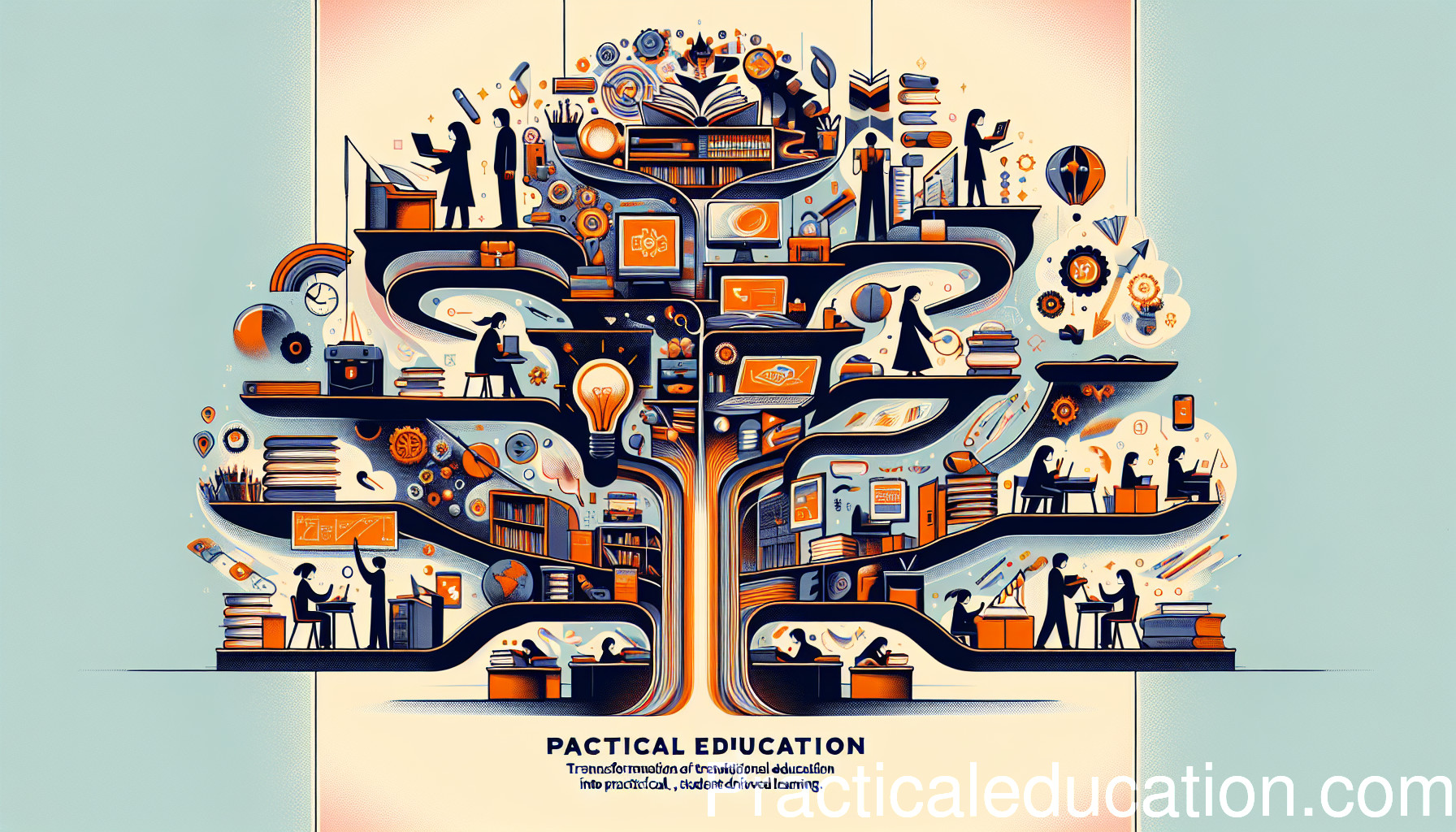
Some students will make so much money during their studies that they’ll choose to leave early. That’s not failure—that’s victory. Let the system celebrate successful dropouts who left because they made it.
In traditional educational paradigms, graduation is often viewed as the ultimate goal — a certification of knowledge, adherence to curriculum frameworks, and the successful completion of a predetermined educational path.However, this perspective fosters a rigid system that inadequately prepares students for the complexities of today’s economy and society.
The emergent reality is that some students will achieve such significant financial success during their educational journey that they will opt to leave formal schooling early.
This is not a failure of the educational system; rather, it is a testament to the effectiveness of a student-driven model that aligns with real-world demands.
The concept of "dropouts by design" challenges conventional wisdom and reframes the narrative surrounding education and success.
This approach advocates for a curriculum that prioritizes practical, real-time applications of skills and knowledge over mere completion of a degree.
To dismantle outdated myths surrounding education, we must recognize that true mastery and competence arise from engaging directly with the real world, not from passive acquisition of information.
Traditional educational institutions often promote compliance and rote memorization; however, a practical education model emphasizes ownership of learning outcomes, entrepreneurial spirit, and the cultivation of valuable skills that students can monetize.
As students pursue their passions and entrepreneurial ventures, they often outpace their peers who remain tethered to traditional academic frameworks.
Incorporating a "dropouts by design" philosophy into curriculum design requires a systemic overhaul.
Educational institutions must transition from a prescriptive, information-centered model to one that fosters autonomy and encourages students to identify marketable skills.
This involves developing curricular frameworks that are not rigidly defined but allow for adaptability based on evolving economic contexts and students’ interests.
Courses should integrate real-world projects that are embedded within local or global business landscapes, thereby blending academic inquiry with practical applications.
This can potentiate skills such as critical thinking, problem-solving, and interdisciplinary synthesis.
Institutions must also establish partnerships with businesses and organizations to create opportunities for students to engage in internships, apprenticeships, and entrepreneurial projects.
These experiences will not only replace outdated theoretical constructs but also provide students with credentials based on demonstrable work and income rather than standardized tests.
When students earn money by applying their skills in real-world settings, they gain confidence, build networks, and develop a deeper understanding of their disciplines.
This means recognizing and celebrating achievements that may not conform to the traditional graduation timeline, thereby reframing what success looks like in the educational landscape.
By adopting this model, the global educational system can incorporate a diverse range of voices and perspectives, building a more inclusive framework for learning.
The ability to learn through practical experience is not uniformly accessible; therefore, educational reform must prioritize equitable access to resources that foster entrepreneurship and innovation across geographically and economically diverse contexts.
Eastern educational practices, which often emphasize holistic development and adaptability, can complement Western entrepreneurial methods by providing depth in critical thinking and cultural competency.
The fusion of these approaches can cultivate a generation of learners who are not only skilled but also culturally informed and adaptable in an increasingly interconnected world.
The implications for the student experience are manifold.
Students must be encouraged to explore their interests and passions actively, even if this leads them away from traditional educational pathways.
With the advent of digital platforms for learning and business, students can now acquire skills that are relevant and market-driven, allowing them the autonomy to pivot as necessary.
They should be introduced to practical financial literacy and entrepreneurial mindsets early in their educational journeys, fostering a culture where earning income from one’s expertise is not only acceptable but celebrated.
The measure of success should pivot from the outdated focus on seat time and credential accumulation towards demonstrable learning outcomes and the practical application of knowledge.
Furthermore, the global learning landscape stands to benefit significantly from this paradigm shift.
Education must adapt to rapid changes in technology and labor markets.
By embedding practices that acknowledge the fluid nature of learning and career pathways, we can create systems that are resilient and responsive.
Emphasizing region-specific projects as well as global perspectives can arm students with the tools to navigate and contribute to the global economy effectively.
As cultural and economic interactions intensify, the ability to innovate, collaborate, and respond dynamically becomes imperative.
Thus, cultivating a class of students who may eventually become 'dropouts by design' not only prepares them for success but also enhances the adaptive capacity of economies at large.
In summary, redefining educational success to celebrate those who achieve substantial financial independence while still pursuing or leaving formal education early aligns with the principles of ownership, autonomy, and mastery.
This model not only dismantles traditional myths about education but also situates learning within the context of real-world relevance.
As we embrace this new educational landscape, we create a future where students transform their learning experiences into both income-generating opportunities and profound life competencies.
“Instead of fearing dropouts, we should celebrate the students whose mastery has made them too successful to stay.” — Eric Bach