Schools That Evolve With Students
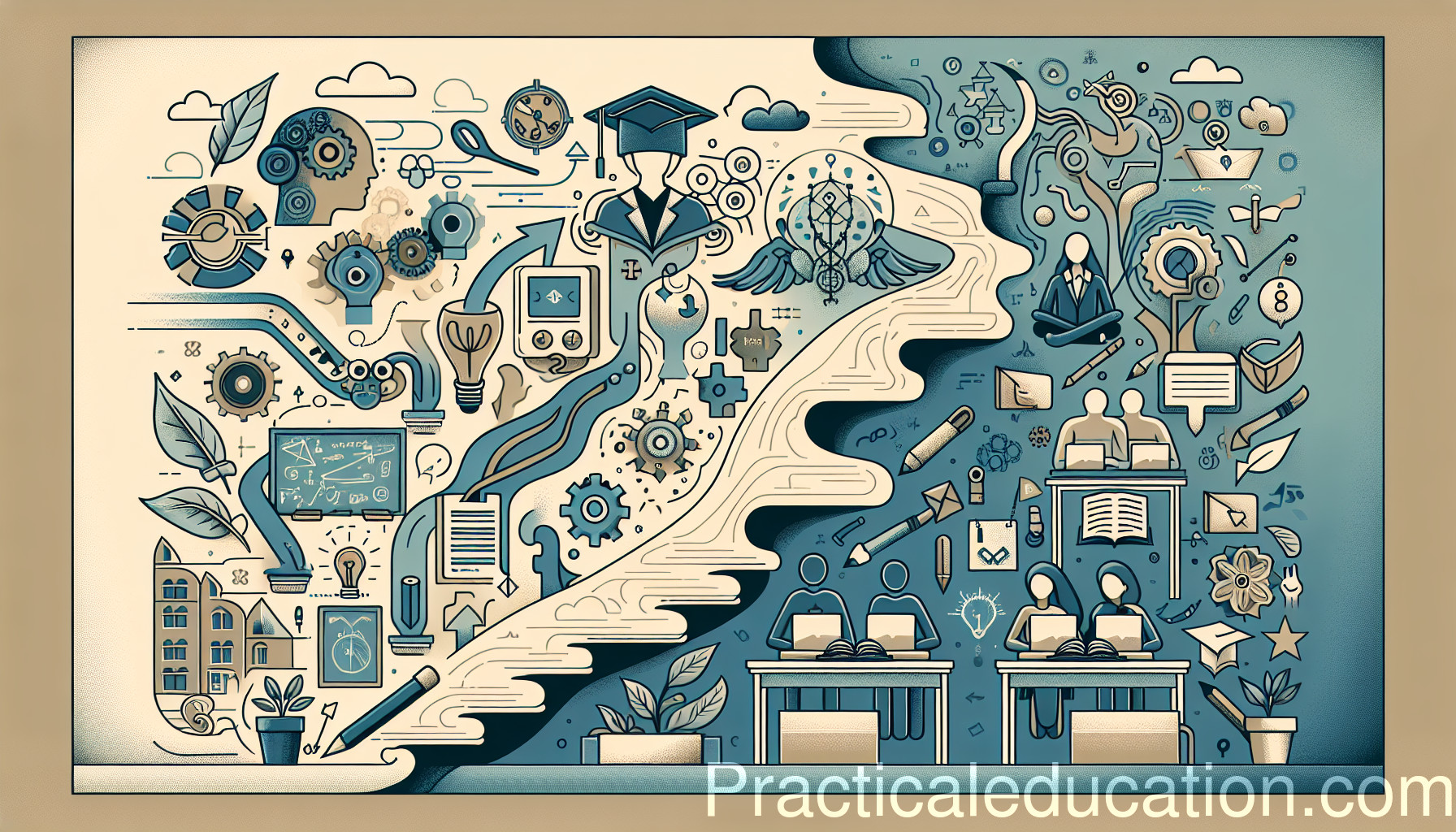
Education shouldn’t end at 18—or be frozen at 14. Offer lifelong, flexible, on-demand, real-world upgrading. Micro-courses. Global mentors. Custom degrees. The future of school is modular, mobile, and mine.
Education is traditionally viewed as a linear journey culminating in a high school diploma, followed by a degree that serves as a gateway to employment.However, this perspective neglects the reality of modern professional environments, which demand continuous learning, adaptability, and the ability to pivot as market needs evolve.
This chapter argues for an education model that evolves with students, advocating for lifelong, flexible, and real-world-oriented learning.
The concept of modular, mobile, and personalized education dismantles the myths of static learning and highlights the necessity of integrating ongoing skill development with real-world applications.
The conventional educational paradigm is predicated on the belief that knowledge acquisition is best achieved through formal, structured environments that prioritize memorization and obedience.
Such an approach undervalues the importance of practical experience in favor of theoretical learning.
In a world where industries are rapidly transforming due to technological advancements and geopolitical shifts, the rigidity of traditional education systems is increasingly misaligned with the demands of the workforce.
To address this, education must not only accommodate but also encourage continual skill acquisition beyond the confines of early adulthood.
The historical segregation of learning phases—primary, secondary, tertiary—imposes an artificial limitation on students, confining them within a predetermined timeline.
A modular education system allows for flexible entry and exit points, enabling learners to curate their educational pathways based on personal and professional needs.
Curriculum design must shift from a uniform syllabus to a framework that is adaptive and modular.
Micro-courses focusing on specific skill sets or competencies, aligned with current market demands, can facilitate rapid learning opportunities.
This agile approach offers students the ability to engage with subjects or skills relevant to their immediate career goals, allowing them to enhance their expertise in a practical manner.
For instance, an individual may choose to master data analytics while simultaneously pursuing a micro-course in digital marketing, each tailored to support varying aspects of their career trajectory.
The function of educational institutions would then transition from gatekeepers of knowledge to facilitators of personalized learning experiences.
The implications for educational institutions are significant.
They must reinvent themselves as learning ecosystems that encourage experimentation and foster collaboration.
Traditional classrooms should be replaced with flexible learning environments that promote interaction, practical engagement, and real-world problem solving.
The strategic integration of technology can enhance these approaches, making learning accessible anytime and anywhere.
Platforms that deliver customized content can provide students with the resources necessary to learn at their own pace while also utilizing global networks and mentors.
These mentors could be industry professionals from diverse backgrounds, offering insights that not only inform but also inspire students to innovate within their respective fields.
Furthermore, this reformed educational model should reflect global perspectives.
While Western-driven frameworks often emphasize entrepreneurial execution, Eastern philosophies can contribute depth through logic and cultural adaptability.
By incorporating diverse methodologies and worldviews, students can cultivate a holistic understanding of global markets and cultural competencies, which are essential in today’s interconnected economy.
Understanding both local contexts and global trends equips students to navigate pathways that are not just profitable but also socially responsible, promoting a balance between economic gain and ethical considerations.
Education in this new light is about empowerment, fostering autonomy and ownership over one’s learning journey.
As students curate their own courses and pathways, they gain agency in their educational experiences, resulting in deeper engagement and commitment.
This autonomy translates into confidence in their skillsets as they prepare to enter or transition within the workforce.
Investing in their education is closely linked to their ability to generate income, as they are equipped with relevant and applicable skills that meet the evolving demands of employers.
Addressing the socioeconomic disparities prevalent in access to education is also paramount in advocating for this new model.
Lifelong learning frameworks can bridge gaps in educational access, particularly for marginalized communities.
By offering low-cost, easily accessible online courses and resources, education can become democratized, permitting individuals from various backgrounds to seek knowledge and opportunities.
This inclusivity not only fosters personal development but also contributes to broader societal progress by cultivating a diverse workforce equipped to tackle complex global challenges.
Moreover, this new educational paradigm must embrace the notion that learning does not culminate on a set date; it is an ongoing process that evolves with one’s career and personal development.
Professional fields increasingly require candidates to demonstrate adaptability and lifelong learning capabilities.
Employability is no longer confined to having completed a singular degree; rather, it is the continuous accumulation of knowledge and skills that empowers individuals to respond effectively to changing job markets.
The inevitability of furthering education beyond the age of eighteen should be standard, supported by institutions that prioritize the lifelong learner.
In conclusion, this chapter advocates for a radical overhaul of the existing educational model.
An education system that evolves with students, offering lifelong, flexible, and real-world-based learning opportunities, is imperative for fostering autonomy, income generation, and mastery in an ever-changing global landscape.
To prepare effectively for a dynamic economic future, educational institutions must adopt a modular and personalized framework, positioning themselves not just as centers of knowledge but as catalysts for individual and collective success.
“Education must not be a rite of passage; it should be a lifelong journey towards mastery and autonomy in a world that evolves with us.” (Eric Bach)