Don’t Blame the Teachers—They’re Prisoners Too
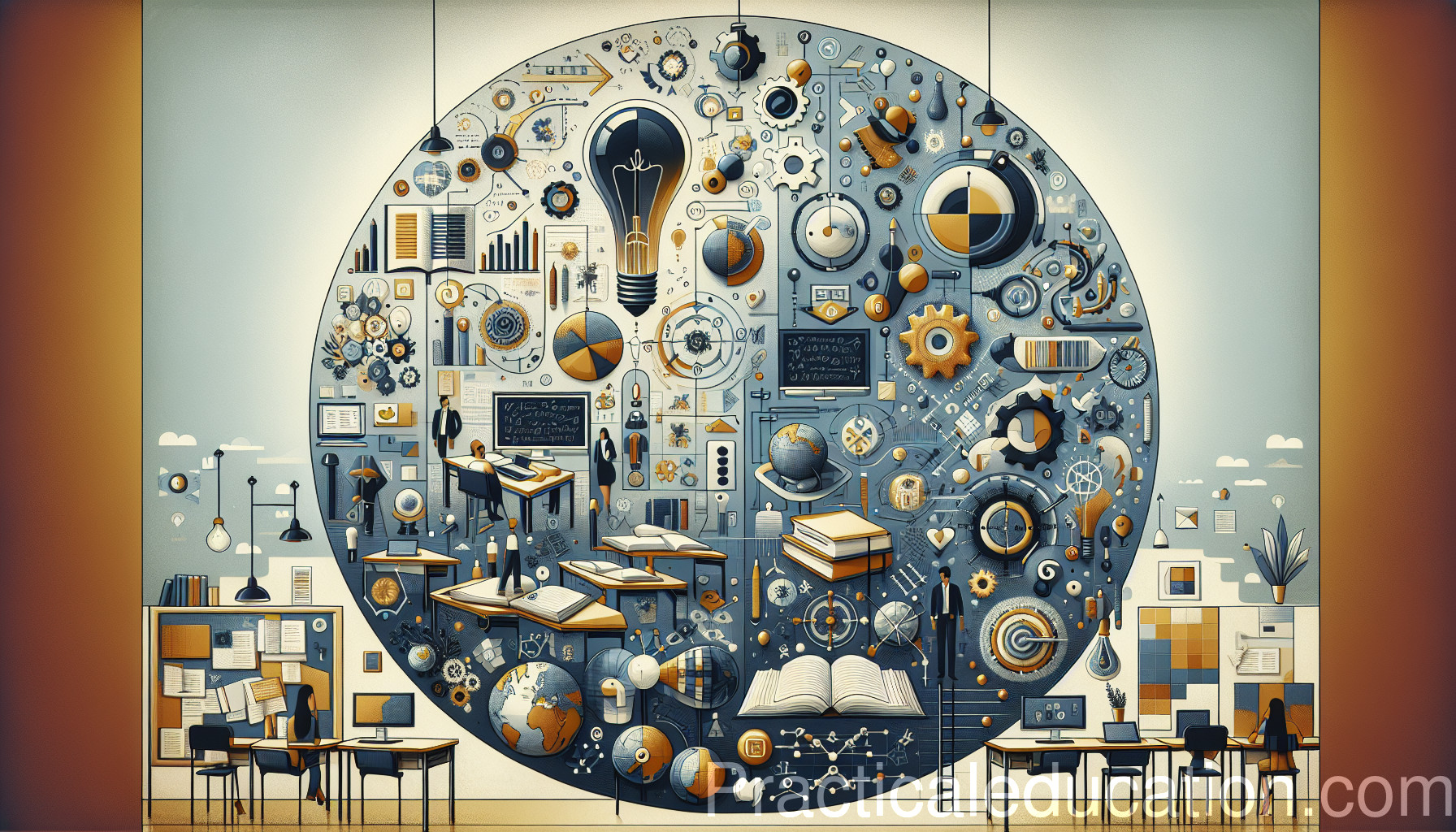
The problem isn't the people—it’s the prison. Teachers are often the most passionate, brilliant minds trapped in the most limiting cages. They’re forced to obey rigid syllabi, chase meaningless grades, and discipline creativity instead of nurturing it. We don’t need to replace them—we need to release them. A revolution that doesn’t free teachers will never free students.
In the discussion surrounding education reform, a pervasive myth pervades the narrative: that the individuals occupying the roles of teachers are the primary source of dysfunction within the educational system.This perspective not only diminishes the valuable contributions of passionate educators but also obscures the more substantial systemic issues that constrict the potential of both teachers and students alike.
The reality is that teachers operate within a framework that hinders innovation and restricts rich educational experiences.
Therefore, the challenge does not lie solely in reforming teaching methods but in dismantling the prison-like structures of traditional education.
The traditional education model is predicated on compliance, standardization, and an outdated reliance on memorization as the primary mode of learning.
This model fails to recognize that real-world mastery is inherently experiential, not rote.
It is essential to shift the focus from a system that prioritizes obedience to one that fosters autonomy and critical thinking.
A curriculum designed with practical applications at its core would stimulate student engagement and deeper understanding while also respecting and enhancing the expertise of educators.
This approach commits to a continuous cycle of engagement, reflection, and application, empowering students to take ownership of their learning journey.
By doing so, we challenge the normative views that have governed educational methodologies for decades.
One might argue that teachers are to blame for perpetuating outdated methodologies, yet this argument is fundamentally flawed.
Educators are often incentivized to conform to rigid syllabi and standardized testing, which prioritize quantifiable outputs over qualitative growth.
This creates a paradox: those who enter the profession driven by passion and a desire to inspire are, in many respects, stripped of the very agency that would allow them to fulfill that purpose.
The systemic constraints—such as curricular restrictions, testing pressures, and administrative oversight—serve only to stifle creativity and innovation within the classroom.
The necessity for reform extends beyond teaching practices; it encompasses the entire educational environment that constrains those practices.
To initiate systemic change, the focus should shift to cultivating educational frameworks that prioritize real-world learning over mere academic performance.
This requires a fundamental reevaluation of what constitutes knowledge in the modern economy.
Knowledge must intertwine with skills relevant to actual market demands, thereby fostering an educational experience that is rewarding for both students and teachers.
A reformed curriculum would integrate project-based learning, interdisciplinary approaches, and community engagement, aligning student endeavors with local and global contexts.
These changes must emphasize instance-based learning where students can directly apply knowledge to real-world situations, enhancing both relevance and retention.
This movement towards practical education cannot be confined to Western paradigms.
The integration of Eastern philosophical perspectives on education—valuing depth, logic, and adaptability—can provide a complementary framework that redefines the notion of what a successful learner looks like in a globalized world.
By blending Western entrepreneurial spirit, which champions initiative and innovation, with Eastern educational philosophies that stress holistic insights and collective contributions, we develop a curriculum reflective of diverse cultural, economic, and geopolitical contexts.
This ensures that students from various backgrounds can address their own communities’ challenges while gaining transferable skills that will empower them in an interconnected world.
Institutions of higher learning, therefore, must align their objectives not merely to produce graduates but to foster lifelong learners equipped with the ability to navigate complex societal landscapes.
This paradigm shift necessitates collaboration between educators, administrators, policymakers, and industry leaders.
By establishing frameworks that celebrate and incentivize innovation among educators, institutions directly benefit from their teachers’ collective expertise while simultaneously enhancing student outcomes.
Professional development programs should be restructured to provide teachers with the resources to explore and implement cutting-edge practices, encouraging them to break free from the confines of outdated teaching strategies.
Moreover, educational institutions must embrace technological advancements as tools for enhancing learning, not simply as ways to reduce costs or monitor performance.
Digital literacy is essential; however, it should include cultivating analytical and creative problem-solving skills.
Schools that prioritize technology in a meaningful way can demystify complex concepts and allow for experimentation and collaboration among students, drawing on both local and global resources.
Real-time data analysis, virtual simulations, and online collaboration platforms can be integrated into curricula to provide students opportunities to engage in learning that is not only immediate but also applicable and enduring.
Ultimately, the liberation of teachers from the prison of conventional education will catalyze the liberation of students.
Ensuring that educators are free to foster creativity, critical thinking, and autonomy is paramount.
Such a system encourages an organic development of knowledge—one that nurtures curiosity and prepares learners for the unpredictability of a rapidly changing world.
Educational reform is not simply an academic exercise; it is a necessary strategy to equip future generations with the skills and adaptability essential for success.
To encapsulate this transformative vision: “A system that binds educators will inevitably bind learners; true progress lies in releasing the potential of both.” (Eric Bach)