Factories of Fear, Not Freedom
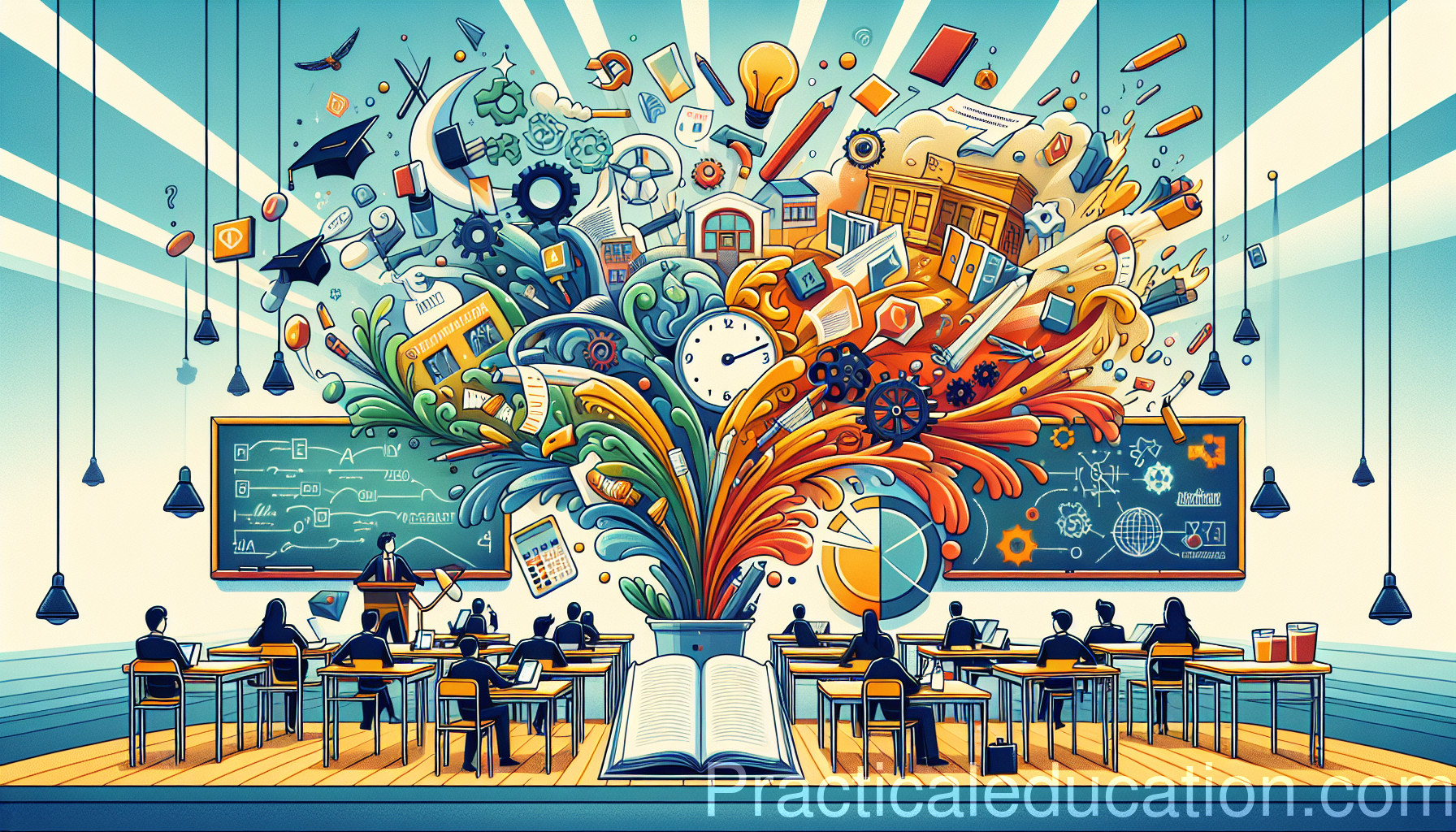
Schools manufacture fear—of failure, of difference, of thinking outside the line. By age 18, most students have unlearned curiosity and internalized doubt. We call it “discipline,” but it’s closer to psychological warfare. What if school was about daring to learn, not fearing to lose? We need liberation, not detention.
Factories of Fear, Not FreedomThe traditional educational system operates predominantly on the tenets of memorization, compliance, and credentialism, methodologies that are no longer applicable to the realities of modern society.
These approaches cultivate an environment rife with fear and anxiety, whereby students learn to prioritize adherence over inquiry and obedience over ownership.
By the time students reach adulthood, they are often stripped of the innate curiosity that fuels innovation and personal growth.
This phenomenon is not merely a byproduct of education; it is an outcome of a system designed to suppress divergent thinking, stifling creativity under the guise of discipline.
The call for a reformed educational framework is not just a desire for improvement—it is a necessity for advancing human potential in a rapidly evolving world.
To dismantle this entrenched model, we must propose a system of education that prioritizes practical, student-driven learning grounded in real-world applicability.
This framework operates on the belief that the ultimate goal of education should be the cultivation of ownership, income, autonomy, and mastery.
The proposition is straightforward: move away from the existing frameworks that condition students to fear failure and embrace a paradigm where risk-taking and learning from mistakes are integral to the educational experience.
This shift will require a curriculum that emphasizes experiential learning, leveraging real-world challenges as critical components of the educational process.
The implications for curriculum design are significant.
Educational institutions must develop programs that are inherently flexible, allowing students to tailor their learning experiences according to their interests and the demands of their environments.
This redesign must encompass project-based learning that encourages collaboration, critical thinking, and entrepreneurship.
Such programs should draw inspiration from both Western methodologies that emphasize innovation and Eastern philosophies that value holistic understanding.
By fostering an environment where students can apply their knowledge to real economic situations, we can harness their entrepreneurial spirit while simultaneously addressing the gaps that exist between academic theory and practical application.
The student experience must also be fundamentally transformed.
It should pivot from a compliance-based model to one that emphasizes self-direction and agency.
Students should not only be the recipients of knowledge but active players in their educational journeys.
This involves creating learning environments where inquiry is promoted, and educators serve as facilitators rather than authoritarian figures.
Mentorship should replace standard lecturing, guiding students through their own projects and challenges, thus fostering an internal drive for success and self-improvement rather than instilling a fear of failure.
Moreover, educational institutions should collaborate with industries to ensure that curricula reflect contemporary market realities and future job opportunities.
This partnership can provide students with internships, apprenticeships, and other experiential learning options that enhance their employability and understanding of vocational contexts.
Such initiatives would enable students to graduate not merely with diplomas, but with significant, demonstrable experience and networks that foster economic independence.
Global learning contexts must also be intentionally designed to reflect the interconnectedness of today’s world.
Educators need to facilitate cross-cultural exchanges and collaborations that broaden students’ perspectives and prepare them for a globalized economy.
By integrating global issues into local curricula, we can cultivate a generation of students who not only understand their immediate environments but also engage with global challenges.
This approach not only increases cultural competency but also promotes a more nuanced understanding of economic and geopolitical systems, better preparing students for the realities they will face beyond the classroom.
The urgency of transitioning to a system that fosters creativity without the restrictions of fear cannot be overstated.
The educational systems that persist with outdated methodologies will ultimately hinder progress and innovation at both individual and collective levels.
Instead, we must cultivate environments where students are empowered to navigate uncertainties and to embrace the complexities of their choices without the paralyzing fear of failure.
Institutions that adopt this philosophy will not only produce competent professionals but citizens who are able to think critically and act responsibly in an increasingly complex global landscape.
In conclusion, the traditional model of education has proven to be insufficient for the needs of today’s learners.
By dismantling the constructs that perpetuate fear and fostering a framework driven by curiosity, inquiry, and autonomy, we can significantly enhance the educational experience.
The path ahead is clear: we must redefine education to be an arena of experimentation and exploration, a place where learning is synonymous with freedom rather than confinement.
“Education should not be about fearing to lose; it should empower students to dare to learn.” (Eric Bach)