Burn the Curriculum, Keep the Curiosity
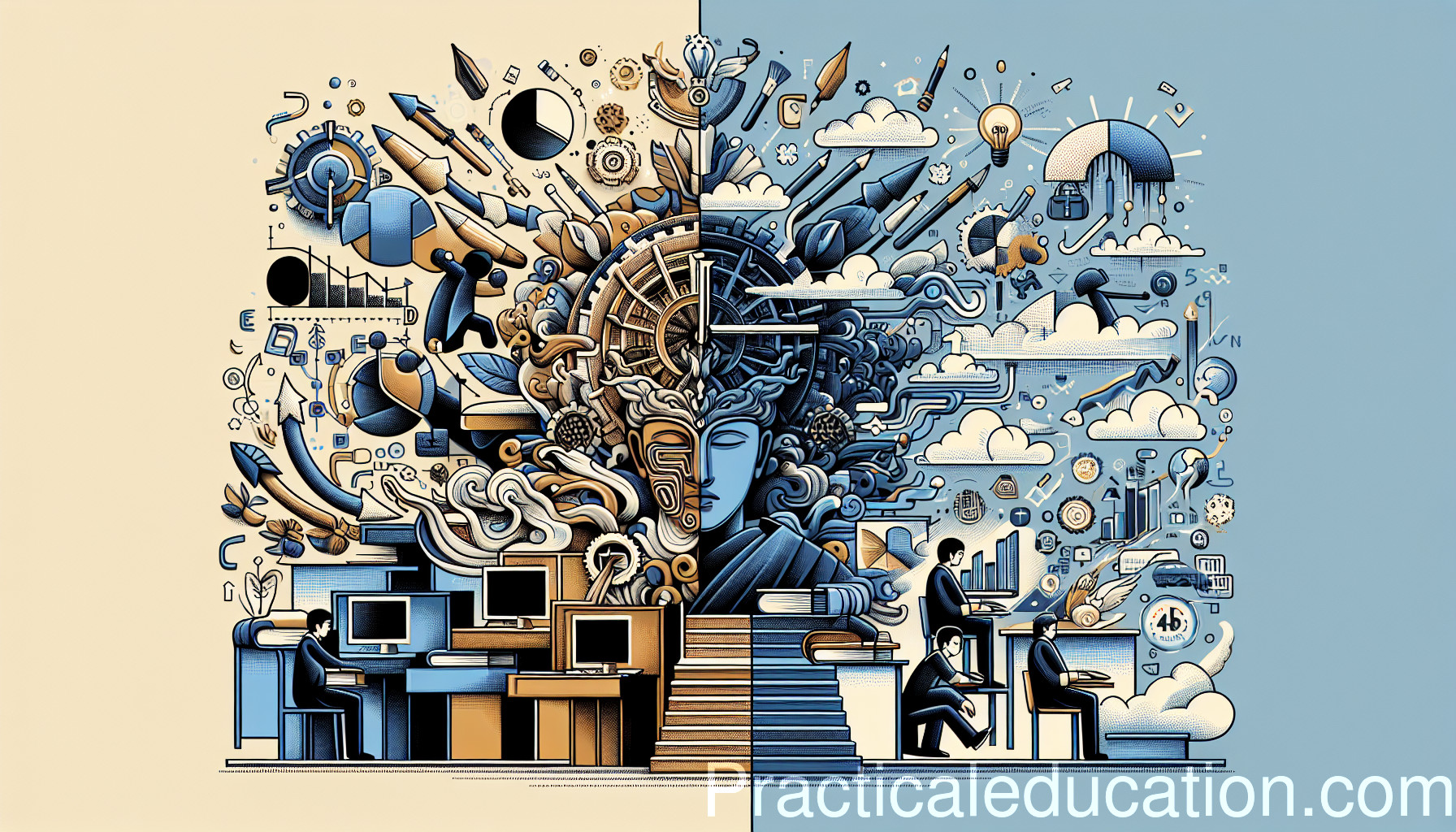
The current curriculum is a museum of irrelevance—cluttered with outdated facts, colonial logic, and lifeless rituals. We must stop polishing 500-year-old cages and instead set students free. The future doesn’t belong to those who memorize—it belongs to those who materialize. Let learning follow curiosity, purpose, and usefulness. If it doesn’t serve your mind, your soul, or your survival—cut it.
The current educational landscape is steeped in a curriculum that often resembles a museum, preserving antiquated knowledge with little relevance to the dynamic needs of contemporary society.This fixation on rote memorization and standardized assessments perpetuates an illusion of learning while stifling curiosity and inhibiting true understanding.
The focus remains entrenched in the past, with educational institutions clinging to outdated content that bears little connection to the realities students will face in their professional and personal lives.
The prevailing model is not only misaligned with the goals of twenty-first-century learners but actively obstructs the development of critical thinking, adaptability, and entrepreneurial skills.
To dismantle this conventional paradigmatic structure, we must prioritize a curiosity-driven educational model that emphasizes real-world applicability and personal agency.
This approach necessitates the abandonment of traditional curricula in favor of frameworks that center on student interests, aspirations, and immediate societal needs.
Instead of attempting to directly transfer a predefined body of knowledge, education should facilitate an exploration of relevant themes that resonate with students’ lived experiences.
Such an educational model allows for the cultivation of skills that foster ownership over one’s learning journey, culminating in income-generating capabilities and greater autonomy in various socio-economic contexts.
The paradigm shift toward a student-driven model requires a rethinking of curriculum design itself.
Traditional subjects and content can clutter educational environments, distancing learners from practical applications.
A radical alteration in curriculum development would view subjects not as isolated domains but as interconnections that students can explore through project-based learning and interdisciplinary ventures.
For instance, a student interested in sustainable agriculture could draw from biology, economics, and environmental science, allowing for an organic synthesis of knowledge that is directly linked to the real world.
This integrated approach ensures that students are not merely passive recipients of information but active participants in their educational experiences.
Educational institutions must also adapt their structural and operational frameworks to support this redefined approach.
This requires breaking down traditional hierarchies and fostering collaborations among educators, industry leaders, and community organizations.
Institutions can leverage online platforms and tools to facilitate real-time engagement with experts who can provide insights into current workplace demands and societal challenges.
By embracing modern technologies and fostering partnerships within local and global communities, education can become a dynamic dialogue rather than a monologue.
This methodological shift empowers students to engage critically with the materials and concepts they encounter, strengthening their confidence and competence in applying knowledge productively.
Simultaneously, the student experience must be reimagined to foster a culture of curiosity and inquiry.
This means cultivating classroom environments that reward exploration, experimentation, and even failure as integral parts of the learning cycle.
Students should be encouraged to pursue their own inquiries, with educators acting as facilitators who guide them toward resources and mentors who can support their learning objectives.
The traditional model’s reliance on standardized assessments must give way to performance-based evaluations, where students demonstrate their acquired skills through tangible projects or contributions to their communities.
Implementing a globally-minded educational framework is crucial to this transformation.
In an interconnected world, education that lacks relevance or adaptability hinders students’ potential to operate effectively across various cultural, economic, and geopolitical landscapes.
By fostering a global perspective, educational programs can emphasize the development of competencies that transcend geographical boundaries, such as critical thinking, cultural literacy, and collaborative problem-solving.
This approach is particularly vital in contexts facing rapid change due to technological advancements and socio-political shifts.
In harmonizing Western ingenuity with Eastern philosophical depth, we can create a balanced educational approach that neither sacrifices creativity for discipline nor dismisses rigor in favor of ease.
The East’s emphasis on holistic development and the West’s thrust toward innovation can forge an educational model that harnesses the strengths of both traditions.
This fusion can manifest in curricula designed to prioritize student well-being alongside academic achievement.
By recognizing the whole learner—mental, emotional, social, and practical—educators can create a space where curiosity thrives, and students feel empowered to pursue their interests while developing skills that meet the demands of a complex world.
The implications of adopting a curiosity-driven approach to education extend beyond individual classrooms.
Educational reformers must engage policymakers, community leaders, and businesses to co-create learning environments that prioritize relevance and adaptability.
Collaboration will be essential to secure resources and support that cultivate innovation across all levels of education.
By redesigning educational institutions and policies to embrace an agenda focused on curiosity and practical learning, we can forge pathways for students to become proactive agents in their learning journeys.
We must challenge the very foundations on which our current systems rest and embrace the practical implications of this inquiry-driven paradigm.
Students, equipped with the ability to learn actively, thrives in environments that prioritize real-world connections and avenues to expand personal and professional horizons.
Educational equity demands that every learner has access to the tools and opportunities necessary to succeed, and a focus on practical, student-driven learning ensures that this equity is not merely an ideal but a tangible reality.
Let us recognize that the future does not belong to those who memorize; it belongs to those who materialize their learning into real-world applications.
To dismantle the myths of traditional education, we must burn the irrelevant curriculum and embrace curiosity as the core principle guiding our educational practices.
Thus, we pave the way for a learning model that is not only responsive to the needs of learners but also vital for societal advancement in an increasingly complex global landscape.
“The future belongs to those who materialize their curiosity into practical solutions.” — Eric Bach