Learning to Stay Small
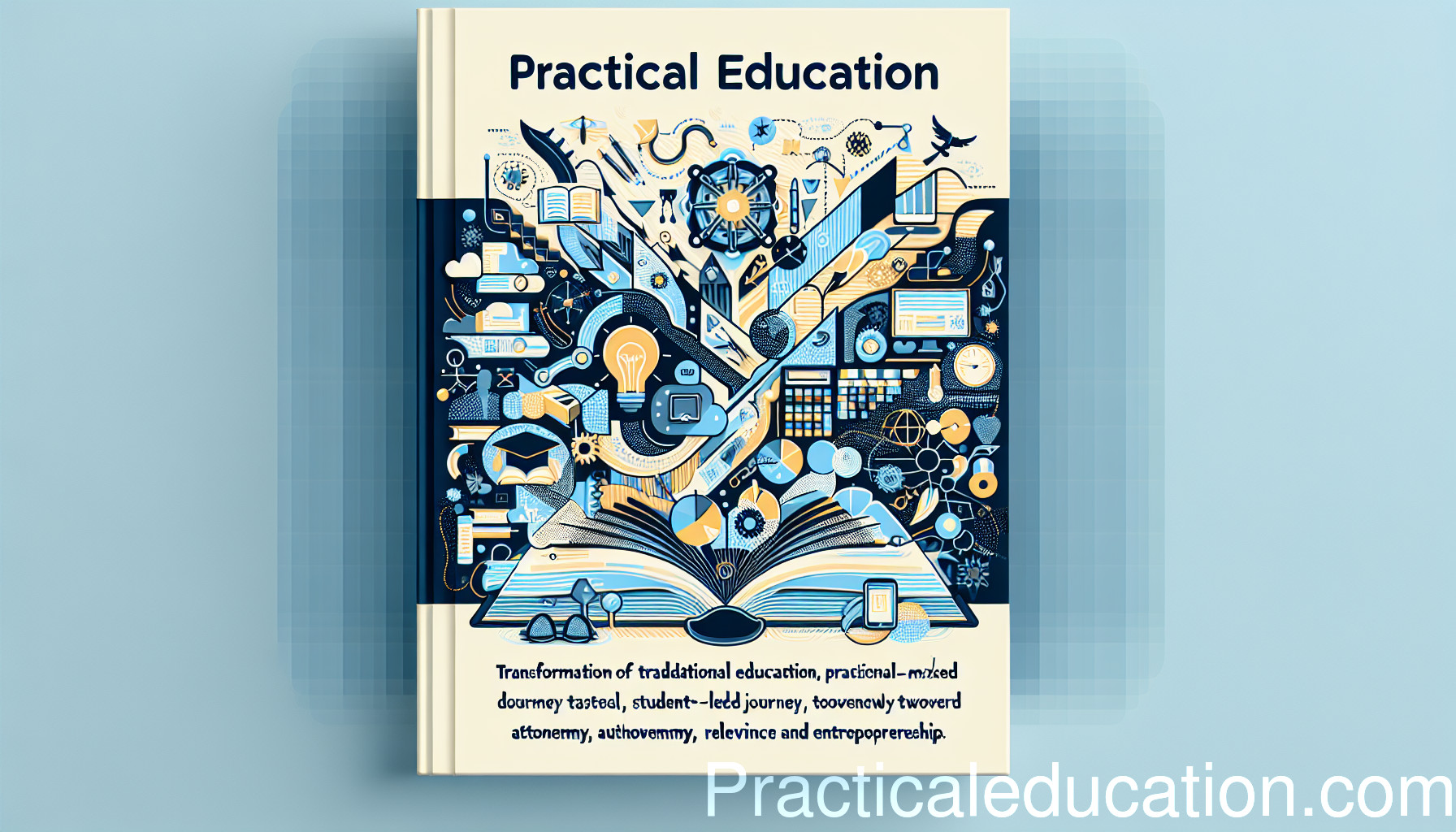
You have an idea? School will shrink it. You have a gift? School will grade it. The system is scared of scale—it loves predictability. But the world is built by wild thinkers. We must train for expansion, not control.
Learning to Stay SmallThe traditional educational model is built on foundational myths that prioritize compliance over creativity, uniformity over individuality, and theoretical knowledge over practical application.
Central to this discussion is the assertion that educational institutions have become risk-averse environments that discourage expansion in favor of safety.
This model has perpetuated a system where critical thinking, entrepreneurship, and innovation are stifled, leaving students poorly prepared for the complexities of the modern world.
The core misconception is that the purpose of education is compliance, rather than cultivation.
By examining and dismantling this perspective, we can envision a model of education that is aligned with the reality of a dynamic global economy, fostering ownership, income potential, and the development of autonomous thinkers.
The prevailing educational paradigm often prioritizes memorization and standardized testing, effectively reducing learning to a formulaic approach that seeks to minimize differences among students.
This model is predicated on the idea that predictability is preferable, both in terms of student performance and institutional outcomes.
However, the world outside the classroom is marked by complexity and uncertainty.
Innovation emerges not within the confines of rote learning but through exploration and experimentation—a process that requires the courage to engage with the unknown.
A radical rethinking of education must pivot away from traditional metrics of success toward an emphasis on practical, student-driven experiences that encourage risk-taking and creative problem-solving.
To cultivate environments where students are empowered to expand their capabilities, educational curricula must be redesigned to reflect real-world applications.
This means integrating project-based learning that requires students to address genuine problems and devise effective solutions.
For instance, rather than engaging with theoretical models that lack immediate applicability, students could engage in community projects that teach them how to navigate complex social challenges while allowing them to experiment with various business models.
These projects could range from launching a social enterprise to developing an innovative product that meets a specific market need.
Such endeavors could facilitate the acquisition of requisite hard and soft skills, including collaboration, critical analysis, financial literacy, and strategic planning, which remain essential in today's economy.
Additionally, educational institutions must redefine their role from authoritative gatekeepers of knowledge to facilitators of student exploration.
This involves moving away from highly structured, teacher-led classrooms toward environments that support self-directed learning pathways.
Schools should serve as incubators for the wild thinkers—those individuals who dare to explore new possibilities rather than conformance.
By employing mentoring systems that connect students with industry professionals, educators can provide insights into real-world practices while fostering a mindset of ambition and autonomy.
Such systems not only bridge the gap between academic knowledge and practical application but also help students to envision potential career paths, instilling an entrepreneurial mindset vital for success in the increasingly competitive global landscape.
The inclusion of diverse perspectives in educational scope is equally imperative.
A global mindset does not merely acknowledge different cultural narratives but actively integrates these insights into curriculum and pedagogical approaches.
For example, a business module could examine case studies from rapidly developing economies, juxtaposing them against Western frameworks to encourage comprehensive understanding.
Integrating both Eastern depth and Western execution allows students to appreciate various problem-solving approaches, enhancing adaptability and creativity—qualities necessary for leaders in a globalized economy.
This kind of education fosters not only interpersonal skills but also cultural competencies, preparing students to navigate multifaceted international environments proficiently.
A critical aspect of restructuring the educational framework involves the assessment model.
Instead of the traditional grading system that emphasizes competition and comparison, alternative metrics that focus on mastery and growth should be developed.
Formative assessments that measure progress through practical application rather than theoretical retention encourage students to take ownership of their learning process.
By emphasizing mastery over demonstration, students are more likely to engage deeply with their subjects, cultivating a genuine understanding that translates to real-world capability.
As we consider the implications of these necessary changes, educational institutions must be willing to adopt a flexible, iterative approach to curriculum design.
There should be less emphasis on predefined objectives that do not adapt to the fast-paced nature of technological and social advancements.
Institutions can experiment with modular courses that allow students to choose their learning paths, reinforcing autonomy in learning while still achieving necessary competencies.
This adaptability encourages a culture of lifelong learning, crucial for navigating the evolving demands of the global workforce.
In conclusion, the outdated academic model that prioritizes uniformity and dictates a singular path of success must be replaced with a framework that emphasizes practical, student-driven learning.
By fostering environments that celebrate individuality, encourage real-world application, and cultivate a global perspective, we can prepare students not only to thrive within the existing structures of society but to challenge and transform them.
Education should not be about shrinking ideas and constraining gifts; it must, instead, be a platform for expansion, exploration, and empowerment, equipping learners to navigate the complexities of the world with confidence and ingenuity.
"Education should not shrink ideas, but expand them; it must foster creativity and ownership for a future of unbounded potential." — Eric Bach