The Myth of the “Smart” Subject
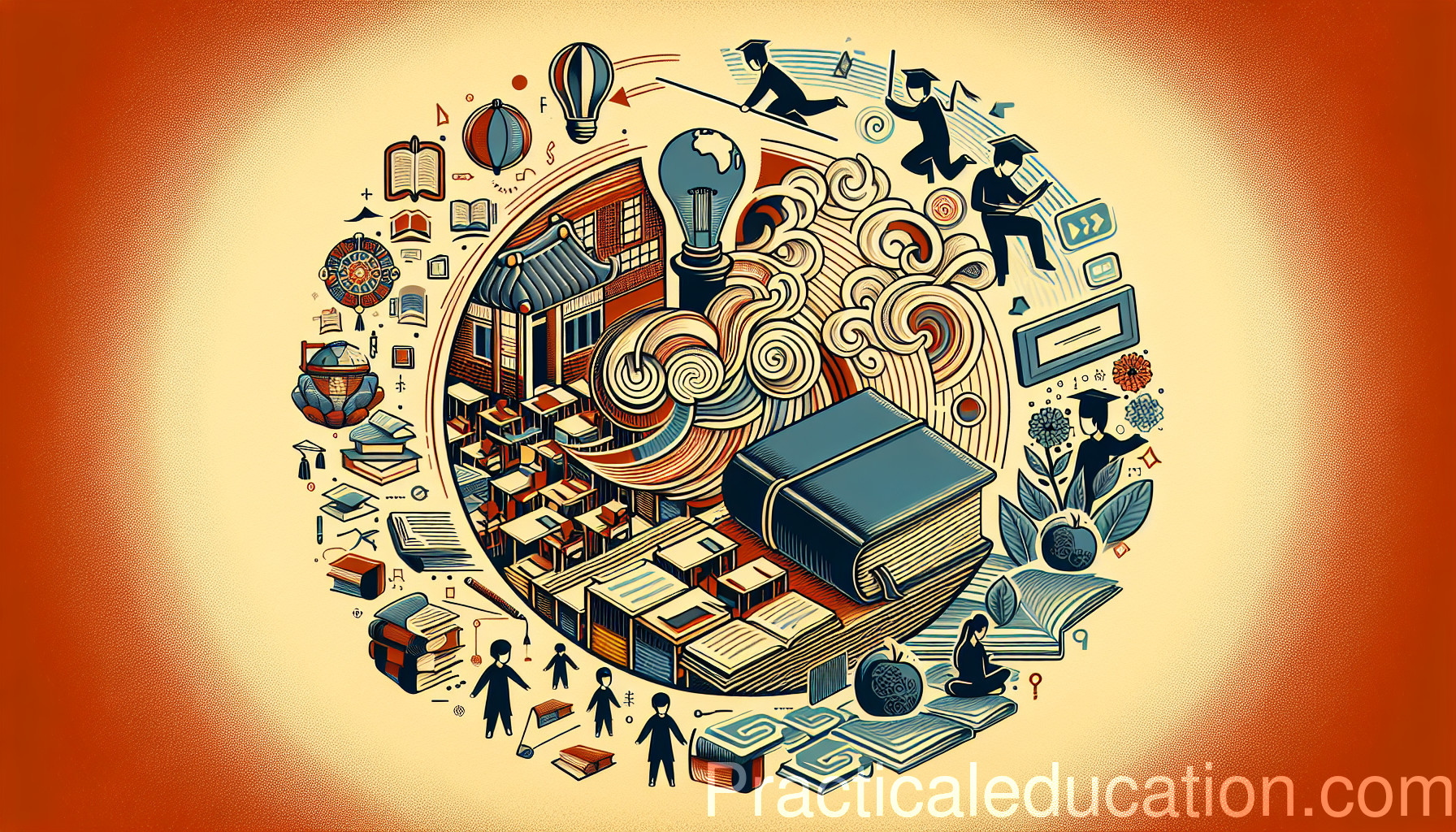
STEM is important—but so is storytelling, ethics, and expression. We've turned some disciplines into gods, and others into jokes. But the world’s greatest solutions lie at their intersection. Math needs meaning. Art needs structure. Fusion is where real intelligence begins.
The Myth of the “Smart” SubjectIn contemporary education, the categorization of disciplines into rigid hierarchies often fuels a misconception of intelligence and value.
The prevailing sentiment that subjects like Science, Technology, Engineering, and Mathematics (STEM) hold intrinsic superiority while the humanities and arts are relegated to secondary status undermines a more holistic approach to learning.
This classification not only distorts the capabilities of students but also stunts the potential of interdisciplinary collaboration, where the most significant advancements in knowledge and society typically arise.
The critical notion here is that such artificial distinctions suppress the realization that true competence arises not from isolated mastery of one domain but from the integration and fusion of multiple fields of study.
STEM subjects, while undeniably crucial in driving technological advancement and economic development, cannot be considered in isolation.
For instance, mathematics without context is merely an abstract exercise, devoid of relevance and applicability.
Conversely, storytelling and the arts bring vibrancy and meaning that can enhance the understanding of complex scientific or mathematical concepts.
When students learn to approach problems from various perspectives—rooted in mathematical logic yet informed by ethical considerations or creative expression—they are positioned to innovate and solve real-world issues more effectively.
The greatest inventions and ideas of our time—such as sustainable technologies or user-centered designs—are often products of robust interdisciplinary cooperation, illustrating the necessity of blurring these rigid boundaries.
Educational institutions must, therefore, begin to dismantle these hierarchical structures within their curriculum design.
Courses should be reimagined to promote interdisciplinary learning experiences, rather than segregated knowledge areas.
For instance, a curriculum incorporating both calculus and creative writing could explore the narrative behind mathematical models, emphasizing the human stories behind scientific discoveries and technological progress.
This fusion not only enriches student understanding but cultivates more discerning thinkers who appreciate the interplay of logic and creativity.
In reconfiguring academic programs, we must also consider the implications for educational institutions beyond mere curriculum adjustments.
Traditional assessment methods, which often prioritize rote memorization and standardized testing, must evolve to match this integrated learning approach.
As educators shift to project-based assessments that evaluate students on their ability to connect diverse ideas and collaborate with peers from various disciplines, they incentivize a deeper engagement with material that is directly relevant to real-world contexts.
This requires administrative buy-in as well as faculty development to ensure that instructors are equipped to guide students through interdisciplinary projects effectively.
Furthermore, the future of education must embrace a global perspective.
The challenges the world faces—climate change, inequity, or health crises—require solutions that are informed by diverse cultural and ethical frameworks.
The merging of Western innovation methodologies with Eastern philosophies of balance and collaborative learning offers a fertile ground for nurturing more adaptable and capable thinkers.
This dual approach cultivates an educational system that emphasizes ownership of the learning experience, where students are not just passive recipients of knowledge, but active participants capable of synthesizing ideas across disciplines and cultures.
By dismantling the notion of "smart" subjects and promoting a curriculum that values fusion over division, future generations of students can develop a more comprehensive understanding of the world.
This model prepares them for an economy increasingly driven by interdisciplinary skill sets and collaborative problem-solving abilities.
Consider, for example, the intersection of renewable energy technologies with local cultural practices in rural areas.
By equipping learners with a skill set that encompasses both technical know-how and an understanding of the social landscape, we enable them to design solutions that are not only innovative but also contextually relevant.
The implications of this educational blueprint extend to personal and professional growth as well.
Students who engage in a curriculum that emphasizes interdisciplinary learning not only acquire knowledge but also develop critical soft skills, such as communication, empathy, and ethical reasoning.
These competencies are vital in fostering an autonomous mindset, empowering individuals to navigate complex problems in an increasingly interconnected world.
Moreover, the entrepreneurial spirit can flourish when students harness insights from varied fields, leading to the creation of new products, services, or initiatives that address pressing societal challenges.
In conclusion, the myth of the “smart” subject must be challenged and actively dismantled within the framework of educational reform.
By advocating for a curriculum that embraces the intersection of diverse disciplines, we cultivate a generation of learners who are not only knowledgeable but also wise, capable of navigating ambiguity and leveraging the interplay of various fields to address the multifaceted problems of society.
The path forward lies not in a singular focus on STEM or any other subset of disciplines, but in recognizing that the future of education thrives on the collaboration of all fields of study, where each contributes to a richer, more nuanced understanding of the world.
As Eric Bach aptly puts it, “Real intelligence lies not in what we know, but in how we connect what we know.”