The Memorization Illusion
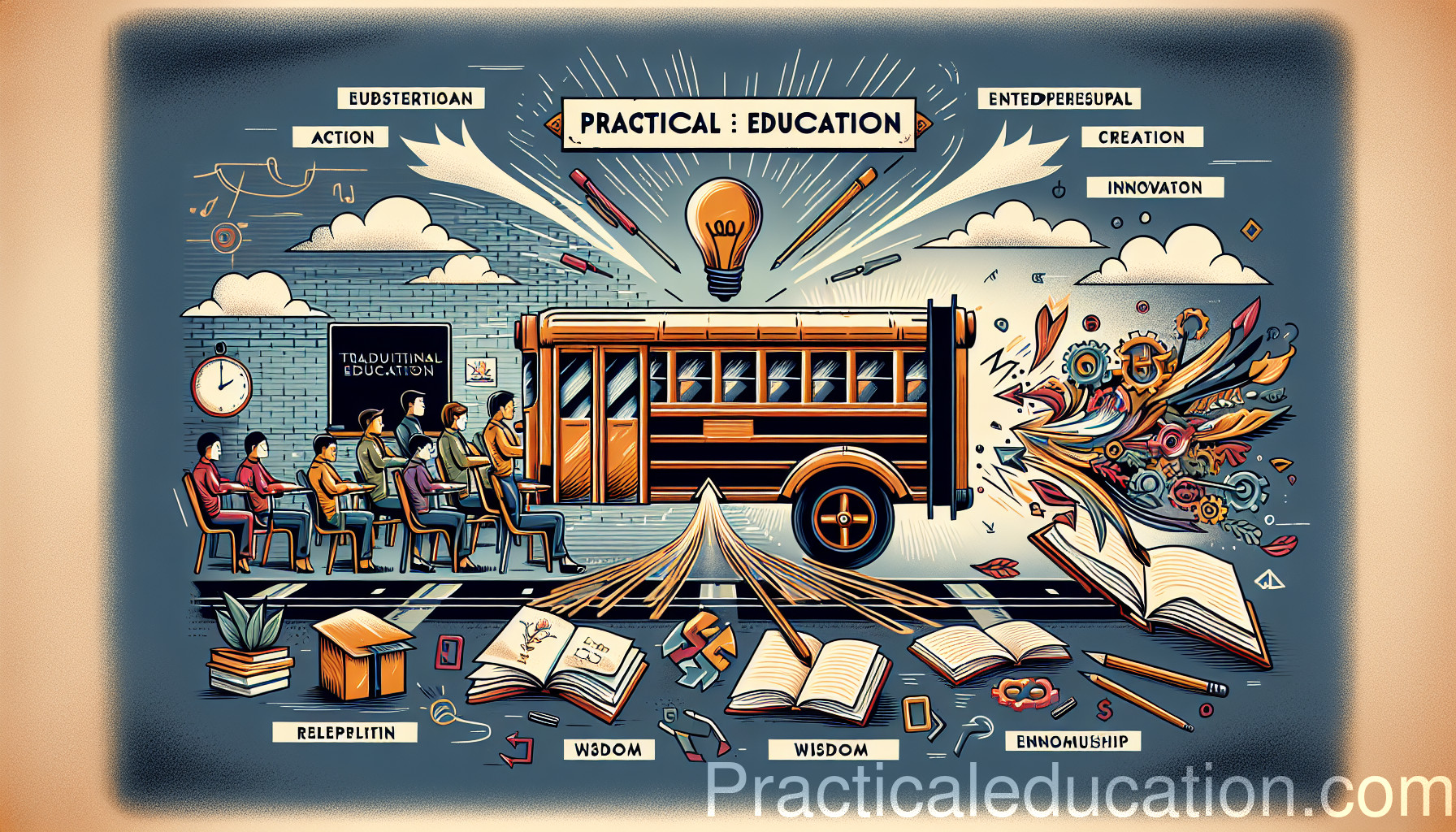
We’re told to “show our work”—but what if we just get the right answer? School rewards process over result. But in life, it’s the opposite. We don’t need to memorize—we need to connect. True intelligence is pattern recognition, not regurgitation.
The paradigm of traditional education has long been mired in a model that prioritizes memorization, rote learning, and procedural compliance over practical application and real-world relevance.This model propels students toward a false understanding of intelligence, one that values the ability to repeat information over the capacity to synthesize knowledge into actionable insights.
Consequently, many individuals emerge from educational systems ill-equipped to grapple with the complexities of modern life, where success is defined not by standardized tests but by the ability to identify patterns, connect disparate ideas, and generate innovative solutions.
The concept that “showing your work” is synonymous with success is a misconception.
This chapter advocates for a transformative approach to education that shifts the focus from memorization to connection, emphasizing real-world applications that cultivate genuine intelligence.
At the heart of our argument lies the assertion that true intelligence is fundamentally about recognizing patterns rather than simply recalling facts.
In life, the challenges that individuals face are rarely addressed with a straightforward recitation of learned formulas.
Instead, successful navigation of the complexities of the contemporary world requires an integration of knowledge, adaptability, and innovative thinking.
By teaching students to view knowledge as a web of interconnected concepts, we prepare them to respond effectively to real-life challenges.
Educational systems should prioritize skills like critical thinking, creativity, and problem-solving over adherence to a prescribed method of demonstrating proficiency.
This shift necessitates a curriculum reimagined to foster exploration and connection rather than confinement to pre-determined pathways.
In educational design, the implications of this shift are profound.
Curricula should be constructed around real-world problems, which would allow students to engage with material in a practical manner that mimics the dynamics of professional environments.
Incorporating project-based, experiential learning initiatives would align educational experiences with the skills that employers actively seek.
For instance, rather than conducting an isolated algebra exercise, students could tackle a project requiring financial literacy where they develop a budget using mathematical principles.
This methodology cultivates the ability to apply mathematical knowledge for real-world outcomes.
The focus is not solely on the mathematical principles learned, but also on the critical evaluation and modification of strategies based on outcomes—an essential skill for any career.
The approach requires educational institutions to embrace a model that encourages risk-taking and experimentation.
Rather than penalizing students for incorrect answers, institutions should foster an environment where errors are viewed as stepping stones to understanding.
By focusing on learning outcomes rather than the process of arriving at those outcomes, we allow students to hone their intellectual agility.
This practice aligns with the growing recognition that iterative processes are inherent to most successful entrepreneurial ventures.
Students should have the freedom to explore alternative approaches and reflect on their processes, fostering resilience and adaptability—qualities that will serve them well in their future endeavors.
Moreover, applying this model globally necessitates an understanding of cultural and contextual nuances.
While Western educational models have historically emphasized individual achievement and competitive assessment, Eastern paradigms frequently prioritize collective effort and mastery.
The integration of these perspectives can create a more holistic educational experience.
Collaborative project learning could draw on strengths from both educational traditions, allowing students to appreciate multiple viewpoints while engaging in meaningful collaboration.
Such a blending not only maximizes learning outcomes but also prepares students for increasingly interconnected global economies, where cross-cultural competence is invaluable.
Furthermore, the global applicability of this educational model requires a reexamination of credentialing systems.
Current frameworks often emphasize academic achievement in a manner that overlooks the necessary competencies gained through practical experience.
In a world where credentials may not fully reflect an individual’s capability to contribute meaningfully, alternative methods of assessing knowledge and skill must be developed.
Industries are increasingly valuing portfolios of work, demonstrated skills, and experiential learning over traditional diplomas.
Educational systems must evolve to validate these experiences formally, providing students with the tools to translate their learning into marketable skills and career opportunities.
In an era characterized by rapid technological advancement and shifting economic landscapes, education must adapt to prepare students for a world where traditional pathways to success are continually redefined.
The emphasis should be on equipping students with the means to forge their paths—those that prioritize connection over memorization, real-world outcomes over theoretical constructs, and practical intelligence over outdated assessments.
Such an educational framework empowers students not merely to engage with content but to become proactive architects of their future.
By fostering environments where connections between concepts can be made fluidly and innovatively, we enable a generation that is not only adept at navigating complexities but also skilled at leveraging them into profitable avenues.
Ultimately, the traditional education model is not equipped to produce the results demanded by contemporary society.
The emphasis on memorization creates a culture of compliance rather than innovation.
The challenge lies in recognizing that knowledge retention does not equate to intelligence.
Rather, education should pivot towards teaching students to connect ideas, discern patterns, and engage critically with the world around them.
This is the pathway to cultivating an educated populace capable of critical thought, innovative solutions, and ownership over their futures.
Education should empower individuals to think and act autonomously, with earned confidence stemming from genuine understanding.
Such transformation does not merely benefit the individual but serves society by fostering a citizenry prepared to confront and solve imminent global challenges.
“Intelligence isn’t about what you remember—it’s about what you can connect.” — Eric Bach.