From Learning to Earning
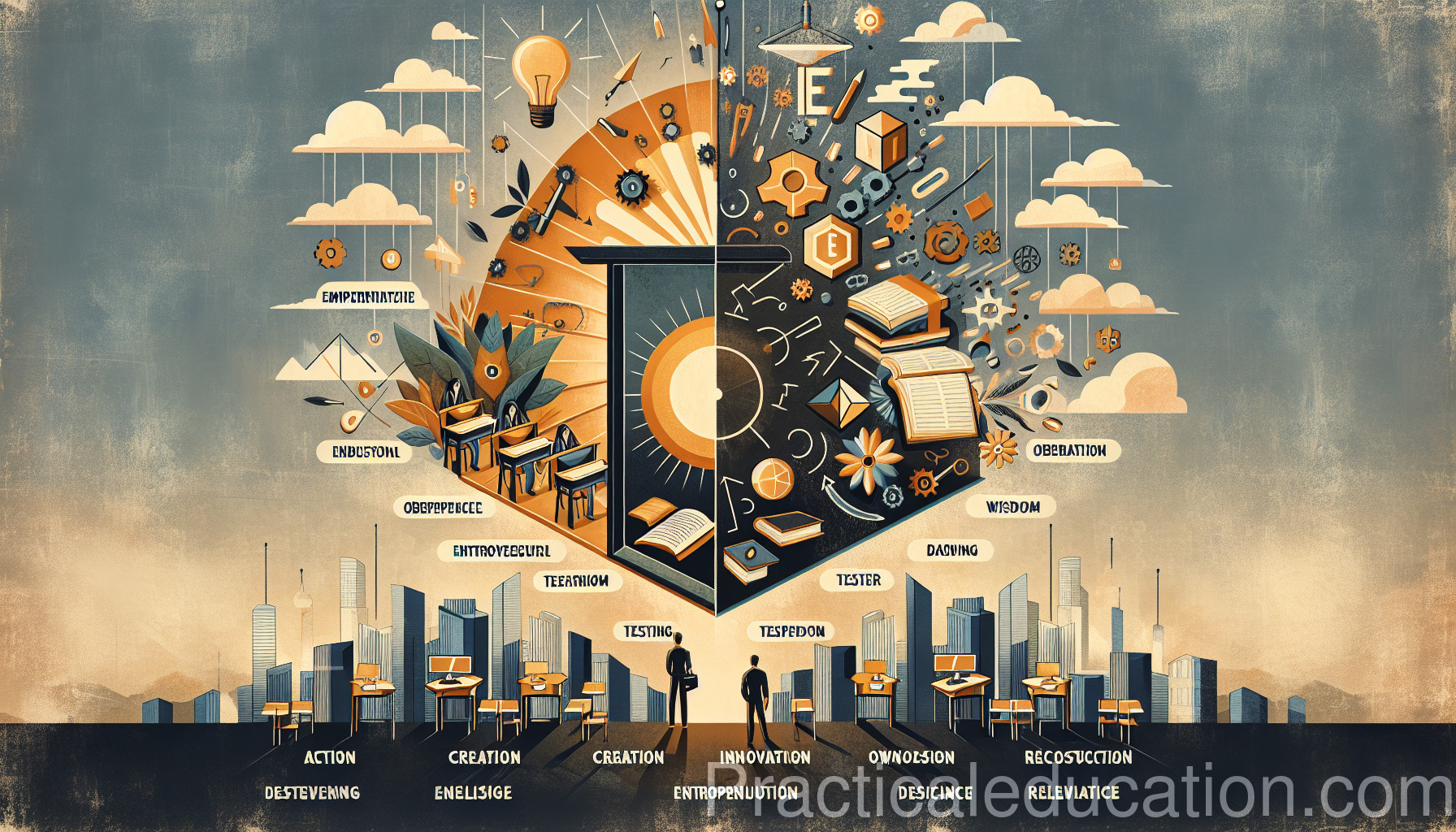
Why should students pay to learn when they could be getting paid to learn? Education can be profitable—students can build businesses, solve problems, and generate value while still in school. Learning should be the start of wealth, not the cause of debt. Let’s flip the financial model.
Education has long been viewed as a precursor to earning potential, with the prevailing model dictating that students must first navigate a lengthy and often irrelevant academic regime before they can convert their knowledge into opportunity.This model supports a cycle of debt, delay, and dependence, holding students hostage to outdated notions of success tied solely to credentials and degrees.
However, a paradigm shift is not only possible; it is necessary.
To dismantle the myths of traditional education, we must embrace a reimagined structure in which learning is directly tied to earning, thereby fostering autonomy and initiating wealth generation from the moment students engage with their education.
The core idea is simple yet transformative: students should be compensated for their learning endeavors.
This contrasts starkly with the conventional wisdom that requires students to incur debt to acquire knowledge.
In this new model, the educational experience becomes a platform for entrepreneurial ventures, where students actively engage in problem-solving and value creation as part of their learning process.
By integrating practical assignments that directly address real-world challenges, educational institutions can shift from a passive learning environment to one that empowers students to become active contributors to society and the economy.
This framework has several concrete implications for curriculum design.
First, curricula must be developed with direct input from industry stakeholders.
Courses should incorporate interdisciplinary approaches that allow students to build authentic skills relevant to current market demands.
For instance, a business class could unfold as a practical lab in which students create their own start-ups, supported by mentorship and resources from local businesses.
This experiential learning model not only reinforces theoretical knowledge but also instills a sense of ownership in students, as they become the architects of their financial futures.
Additionally, educational institutions themselves must adapt to facilitate this transformative learning model.
Traditional metrics of assessment, such as standardized tests and grades, should be replaced or accompanied by measures that evaluate students’ ability to generate value through their projects.
Institutions could partner with businesses to offer apprenticeship programs that allow students to work while learning, effectively earning while they develop competencies.
By doing so, educational environments can foster a culture of innovation and self-sufficiency, enabling students to perceive education as an investment in their success rather than a burdensome obligation.
For students, this new educational reality would redefine their experience.
They would not only pursue academic knowledge but also seek out opportunities for real engagement with the marketplace.
As they work on projects that yield tangible outcomes, what emerges is a sense of agency.
Instead of being passive recipients of knowledge, students become proactive navigators of their learning paths.
They would learn to identify problems, analyze markets, and execute ideas while still engaged in their educational journey.
This integrated model can cultivate a generation of learners equipped with the practical skills and experiences necessary to thrive in an increasingly dynamic global economy.
Moreover, the implications of this approach extend beyond individual sectors; they resonate with a variety of cultural and economic contexts.
Education systems worldwide can adapt these principles, tailoring them to address specific local challenges while drawing on universal entrepreneurial philosophies.
In developing economies, for instance, students can be taught to innovate solutions to regional problems, leading to sustainable development and employment opportunities.
In developed nations, the focus could shift towards technological advancements, allowing students to immerse themselves in cutting-edge industries.
Both contexts benefit from a model that views education through the lens of value generation rather than mere credentials.
This model also naturally aligns with a global perspective, encouraging cross-cultural collaborations and knowledge exchanges.
Students can learn from peers around the world, gaining insights into diverse market needs and entrepreneurial practices.
Such global engagement not only enriches the educational experience but also prepares students to navigate an interconnected economic landscape.
They become not only locally competent but also globally aware, equipping them with the adaptability required to thrive in different cultural contexts.
Cost structures within this educational model also warrant consideration.
Rather than charging students to learn and subsequently burdening them with debt, educational institutions can adopt a revenue-sharing approach.
Students could participate in their entrepreneurial outputs in exchange for resources, training, and mentorship.
The success of their ventures could then contribute to a fund that supports future cohorts of students, creating a sustainable cycle of investment in education.
This approach aligns economic incentives for institutions and students alike, ensuring that both parties are invested in real success.
In conclusion, it is time to establish a new epistemic foundation for education—one that prioritizes profit, ownership, and real-life mastery over rote learning and superficial qualifications.
By shifting towards a model where students earn while they learn, we dismantle the traditional myths surrounding education, transforming it into a viable pathway to financial autonomy.
This proposed educational model promotes a self-sustaining ecosystem where learning and earning are inextricably linked, fostering a new generation of proactive, innovative, and empowered individuals.
“Learning should not precede earning; let education be the launchpad for wealth, not the anchor of debt.” — Eric Bach.