The Manifesto: From Obedience to Ownership
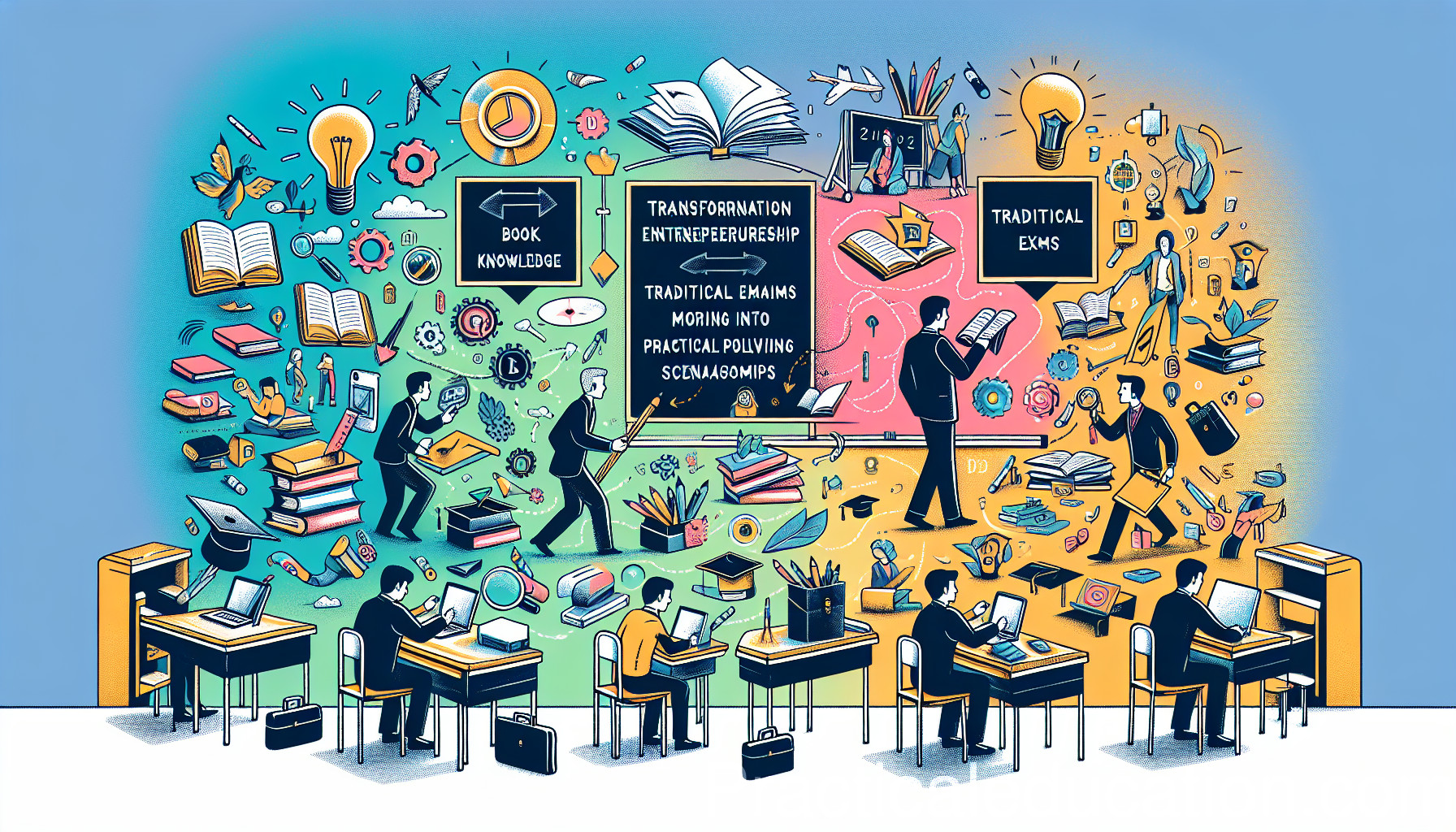
This is a call to every student, parent, teacher, leader, and nation: the old school is dead. We reject obedience disguised as discipline, memorization masquerading as intelligence, and poverty packaged as prestige. Practical Education is not a book—it is a blueprint. A world where learning is profitable, school is entrepreneurial, classrooms are companies, and every student becomes the founder of their own future. From this day on, we learn to lead our lives, not just follow their orders.
The traditional educational model has long been rooted in a framework that prioritizes obedience and memorization over autonomy and practical application.Within this model, students are often conditioned to accept information passively, regurgitating facts for the sake of examinations and grades, rather than engaging with material in a manner that fosters critical thinking and innovation.
This chapter argues for a paradigm shift from this obsolete model to one that emphasizes ownership, income generation, and self-directed learning.
It asserts that education must serve as a tool for personal and professional empowerment, preparing individuals not just to navigate but to actively shape the world around them.
Ownership in the context of education refers to the idea that learners should take responsibility for their learning journey.
This conception of ownership extends beyond mere content mastery; it encompasses the development of entrepreneurial skills, the application of knowledge in practical settings, and the cultivation of a mindset geared towards creating value in the real world.
The current model’s failure to promote ownership leads to disengagement and the perpetuation of a knowledge economy that rewards rote memorization over genuine understanding.
This necessary transformation requires a redesign of curriculum that aligns with the intrinsic needs of students in today's rapidly evolving world.
A focus on project-based learning, driven by student interest and real-world impact, can replace the outdated lecture-based structure that relies on passive consumption of information.
In practice, this means empowering students to identify problems within their communities or industries and to devise innovative solutions.
This method not only enhances learning outcomes but also creates a sense of ownership as students see the tangible results of their efforts.
Educational institutions must re-envision their roles as facilitators of entrepreneurial education.
Faculty should act as mentors rather than authoritative figures, guiding students through self-directed projects and providing feedback that is constructive rather than evaluative in a traditional sense.
This mentorship can take various forms, including partnerships with local businesses and organizations that provide real-world contexts for learning.
These collaborations can elevate the relevance of academic pursuits, making education a pathway toward viable careers and not just a prerequisite for employment.
Ultimately, students should leave educational settings equipped not only with knowledge but also with practical skills that translate into job readiness and entrepreneurial prowess.
The implications of this shift extend beyond individual classrooms to educational systems at large.
National educational policies should advocate for programs that support entrepreneurial thinking, integrating business skills into curricula across disciplines.
This means redesigning assessments to measure competencies such as creativity, problem-solving, and collaboration, rather than traditional academic performance indicators.
By aligning educational outcomes with the needs of a dynamic workforce, nations can enhance their competitiveness in the global economy.
In a global context, the educational reforms proposed here must be adaptable to various cultural environments.
Western methodologies of entrepreneurship—characterized by risk-taking and innovation—can benefit from an Eastern emphasis on collective values and societal contribution.
Integration of these perspectives can yield a holistic educational approach that respects diverse cultural narratives while fostering a common goal of economic empowerment through education.
This synthesis can cultivate a generation of learners who view their education as a means to not only uplift themselves but also to contribute to their communities and the world at large.
Students should emerge from these reimagined educational paths not as mere consumers of knowledge but as proactive creators of opportunities.
The act of learning becomes synonymous with generating income, where educational achievements are directly linked to marketable skills and entrepreneurial ventures.
Students are not just prepared to secure jobs; they are equipped to create jobs—thereby instilling a culture of ownership and autonomy that transcends traditional employment models.
Such an educational model not only equips learners with practical skills but also cultivates a mindset that is adaptable and resilient in the face of changing global landscapes.
As automation and artificial intelligence continue to transform industries, the ability to learn, unlearn, and re-learn will become paramount.
Education must therefore instill not just knowledge, but also the adaptability to thrive amid uncertainty and change.
In conclusion, the transition from an educational system built on obedience to one rooted in ownership is essential for developing individuals capable of navigating and reshaping the complexities of modern society.
It is imperative that we acknowledge and harness the potential within every student, turning educational institutions into incubators of innovation and autonomy rather than mere sites of compliance and memorization.
The future of education lies in adopting a comprehensive approach that prioritizes practical, profitable, and student-driven learning—ensuring that the next generation is not just prepared for the world, but empowered to lead it.
"Education should be a launchpad for ownership and opportunity, not a confinement of compliance and credentialing." — Eric Bach.