The Pythagorean Trap
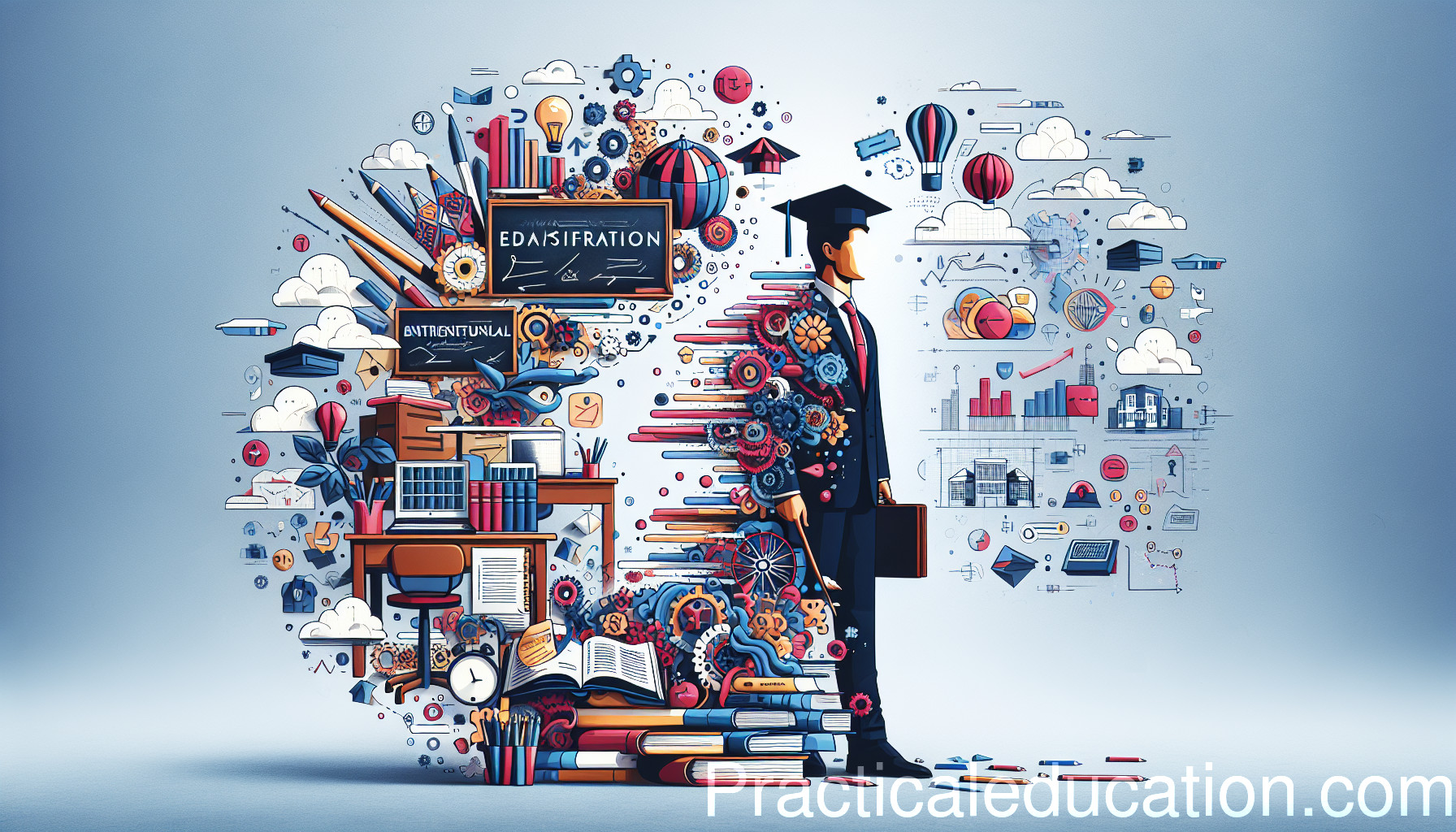
We celebrate knowing the Pythagorean theorem—but we can’t explain how compound interest works. Students are buried in theorems but starve for truth. We must stop prioritizing abstract math over applicable mastery. Geometry never taught a child how to dream.
The educational landscape is often dominated by abstract concepts that bear little relevance to the everyday experiences of students.The often-cited Pythagorean theorem serves as a perfect example of this disconnect.
While a solid understanding of mathematical principles is undoubtedly valuable, the overwhelming focus on such abstract knowledge fails to equip students with the practical skills necessary for financial literacy, problem-solving in the real world, and creative thinking.
The mythology surrounding traditional education, particularly in mathematics, leads us to celebrate rote memorization over applicable mastery, ultimately leaving students ill-prepared for the complexities they will face outside the classroom.
To dismantle this outdated model, one must acknowledge that education should not only impart knowledge but also develop autonomy and ownership in learners.
The prevailing educational system, with its emphasis on memorizing theorems and formulas, neglects structuring learning experiences that translate into real-life applications.
Students emerge from this system not with a toolkit for life, but a fragmented collection of theories disconnected from their practical implications.
The question we must confront is not whether students can recite the Pythagorean theorem, but rather whether they grasp the implications of compound interest when contemplating their investment decisions or financial futures.
This shift emphasizes the need for a curriculum prioritizing applicable mastery over mere theoretical knowledge.
Curriculum design should pivot from a focus on abstract mathematical concepts to a more integrative approach that synthesizes knowledge with practical application.
Hands-on experiences, real-world problem-solving, and contextual learning should supplant the traditional emphasis on memorization.
For instance, teaching students about rates and ratios is imperative not merely for passing exams but for fostering an understanding of their financial lives, such as how budgeting, savings, and investments work.
An effective curriculum must intertwine disciplines, enabling students to see connections between mathematics, economics, and personal finance.
The goal is to prepare students for real-world scenarios where they must employ these skills, thus ensuring relevance and resonance with their everyday lives.
Educational institutions must also confront the myth that academic rigor is synonymous with preparing students for future success.
Rigor in education should not merely denote difficulty but should align with real-world applicability and student engagement.
Stakeholders in education, from policymakers to educators, must advocate for partnerships with local businesses and communities that can facilitate experiential learning opportunities.
These partnerships can lead to projects that allow students to apply what they learn in tangible ways, such as operating a student-run business, engaging in community service projects that require practical skill application, or participating in market analyses that provide stakeholders with current, real-world data.
Institutions should foster environments where students pursue knowledge driven by curiosity and real-life applicability rather than compulsion to conform to outdated standards.
The overarching aim is to cultivate a global mindset that recognizes the diverse contexts in which students will operate.
In various cultures, outcomes and methodologies in education differ widely; however, the necessity for financial literacy, problem-solving, and critical thinking remains constant.
Therefore, a practical educational model should incorporate lessons and strategies that have been shown to work across different cultural and economic backgrounds.
This paradigm shift needs to echo the practicality of Western entrepreneurial execution while being informed by the adaptability and system-based thinking prevalent in Eastern philosophies.
Such an educational framework should enable students from all backgrounds to discover their strengths and interests, fostering autonomy and agency in their learning.
The student experience is thus reimagined from passive consumption to active engagement with knowledge.
Empowering students to take ownership of their learning journeys entails providing them with the latitude to choose their paths, pursue interests relevant to their futures, and understand the impact of their choices within a global marketplace.
Learning experiences must be contextualized, placing students in situations where they can solve real problems, explore entrepreneurial ventures, or engage in collaborative work that reflects the interconnectedness of the modern world.
Through this mechanism, knowledge transcends mere theoretical understanding, reinforcing students’ agency in pursuing their aspirations.
Furthermore, the implications of this shift in educational philosophy extend into global learning systems.
By fostering skills that hold value across borders—such as entrepreneurship, negotiation, and effective communication—students can better navigate an increasingly interconnected world.
Educational reformation must address the demand for skills relevant in a global economy while embracing the intricacies of local contexts.
Programs that emphasize knowledge sharing, cultural competence, and adaptability can equip students to thrive amidst global challenges.
This global orientation prepares learners not just for local success, but for impactful roles on the world stage.
In conclusion, embracing practical, student-driven, real-world learning is essential to dismantling the myths perpetuated by traditional education.
The focus must shift from abstract memorization to applicable mastery that prepares students to navigate their financial landscapes, engage in problem-solving, and pursue their ambitions with autonomy.
Education should be designed not solely as a vessel for transferring knowledge but rather as a catalyst for growing adaptable, innovative thinkers who are fully prepared for the complexities of the modern world.
The true measure of educational success will no longer hinge on the ability to recite a theorem, but on the capability to understand and apply concepts that contribute to personal empowerment and global responsibility.
"Education should equip students to master their realities, not tether them to abstract ideals." — Eric Bach