One Size Fits No One
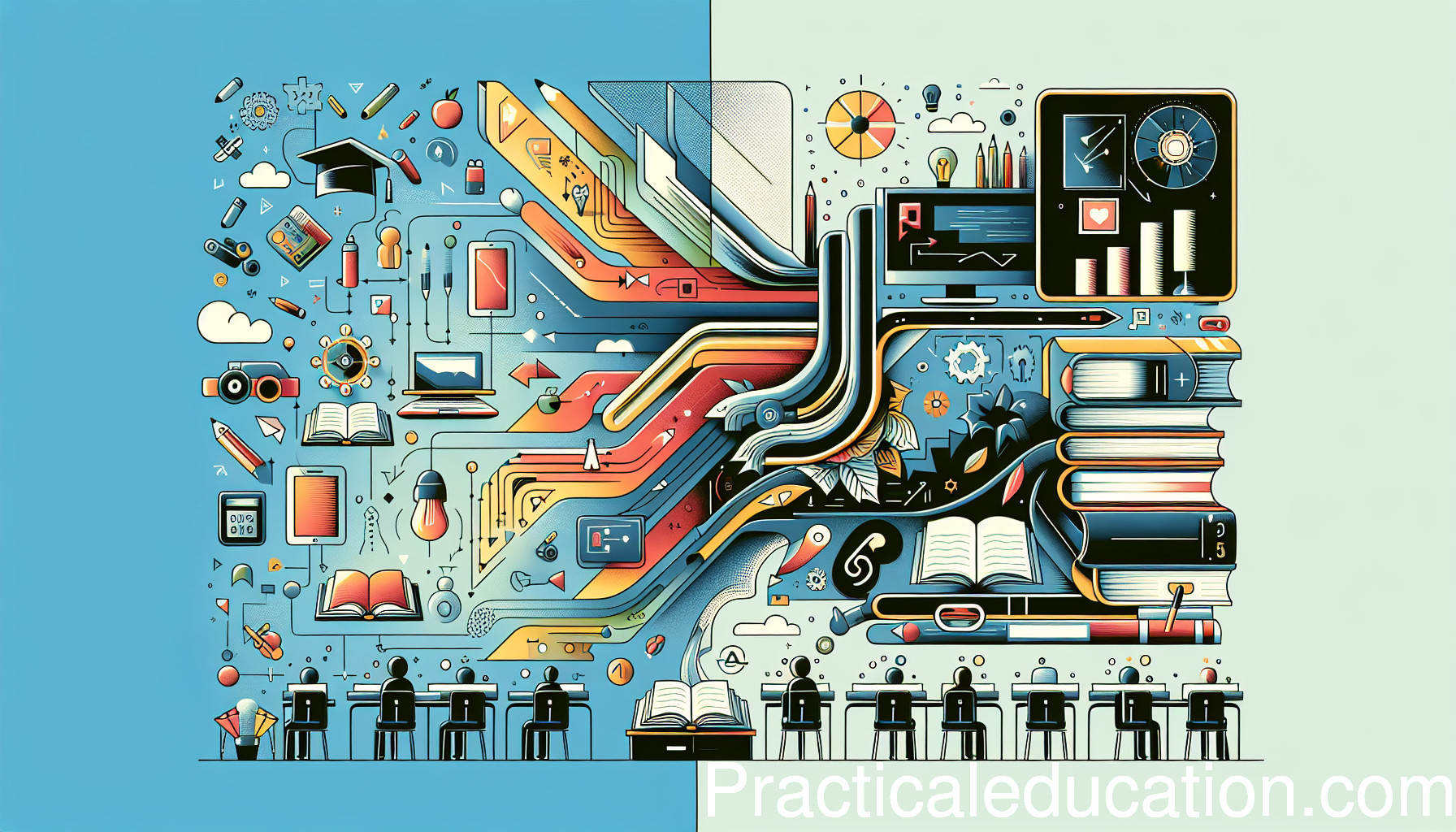
From Shanghai to Seattle, we use the same model and expect excellence. But education isn’t uniform—it must be local, personal, and flexible. A farmer’s son, a refugee girl, a coder-in-the-making don’t need the same content. They need a system that adapts to who they are. Personalization is not a luxury—it’s survival.
The prevailing educational model, ubiquitous from Shanghai to Seattle, operates under the assumption that uniformity can yield excellence.It adopts a one-size-fits-all approach that, while efficient in administrative execution, fails to address the distinct needs of diverse student populations.
Education is increasingly recognized as insufficiently responsive to individual contexts.
Each student brings a unique set of experiences, aspirations, and cultural backgrounds that require a tailored educational framework.
The notion that a standardized curriculum can meet the needs of all students is not only outdated; it undermines the potential for authentic engagement and mastery.
This chapter posits that true educational effectiveness hinges upon the implementation of localized, personalized, and flexible learning systems.
The myth of uniformity in education needs to be dismantled, as it neglects the fundamentally diverse nature of human learning and adaptation.
Distinctive life experiences—such as those of a farmer’s son, a refugee girl, or a developing coder—necessitate divergent pathways to knowledge and skill acquisition.
These pathways must not only reflect individual backgrounds but also respond to the social, cultural, and economic contexts in which learners find themselves.
Personalization in education is not merely an option for enhancement; it is a critical requirement for equitable learning and genuine mastery.
Curriculum design must therefore pivot from a rigid, standardized structure to a framework that embraces adaptability and relevance.
Instead of focusing solely on information retention and regurgitation—hallmarks of traditional educational paradigms—curriculums should encourage critical thinking, problem-solving, and the application of knowledge in real-world scenarios.
This demand for modern educational reform emphasizes skills that foster adaptability in volatile economic climates, encouraging students to become not only consumers of knowledge but also producers and problem-solvers.
To achieve this localized approach, educational institutions must undergo significant transformations in their operational methodologies.
They should create environments that facilitate personalized learning experiences by integrating technology that allows for individualized learning trajectories.
With advancements in artificial intelligence and learning analytics, educators can harness tools that provide real-time feedback on student progress, enabling them to adjust educational pathways and support to fit the learners' unique profiles.
This shifts the educator’s role from disseminator of information to facilitator of learning, allowing for a more nuanced engagement with each student's strengths and weaknesses.
Moreover, this flexibility should extend beyond the walls of traditional educational settings.
Global learning systems must be reimagined to promote collaboration and exchange among diverse populations.
Institutions across the world should foster partnerships that allow for the sharing of local knowledge and experiences.
This can be achieved, for example, by establishing networks that connect classrooms and learners from varied geographic and socioeconomic backgrounds.
Such initiatives facilitate intercultural dialogue and knowledge sharing, ensuring that diverse insights inform localized educational strategies.
The implications of adopting a personalized educational model are far-reaching.
For students, this approach leads to enhanced engagement and motivation as they relate their studies to their personal lives and future ambitions.
It cultivates a sense of ownership over learning, fostering autonomy and independence.
In a globalized economy, students equipped with such skills are better positioned to navigate the complexities of work and life beyond the classroom.
For educators and institutions, the challenge lies in embracing the complexity of personalized education without undermining accessibility and equity.
Developing resources that are adaptable to various contexts and ensuring that systemic support is available for all students, regardless of background, should be a priority.
This entails a commitment to ongoing professional development for educators as they learn to implement and leverage personalized learning strategies effectively.
Furthermore, in a world that increasingly values diverse perspectives and solutions, educational redesign must also consider the geopolitical climate.
Global challenges such as climate change, economic disparity, and social justice demand a reorientation of educational priorities.
Students should be empowered to explore topics that resonate with their communities while also confronting these broader issues through localized action.
Such relevance breeds a generation of learners who are not just well-educated but also socially conscious and capable of driving systemic change.
Ultimately, individualized learning environments will not only enhance student outcomes but also contribute to the overall resilience of societies navigating an uncertain future.
Education must provide a platform for individuals to thrive in dynamic contexts, promoting a culture of innovation and entrepreneurship that respects local knowledge and values.
The future of education is not found in replicating a singular model, but in recognizing the multitude of pathways to success.
Effective education must be an iterative process that continuously adapts to emerging needs and situational demands.
In closing, we may well conclude that successful education seeks neither homogeneity nor uniformity, but rather celebrates individuality, adaptability, and relevance across all cultural and economic contexts.
To paraphrase the core tenet of this approach, education must mirror life: personalized, responsive, and firmly rooted in the realities of the learners it seeks to empower.
"Education should not be a product of conformity, but a symphony of individual expression." — Eric Bach.