Vomit on the Test, Forget by Next Week
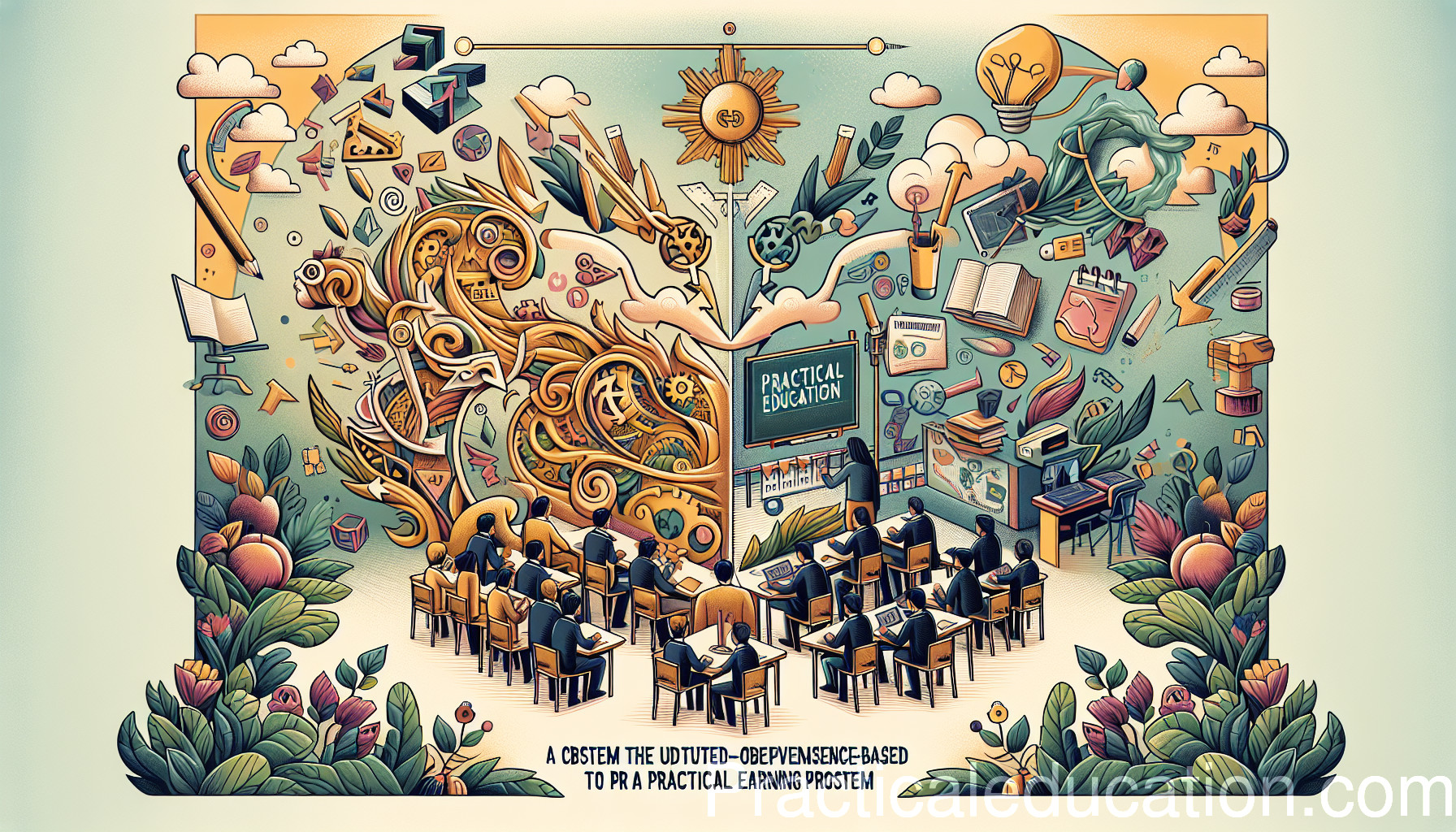
The typical school week: cram, test, forget, repeat. It’s not education—it’s academic bulimia. We’re force-fed facts, vomit them onto tests, and are praised for it. But nothing sticks. If you forget everything after the test, did you ever really learn?
The traditional educational framework is often characterized by a repetitive cycle of memorization, regurgitation, and subsequent forgetfulness.In this model, students cram information only to forget it shortly after assessments, a phenomenon aptly described as “academic bulimia.” This systemic failure to instill lasting knowledge and real-world applicability necessitates a reevaluation of foundational educational practices.
The prevailing approach undermines the very purpose of education: to foster skills and understanding that lead to personal ownership, financial independence, and true mastery.
To move forward, it is essential to dismantle the myths surrounding conventional schooling and advocate for a paradigm shift to experiential, student-driven learning.
At the core of this proposed transformation is the redefinition of knowledge acquisition as an interactive, ongoing process rather than a static set of facts.
Effective education must be grounded in practical experiences that encourage students to engage directly with the material.
For instance, instead of simply teaching mathematics through rote memorization of formulas, educational institutions should incorporate real-world applications such as budgeting, project management, and entrepreneurial finance.
This change shifts the focus from passive intake to active participation, resulting in greater retention and understanding of concepts.
The implications for curriculum design are significant.
A curriculum centered on practicality could integrate interdisciplinary projects where students apply skills across different subject areas, thereby reinforcing their learning.
In such a curriculum, solutions to real-world problems replace traditional exams, forcing students to synthesize knowledge and engage in critical thinking.
This approach promotes not only cognitive skills but also emotional intelligence and resilience, as students learn through trial and error while addressing authentic challenges.
By aligning academic goals with practical outcomes, educational institutions can cultivate a generation of learners who are not merely equipped to take tests, but are ready to contribute meaningfully to society.
Moreover, the shift towards a student-driven educational model underscores the need for adaptive and flexible learning environments.
Traditional schooling often relies on a one-size-fits-all approach, which fails to consider the diverse learning styles and cultural backgrounds of students.
By embracing adaptability, educators can design personalized learning pathways that resonate with individual students' interests, thereby enhancing engagement and motivation.
Education should not be a passive experience dictated by external standards; rather, it must encourage ownership and agency among learners.
In a global context, the incorporation of practical, experience-based learning holds profound implications.
Educational systems worldwide can benefit from a synthesis of diverse cultural methodologies.
For instance, while Western educational practices may prioritize entrepreneurship and innovation, Eastern philosophies often emphasize collaboration and ethical considerations.
By merging these approaches, educational institutions can cultivate well-rounded individuals capable of thriving across different cultural and economic landscapes.
This cross-cultural integration prepares students to navigate a complex, interconnected world, fostering not only knowledge but also adaptability, empathy, and civic responsibility.
Furthermore, the transition to a practical education model requires systemic support from policymakers and educational leaders.
There must be a recognition that the outcomes of education today extend beyond academic credentials.
Stakeholders in education should advocate for assessment methods that evaluate students not merely on numerical scores but on their capacity to apply knowledge in real-world scenarios.
This may involve adopting portfolio-based assessments that reflect a comprehensive view of a learner's competencies and contributions to society.
The focus on practical outcomes naturally raises questions about the role of teachers within this new educational landscape.
Rather than merely disseminators of information, educators should become facilitators and mentors who guide students in their pursuit of knowledge and mastery.
Professional development for teachers must also evolve, equipping them with the skills needed to nurture an environment conducive to real-life learning.
This emphasis on mentorship fosters meaningful relationships, enhancing the educational experience and reinforcing the importance of collaboration and mutual respect between instructors and learners.
Moreover, educational institutions need to embrace technology as a transformative tool that can enhance the practical learning experience.
Online platforms, simulation exercises, and collaborative tools can enable students to engage with complex material in dynamic ways.
As students navigate these resources, they not only acquire knowledge but also develop essential digital skills crucial for the modern workforce.
By leveraging technology, educational systems can transcend geographic boundaries and cultivate global partnerships, enabling students to collaborate with peers across the world, thus enriching their learning experiences.
Finally, transitioning to a model of education that prioritizes practical, applicable knowledge has the potential to reshape our understanding of success.
The traditional metrics of educational attainment—grade point averages, standardized test scores, and diplomas—are insufficient indicators of capability in a rapidly evolving economy.
Redefining success to include entrepreneurial mindset, problem-solving abilities, and emotional intelligence can create a workforce that is not only skilled but also adaptable to the nuances of a global job market.
In conclusion, the outdated model of education rooted in memorization and standardized testing must be replaced with a framework that emphasizes practical learning, real-world application, and student ownership.
This radical shift calls for a fundamental redesign of curricula, teaching methodologies, and assessment standards across diverse educational contexts.
By integrating experiential learning and fostering a global mindset, we can cultivate capable individuals who can navigate and thrive in an increasingly complex world.
As we reconsider the purpose of education, it is crucial to remember: "True learning is not about what you know for the test, but how you apply what you know in life.” (Eric Bach)