The Institutional Straitjacket
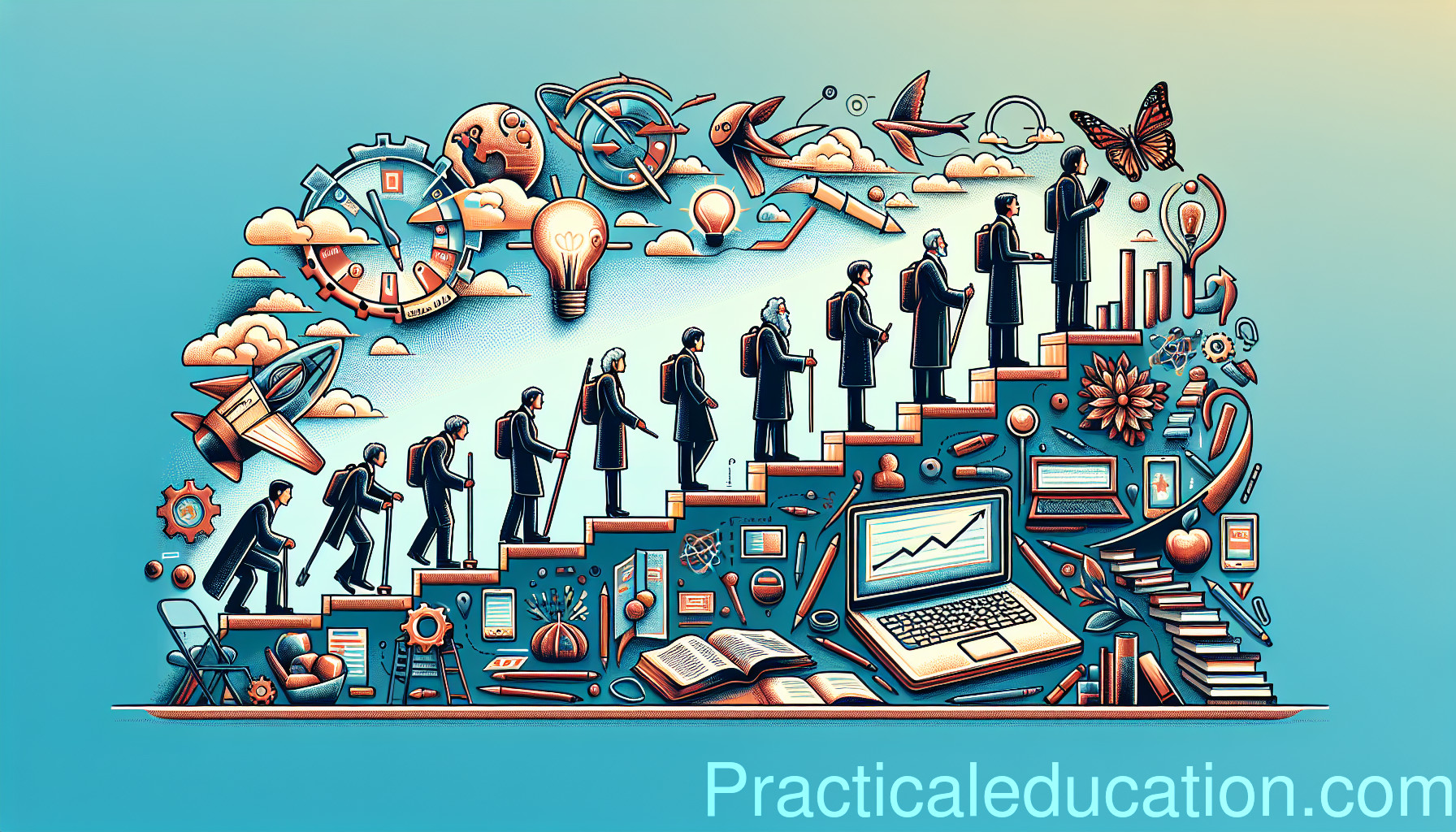
Even the best teacher cannot bloom inside a cement box. Rules, restrictions, and outdated policies turn classrooms into assembly lines. Innovation is punished. Customization is forbidden. Teachers must become designers—not just deliverers—of education.
In the landscape of traditional education, classrooms often function as metaphorical cement boxes—rigid, confining structures governed by rules that prioritize uniformity over individuality.This institutional straitjacket suppresses creativity and innovation, inhibiting both educators and students from engaging in meaningful learning experiences.
The concept of education as a process of rote memorization, obedience, and accumulation of irrelevant credentials persists, despite the glaring disconnect between this model and the real-world demands of autonomy, ownership, and income generation.
To dismantle these myths, we must reconceptualize the role of educators from mere transmitters of knowledge to active designers of dynamic, student-driven learning environments.
Central to this radical shift is the recognition that learning is most effective when it is contextualized within real-world applications.
Educational institutions have historically prioritized standardized curricula that fail to accommodate the diverse interests, skills, and aspirations of their student populations.
This one-size-fits-all approach disregards the unique experiences that shape each learner's journey, reducing education to a series of compliance-driven tasks.
Instead, we must advocate for a curriculum that emphasizes practical competency over theoretical knowledge, anchored in real-world challenges that require innovative solutions.
This should be the foundation for developing far-reaching educational experiences that encourage entrepreneurship, problem-solving, and critical thinking.
Designing such a curriculum requires a fundamental reimagining of the roles and responsibilities of teachers.
Educators must transition from being mere deliverers of information to becoming facilitators and designers of learning environments that promote active engagement and adaptability.
This involves not only reshaping course content but also embracing methodologies that encourage collaboration, experimentation, and reflection.
Environments where students have a say in their learning trajectories foster intrinsic motivation and empower them to take ownership of their educational processes, leading to deeper mastery of subjects and skill sets.
To facilitate this, education systems must embrace the principles of customization and flexibility, permitting adaptability to individual learner needs and local contexts.
This approach is particularly vital in today's globalized world, where economic and cultural landscapes shift rapidly.
Educational institutions can draw inspiration from both Western entrepreneurial methodologies and Eastern philosophies that emphasize rigorous critical thinking and adaptability.
For instance, integrating project-based learning with elements of design thinking can cultivate environments that encourage students to address pressing global challenges through innovative approaches.
The implications of this shift are extensive.
Curriculum design must integrate interdisciplinary projects that reflect the complexities of the real world, enabling students to synthesize knowledge from disparate fields.
Educational institutions should prioritize partnerships with local businesses, organizations, and community groups to create opportunities for experiential learning and mentorship.
Furthermore, assessment methods need to evolve from standardized testing to performance-based evaluations that measure students’ ability to apply their knowledge effectively in practical situations.
This holistic approach not only aligns with the realities of the workforce but also equips students with tangible skills that are directly transferable to entrepreneurial ventures and professional roles.
In terms of student experience, the transformation of the educational landscape necessitates a focus on autonomy.
Students should be encouraged to pursue their passions and interests, allowing for self-directed learning journeys that yield both personal and professional growth.
This is particularly salient in a digital age where resources for learning are abundant and accessible.
Educational institutions can facilitate this autonomy by providing mentorship and guidance rather than prescriptive pathways, allowing students to curate their own educational experiences.
Moreover, a global mindset must be woven into the fabric of this new educational paradigm.
As geographical boundaries dissolve in response to technological advancements, students must develop a broad understanding of global issues, cultural nuances, and economic dynamics.
Institutions should aim to equip learners with the skills necessary to engage effectively in a multicultural world, fostering not only local but also global citizenship.
Collaborative global projects can serve as a catalyst for connecting students across continents, promoting intercultural dialogue, and enhancing collective problem-solving capabilities.
It is crucial to acknowledge that the transformation of educational models is not without challenges.
Resistance may arise from established institutions rooted in traditional practices.
However, this shift is not about discarding foundational knowledge; rather, it is about ensuring that such knowledge is meaningful, applicable, and relevant to students’ lives.
Engaging stakeholders—including educators, policymakers, parents, and the business community—in open and constructive dialogue will be pivotal in overcoming resistance and aligning interests toward progressive educational reform.
In conclusion, the institutional straitjacket of traditional education must be dismantled to foster a learning environment that champions innovation, customization, and real-world applicability.
By repositioning educators as designers of experiences rather than mere information deliverers, we can cultivate a dynamic educational ecosystem that prepares students for autonomy, ownership, and successful engagement with the complexities of the modern world.
Our mission should be to create systems of learning that prioritize mastery over memorization, practical skills over irrelevant credentials, and global relevance over provincial frameworks.
"The future of education lies not in conformity but in the creative freedom to build one's own path." — (Eric Bach).