Learning by Constraint
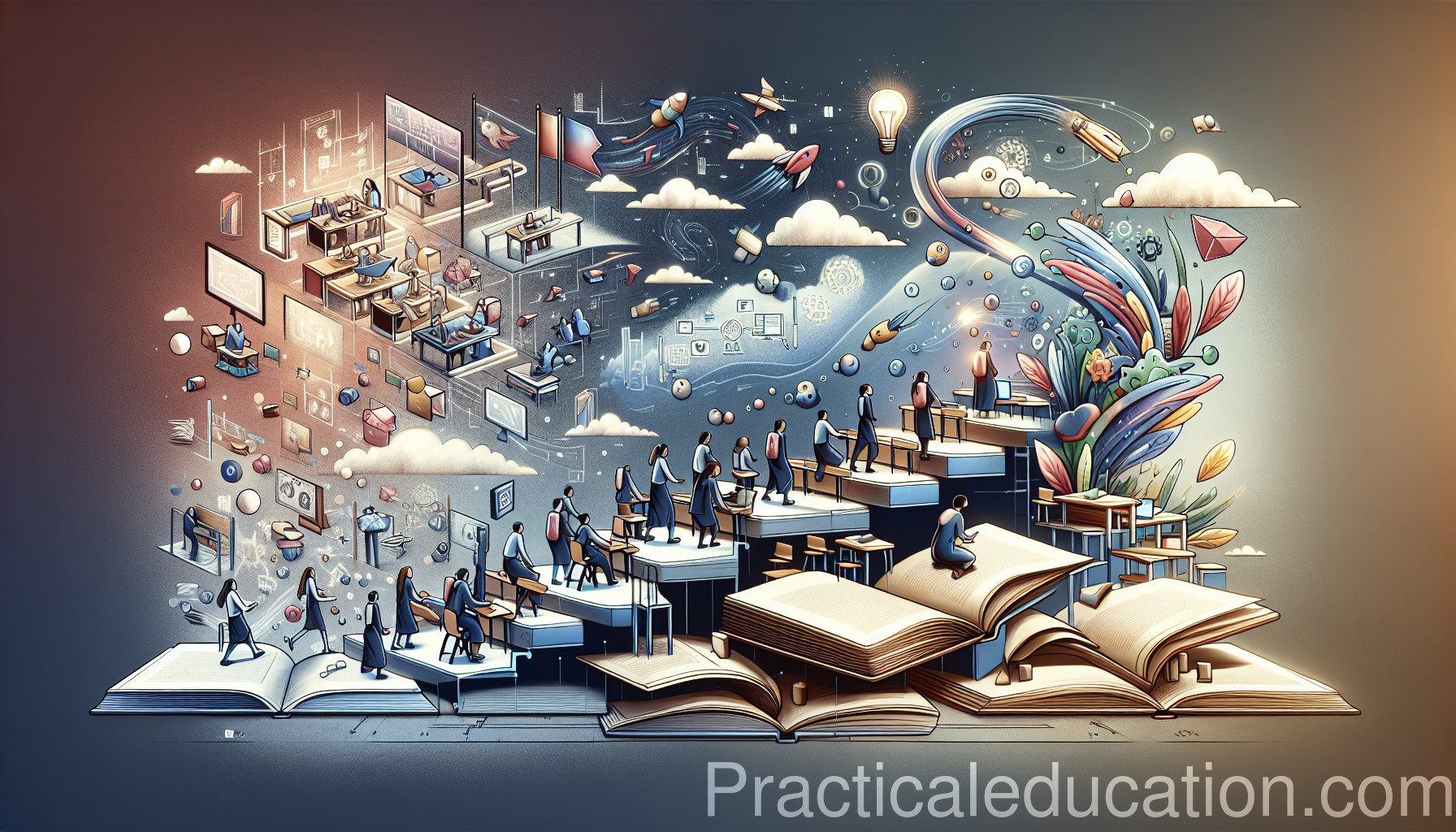
Imagine trying to innovate inside a cage. That’s what most teachers do every day. They improvise inside systems designed to stop them. Their courage deserves admiration—but also liberation. We must give teachers the power to design, disrupt, and transform—not just survive.
Learning by ConstraintTraditional educational models have historically operated under constraints that limit both teachers' creativity and students' real-world applicability.
This system, characterized by rigid curricula, standardized testing, and a strong emphasis on compliance, effectively stifles innovation and disengages learners from the practical applications of their acquiring knowledge.
These boundaries are often perceived as necessary structures; however, they function as cages that inhibit educators from reimagining their pedagogical practices.
The need for transformation in education is urgent, and we must empower educators to operate beyond these constraints, enabling the liberation of their ideas and the redefinition of student learning.
A critical examination of the existing educational paradigm reveals several persistent myths: memorization is equivalent to learning; academic compliance fosters discipline; standardized assessments measure understanding.
Each of these assertions is fundamentally flawed.
Memorization does not equate with comprehension, nor does compliance guarantee preparedness for real-world challenges.
The result is an educational system that prioritizes credentials over competency, ultimately leaving graduates ill-equipped for the complexities of modern life.
By dismantling these myths, we can shift the educational focus toward practical, student-driven learning experiences that promote mastery, ownership, and income-generating skills.
To achieve this transformation, curriculum design must evolve into a more fluid and adaptable structure.
This entails the integration of project-based learning that is responsive to student interests and the current demands of the workforce.
When educators are granted the latitude to deviate from a prescriptive curriculum, they can align learning objectives with real-world issues.
For instance, incorporating multi-disciplinary projects that address local community challenges or global issues fosters critical thinking and problem-solving skills.
Such projects can catalyze genuine engagement and motivate students to see the value in their education as both applicable and relevant.
Educational institutions must also redefine their missions.
The traditional model, with its focus on imparting knowledge to obedient recipients, must give way to a new vision rooted in the principles of autonomy and entrepreneurship.
Institutions should serve as incubators for innovation, where students can partake in experiential learning and experimentation.
Developing environments that encourage collaboration between educators and students can lead to curriculum co-creation, where learners actively shape their academic journeys.
This not only instills a sense of ownership but also cultivates the entrepreneurial mindset necessary for navigating the complexities of contemporary global economies.
A global perspective further enriches this discussion.
By integrating practices and philosophies from diverse cultures—combining the entrepreneurial zeal often associated with Western education and the depth of thinking found in Eastern pedagogies—educational reform can be multidimensional.
For example, Confucian pedagogical practices emphasize learning as a lifelong endeavor, fostering resilience and adaptability.
Applying these principles within a framework of student autonomy can bridge the gap between traditional academic knowledge and practical skillsets.
Moreover, learning through constraints can be transformed by leveraging technology.
Educational tools should facilitate not only access to knowledge but also the means to apply that knowledge in practice.
Ideally, platforms allowing students to connect with real businesses for internships, co-ops, or projects would enhance learning by putting theoretical knowledge into action.
By creating opportunities for students to engage with mentors and industry leaders, we promote a culture where learning is continuously linked to market needs.
Global learning systems must be recognized for their varying cultural and economic implications.
In many developing regions, education is not simply about individual advancement but about community upliftment.
Thus, practical education should incorporate local contexts into its learning frameworks.
By considering the socio-economic challenges that students face in diverse environments and developing solutions that resonate within those specific frameworks, we foster a learning culture that is not only about personal acquisition but also about contributing to societal progress.
The transition to such a transformative educational model is not without challenges.
Policy and regulatory frameworks will need to adapt to support innovative practices.
This requires engaging stakeholders—from educators to policymakers—to rethink accountability metrics, moving away from standardized testing as the sole barometer of success.
Instead, diverse assessment methods that reflect practical competency and mastery should be established.
These could include portfolio assessments, peer evaluations, and self-assessments, ensuring that evaluations are as multifaceted as the learning experiences they seek to measure.
In conclusion, liberating teachers from the confines of outdated educational models fosters a culture of innovation that benefits students and society alike.
As we embrace learning by constraint, we recognize that true educational reform hinges on the autonomy and empowerment of those directly involved in the learning process.
The pathway to meaningful education lies in dismantling the outdated myths that have governed the traditional educational landscape while embracing a practical and student-driven framework that prepares learners for ownership, income, and mastery of their skills.
“Education is not just preparing for a job; it’s about creating opportunities for innovation and mastery.” — Eric Bach.