Real Wisdom Requires Synthesis
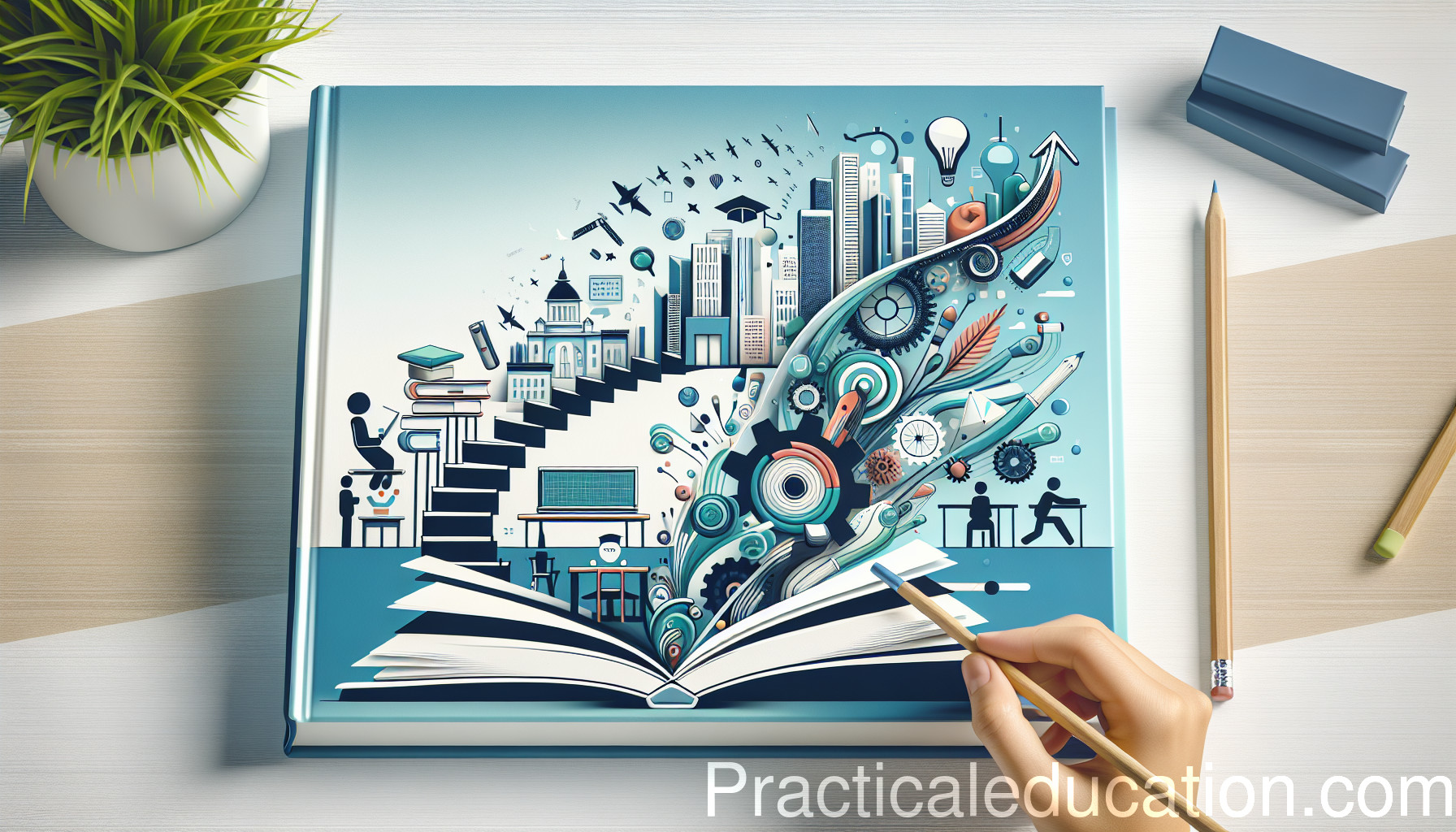
Science answers how. Philosophy answers why. Culture answers who. Business answers how much. Teach students to ask questions from multiple dimensions. Education must move from siloed information to synthesized wisdom.
Real Wisdom Requires SynthesisIn contemporary dialogues surrounding education reform, a common thread reveals itself: the traditional model of education emphasizes siloed information, relying heavily on memorization and rote learning.
This paradigm fosters a disconnect between knowledge acquisition and its practical application in real-world contexts.
To dismantle this outdated model, we must pivot towards an educational framework that promotes synthesized wisdom, integrating insights from diverse fields including science, philosophy, culture, and business.
This approach acknowledges that real understanding comes from the capacity to connect different dimensions of knowledge, ultimately leading to ownership, income, autonomy, and mastery of applicable skills.
The fragmented nature of education restricts students' abilities to think critically and innovatively.
Traditional schooling often compartmentalizes subjects, placing science in one category, humanities in another, and practical skills in yet another.
This separation not only limits students' ability to see the interrelations among various fields but also stifles their potential to apply knowledge creatively in real-world situations.
Instead, education should encourage students to synthesize information from multiple dimensions.
For instance, a student investigating environmental sustainability should not only consult scientific data but also consider ethical implications, cultural impacts, and economic consequences.
By combining these divergent perspectives, students cultivate a comprehensive understanding that transcends mere academic subjects.
To implement a curriculum that emphasizes synthesis, educational institutions must undergo a significant shift in their pedagogical strategies.
Curricula should be designed with an interdisciplinary framework, facilitating collaborations between different departments and integrating diverse areas of study.
A project-based learning model can serve as an effective vehicle for this synthesis, where students engage in projects that require input from various subjects and disciplines to solve real-world problems.
These projects can encompass difficulties faced in local communities, such as addressing food insecurity or promoting renewable energy initiatives.
Through such initiatives, students not only learn discipline-specific knowledge but also develop skills in collaboration, critical inquiry, and adaptive problem-solving.
Furthermore, the educational experience must shift from a teacher-centered model to a student-driven learning approach.
Students should have the autonomy to identify problems that resonate with them and pursue inquiries that excite their curiosity.
This paradigm empowers learners to take ownership of their education and engage deeply with material, ultimately fostering intrinsic motivation.
Educators, assuming the role of facilitators, can guide students in crafting pertinent questions that lead to meaningful investigations.
By focusing on learner agency, educational environments can stimulate creativity, encourage divergent thinking, and nurture a generation of innovators capable of synthesizing wisdom.
The implications of this approach extend beyond individual schools; they transcend cultural and geopolitical contexts.
By cultivating a global mindset, education systems can embrace the varied strengths of Western entrepreneurial execution and Eastern philosophical inquiry.
Western models often prioritize innovation, practical outcomes, and market relevance, propelling students toward financially profitable paths.
Conversely, Eastern traditions frequently emphasize depth, reflection, and the cultivation of virtues.
By integrating these differing paradigms, educational institutions can develop robust environments that promote not only the acquisition of knowledge but also the ethical application of that knowledge in real-world contexts.
Globalization has intensified the need for such educational synthesis.
Students today face unprecedented challenges that require transdisciplinary solutions.
Climate change, global health crises, and economic disparities are complex problems that cannot be fully understood through the lens of a single discipline.
Education must prepare students to navigate these multifaceted issues, encouraging them to ask critical questions that cross disciplinary boundaries.
Implementing synthesis-based learning programs can equip students with the tools to confront these challenges in innovative ways, fostering an ethos that values interdisciplinary collaboration.
The role of technology in promoting this synthesized learning cannot be overlooked.
Digital tools can facilitate connections between disparate areas of study, enabling students to access information, collaborate with peers around the globe, and engage with diverse cultural perspectives.
Online platforms can host forums for debate, enabling learners from varying backgrounds to share insights and solutions, thereby enriching their understanding.
By incorporating technology in education, institutions can dismantle geographical and cultural barriers, providing students with a truly global learning experience.
In evaluating the educational landscape, it is crucial to move beyond outdated credentials as measures of success.
Traditional diplomas and academic degrees often fail to reflect true competence or wisdom.
Instead, we should prioritize skills and knowledge validation through competencies that highlight students' abilities to synthesize information and solve complex problems.
Educational assessment methods must adapt to these new paradigms, focusing on real-world applications of knowledge rather than standardized test performance.
Practical assessments, portfolios, and peer reviews can offer more authentic evaluations of a student's capabilities.
In conclusion, the shift from siloed information to synthesized wisdom represents a critical evolution in education.
By embracing a model that draws insights from multiple dimensions—science, philosophy, culture, and business—educators can prepare students to engage meaningfully with the complexities of the modern world.
This paradigm fosters ownership, encourages income-generating skills, nurtures autonomy, and cultivates mastery.
Only through this synthesis can students hope to emerge as competent contributors to society, capable of navigating the intricacies of global challenges with wisdom.
"Real learning is not merely about knowing; it's about understanding, integrating, and applying wisdom across dimensions." (Eric Bach)