Degrees Don’t Make Leaders
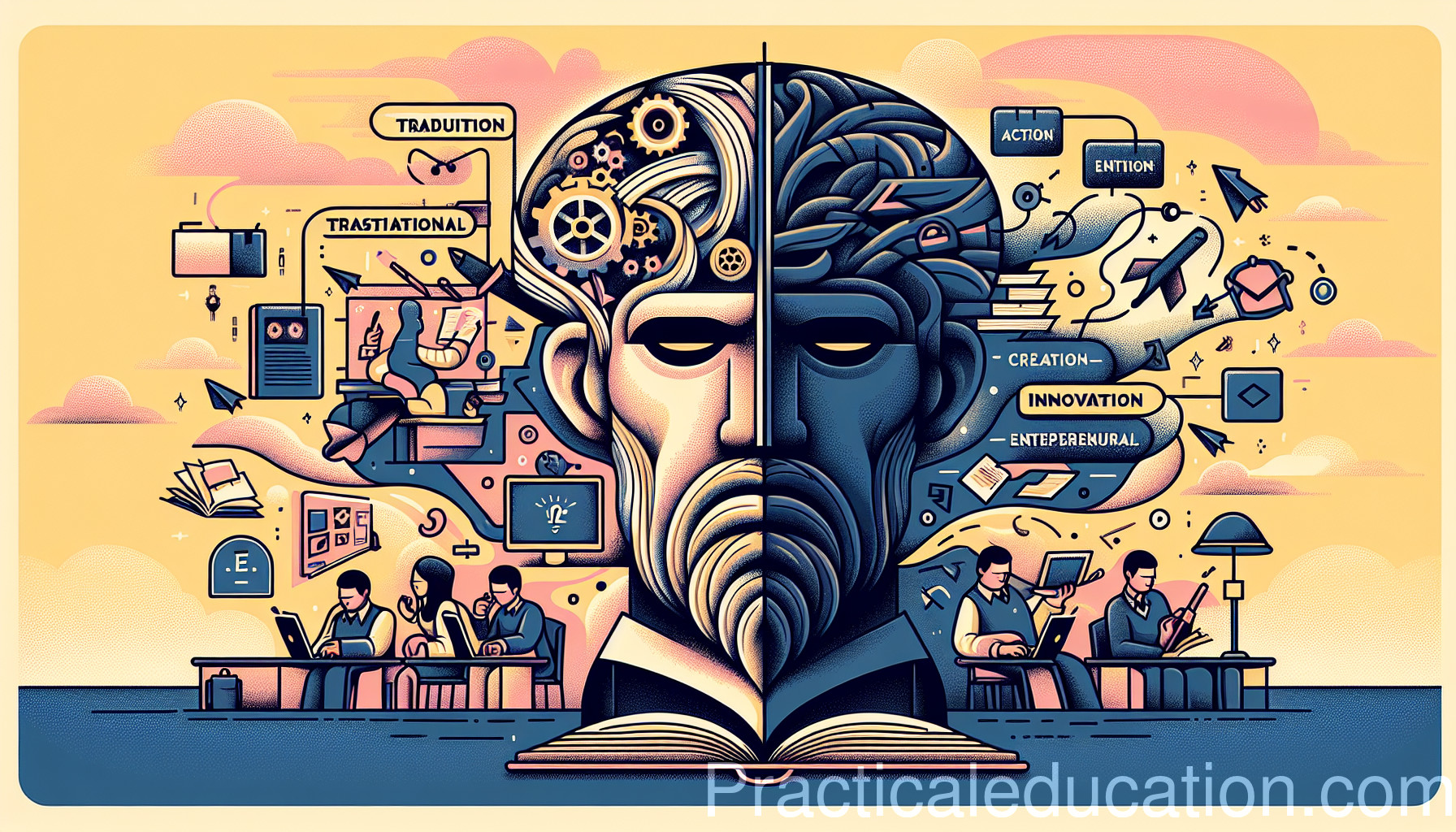
Leadership isn’t taught through textbooks—it’s lived through action. Yet we pretend a degree equals wisdom, vision, and authority. Many of the best leaders never followed the academic script. Let’s stop requiring paper before potential. Education must cultivate leadership, not delay it.
In contemporary education, a persistent misconception underlies the assessment of leadership potential: the notion that a degree signifies not only knowledge but also the capability to lead effectively.This belief is deeply ingrained in academic institutions, where the path to authority often mandates a series of credentials earned through traditional coursework.
However, the efficacy of this model has come into question, as countless examples of successful leaders demonstrate that the most impactful leadership qualities are developed through practical experiences rather than theoretical instruction.
It is essential to dismantle this outdated paradigm that equates degrees with wisdom and authority, and instead realize that true leadership emerges from action-oriented learning.
The foundational assumption of traditional education is that knowledge acquires value through rigorous memorization and the subsequent proof of that knowledge via formal assessments.
This system rewards obedience and compliance over initiative and creativity.
However, for an individual to emerge as a leader, especially in today’s rapidly changing environment, the ability to respond to real-world challenges with agility and insight is crucial.
Leadership cannot be encapsulated within the confines of a textbook; it must be cultivated through experiences that challenge individuals to innovate, solve problems, and inspire others.
Curriculum design must reflect this reality by integrating hands-on learning opportunities that prioritize practical engagement over passive reception of information.
Educational institutions must undergo a paradigm shift in how they define success.
Rather than focusing on the accumulation of degrees as the metric of achievement, institutions should shift towards a framework that prioritizes competencies and skill mastery relevant to real-world applications.
This can be accomplished through project-based learning, internships, and community engagement initiatives where students can enact their leadership potential in live scenarios.
De-emphasizing traditional grading and degree timelines in favor of a competency-based approach allows for a more honest appraisal of an individual’s capabilities.
The goal is to transform students from passive recipients of knowledge into active participants in their own learning journeys.
Moreover, the implications of this shift extend beyond individual institutions.
In a global context, where different cultures view education and leadership through varied lenses, embracing a more diverse approach to learning can enhance cross-cultural leadership capabilities.
Western education tends to emphasize individualism, which can foster innovative thinking, while Eastern philosophies may focus on communal well-being and long-term planning.
A curriculum that recognizes these differences and blends them can create leaders who are adaptable and capable of operating effectively in various cultural settings.
This is particularly pertinent in a globalized economy where organizations often span multiple countries and cultures, demanding leaders who can navigate the complexities of diverse environments.
Student experience is another area ripe for reform.
For students to develop their leadership potential, their education must align with how they engage with the world.
This involves creating environments where students can practice leadership in meaningful ways.
Mentorship programs, peer-led initiatives, and service-learning projects place students in authentic situations where they can lead and learn from both successes and failures.
When educational environments encourage risk-taking and autonomy, students develop resilience and the ability to lead effectively, which are essential traits in modern leadership.
Additionally, the digital age presents unprecedented opportunities for students to assume leadership roles.
Online platforms are democratizing access to information and decision-making processes.
Educational institutions can harness this potential by encouraging students to utilize technology to connect with global communities, collaborate on projects, and develop solutions that address real-world problems.
Incorporating digital literacy and global citizenship into the curriculum equips students with the tools necessary to lead in an interconnected world.
Critically, it is essential to recognize that not all leadership is suited to formal pathways of academic recognition.
Many influential leaders emerged from nontraditional backgrounds, developing their skills outside of formal educational frameworks.
Emphasizing degrees as prerequisites for leadership roles overlooks the wealth of experiences that individuals bring to the table.
Leveraging informal networks, experiential learning, and mentorship can often yield leaders who are better positioned to understand and navigate the complexities of their domains.
The educational framework must adapt to recognize these diverse pathways and validate alternative forms of expertise.
In sum, the frameworks governing the acquisition of leadership need a radical reconfiguration.
By shifting the focus from degree attainment to actionable skills and real-world experiences, educational institutions can better cultivate the leaders of tomorrow.
This requires a collaborative engagement among educators, learners, and industry professionals to design curricula that reflect the complexities of leadership in practice rather than in theory.
It is time that we stop pretending that paper credentials alone determine potential, and instead, create educational environments that empower students to embrace leadership through action.
To lead is to learn actively; degrees should be a tool for those actively engaged, not a ruler to measure their worthiness.
In a world that values wisdom derived from lived experiences, education must evolve to support and reflect this dynamic reality.
As we reassess our notions of educational success and leadership, let us commit to fostering environments where individuals can seize opportunities to lead without the constraint of conventional educational expectations.
"Degrees don’t grant wisdom; action and experience hold the key to leadership." — Eric Bach.