Education That Prints Millionaires
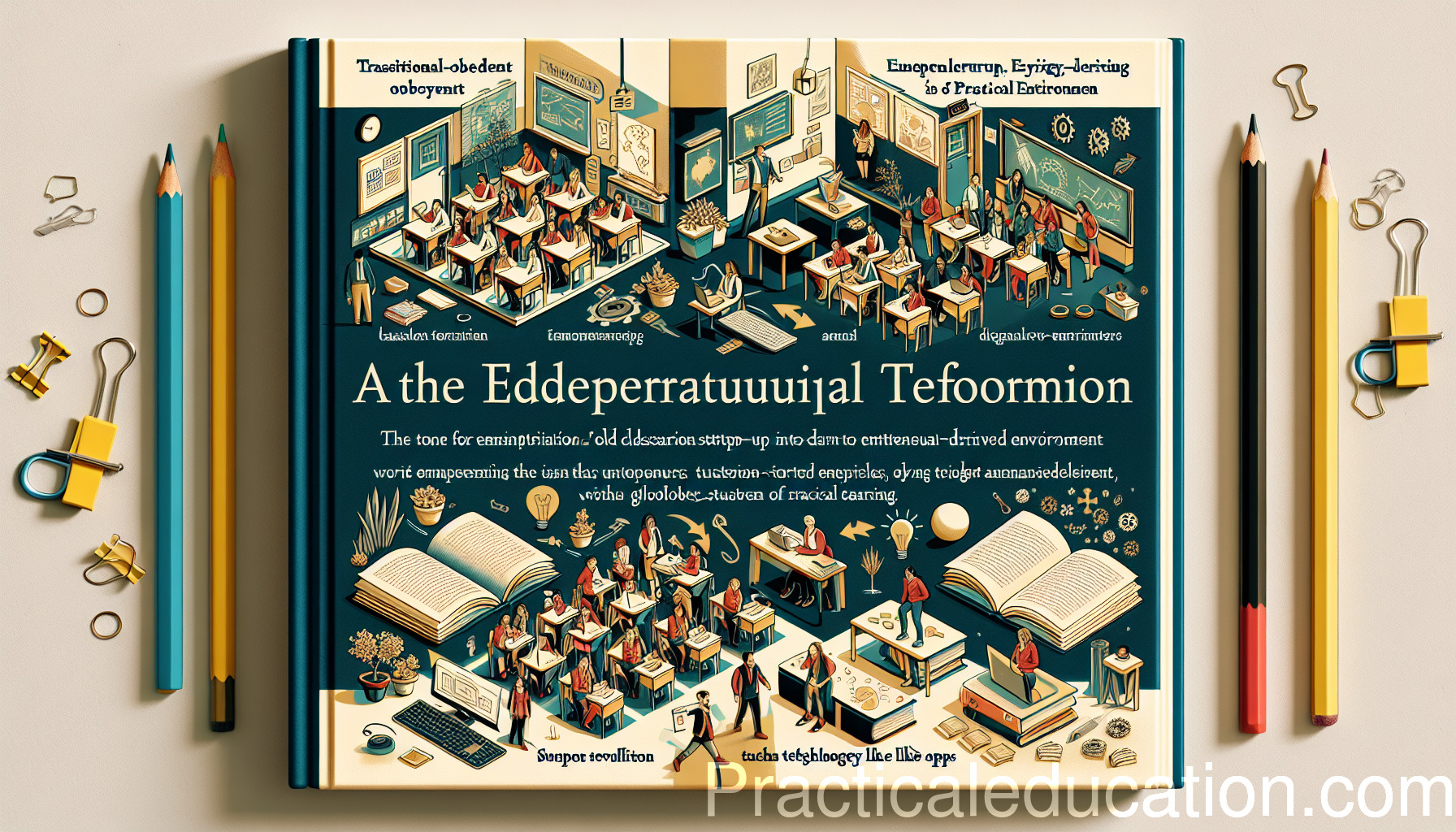
Let the mission be bold: to graduate not job-seekers, but millionaires. Students who can fund their lives, their communities, their next ventures. The new school is a factory of independence. The diploma isn’t the prize—freedom is.
In a rapidly evolving global economy, education models that prepare individuals for traditional employment are proving insufficient.Instead of fostering independent thinkers, innovative problem solvers, and financially autonomous individuals, current educational systems predominantly focus on rote memorization, compliance, and standardized testing.
This approach, rooted in outdated paradigms, produces graduates equipped with credentials but lacking the real-world skills necessary for financial independence and entrepreneurship.
A fundamental shift is required: education must transition from merely preparing students for jobs to empowering them to become self-sufficient producers of wealth and value.
Rather than job-seekers, we must aim to graduate millionaires whose education equips them to thrive in diverse economic circumstances.
To achieve this, educational institutions must prioritize practical learning experiences over theoretical instruction.
This involves designing curricula that integrate entrepreneurial principles into everyday learning.
Students should engage in projects that require them to develop and market products or services, manage finances, and navigate the complexities of business operations.
Institutions can incorporate partnerships with local businesses to provide internships and real-world problem-solving opportunities, effectively bridging the gap between classroom knowledge and market realities.
Such experiential learning fosters an environment where students can apply academic concepts in practical scenarios, enhancing their understanding and retention of knowledge.
Furthermore, the curriculum must be adaptable to local and global contexts, respecting the diversity of student backgrounds while embracing their unique cultural perspectives.
An education that prepares graduates for wealth creation must also cultivate a global mindset.
This includes teaching students about international markets, cultural nuances, and the geopolitical landscape that influences economic opportunities.
By doing so, we not only prepare students for local challenges but also equip them to compete on a global scale.
This approach encourages flexibility and adaptability, essential traits in an increasingly interconnected world.
Evaluating the educational institutions themselves is paramount for this shift to occur.
Traditional schools often operate within rigid frameworks that prioritize standardized testing and compliance over innovation and creativity.
Embracing a model focused on student agency requires institutions to adopt structures that facilitate exploration and experimentation.
Educators must assume the role of facilitators rather than disseminators of knowledge; they should encourage students to identify their interests, pursue their passions, and develop personal learning trajectories.
This can be achieved by integrating mentorship programs where educators guide students through real-world challenges, thereby fostering autonomy and confidence in their abilities.
At the core of this new educational paradigm lies the necessity for students to learn how to generate income.
Financial literacy must be embedded within the curriculum, teaching students the principles of budgeting, investment, and wealth management from an early age.
Understanding how to navigate personal finance and entrepreneurial opportunities will empower students to make informed decisions that support their financial independence.
Furthermore, these concepts should be reinforced with practical application; students can engage in simulations or businesses that require them to manage financial resources, providing tangible experiences that demystify the complexities of economic systems.
Cross-disciplinary learning must also be a cornerstone of this reformed model.
Today's challenges often do not fit neatly within the confines of traditional subjects.
By creating integrated programs that combine technology, arts, sciences, and business, educational institutions can promote innovative thinking and problem-solving skills.
This approach encourages students to draw connections across disciplines, fostering a more complete understanding of their projects and the implications of their work in real-world contexts.
Students need to recognize that effective solutions are often born from the intersection of diverse fields of knowledge.
In embracing this new educational landscape, stakeholders will need to collaborate extensively.
Policymakers, education leaders, and industry representatives should engage in continuous dialogue to ensure that curricula remain relevant and responsive to the demands of the economy.
Integrating feedback mechanisms that allow for real-time assessment of educational outcomes and student readiness for the workforce will create a system of accountability.
Additionally, such collaboration can facilitate resource sharing, enabling smaller institutions to access the tools and networks necessary to implement these sweeping changes effectively.
As we envision graduate profiles that signify financial autonomy and social contribution, it becomes clear that the traditional measures of educational success, such as grades and diplomas, are insufficient.
Instead, the ultimate goal must be to cultivate a new generation of financially literate, self-sustaining individuals who possess the skills, mindset, and entrepreneurial spirit to create viable solutions in their communities and beyond.
These graduates should emerge not merely as contributors to the economy but as innovators capable of transforming industries and addressing issues on a global scale.
Ultimately, responsibility falls on educational institutions to reorient their missions toward fostering independence rather than compliance.
A focus on producing millionaires, rather than job-seekers, necessitates radical changes in curriculum design and instructional practices.
Success in this endeavor will dismantle long-held myths about education restrictive to credentialing and compliance, positioning learning as a driver of personal freedom and community development.
By redefining the purpose of education, we can cultivate a generation equipped not only with knowledge but with the skills and mindset essential for financial freedom and real-world mastery.
"Education that prints millionaires empowers not just individuals, but entire communities to thrive in autonomy." – Eric Bach