Learning to Obey: The Hidden Curriculum
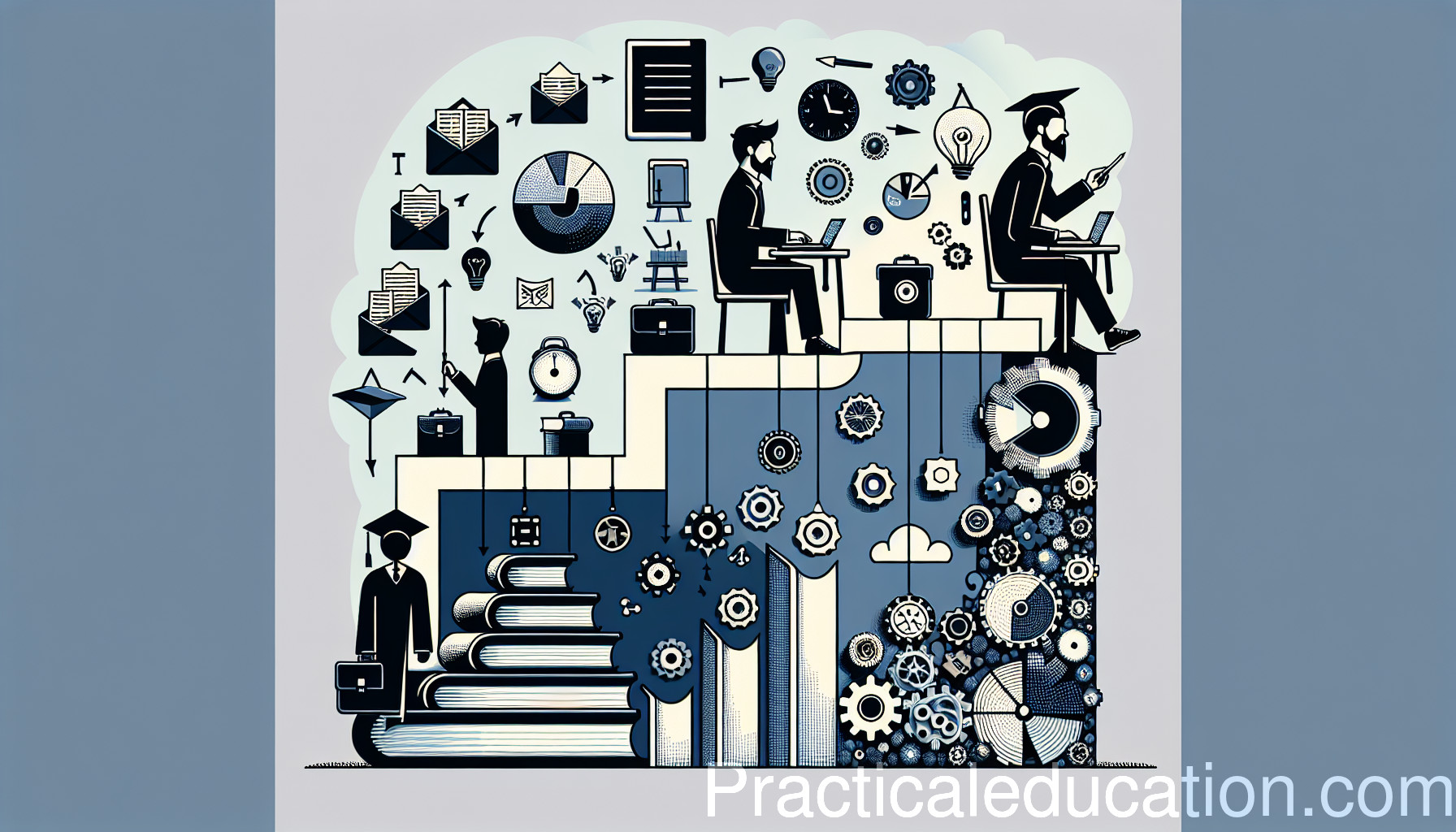
Behind every standardized test and rigid timetable lies a silent training for submission. Students are taught when to sit, when to speak, and what to think—never how to question the system. Obedience is rewarded, rebellion is pathologized. This isn’t education; it’s domestication. And it’s time we exposed it.
Learning to Obey: The Hidden CurriculumIn examining the current educational paradigm, it is essential to recognize that beyond the explicit curriculum lies a pervasive, often unexamined, hidden curriculum designed to instill obedience rather than independent thought.
Standardized tests, rigid schedules, and uniform approaches to learning serve not merely as assessment tools but also as instruments of compliance.
The institution of education, as it predominantly stands, functions more as a mechanism for social conformity than for intellectual growth.
This chapter will explore how these dynamics manifest in the student experience, the implications for curriculum design, and the required paradigm shift towards a practical, student-driven educational model.
At its core, traditional education promotes a culture where questioning and critical thinking are de-emphasized, replaced by an emphasis on rote memorization and obedience to authority.
Students are meticulously trained to fit into predetermined roles and to accept knowledge passively, echoing the expectations of a society that values conformity.
The education system schedules students through days that prioritize compliance: they are beckoned by bells, directed in their movement between classes, and assessed against standardized benchmarks that seldom reflect their individual strengths or talents.
Consequently, this produces a workforce conditioned to adhere to directives rather than to innovate or challenge the status quo.
This hidden curriculum undermines the very essence of learning.
It transforms educational environments into spaces where students learn how to respond appropriately rather than to think critically about the world around them.
The implications extend beyond individual classrooms; they ripple throughout society, perpetuating a cycle where innovation is stifled, and potential remains unrealized.
By framing education as a product of obedience, we overlook its potential to nurture inquiry and entrepreneurship.
Furthermore, when students encounter the repercussions of deviating from established norms, such as disciplinary actions or stigmatization, their capacity to engage in exploratory learning is further diminished.
The pathologization of rebellion effectively teaches students to mistrust their instincts and ideas, leading to an internalization of compliance that persists long after they leave institutional learning environments.
As a result, young adults enter the workforce not equipped to tackle complex real-world problems, but primarily trained to follow orders, limiting their capacity to drive progress and growth.
To fundamentally alter this trajectory, it is crucial to re-envision curriculum design in educational institutions.
A practical education should foster a spirit of questioning and allow students to engage deeply with real-world problems.
This implies restructuring classrooms into collaborative spaces where students can pursue their interests, develop critical thinking skills, and work on projects with measurable outcomes.
Curriculum should be fluid, allowing for adaptability in response to student interests, economic needs, and global contexts.
Educational institutions would benefit from incorporating an interdisciplinary approach that breaks down barriers between subjects, enabling students to develop comprehensive solutions to multifaceted issues.
Moreover, a focus on ownership and autonomy within learning empowers students to take control of their educational journeys.
By offering choices within their learning environments—whether in project selection, research topics, or learning modalities—educators can cultivate responsibility and agency among students.
This shift away from a one-size-fits-all model raises the stakes for individual engagement, potentially transforming the learning process from a passive receipt of information to a dynamic pursuit of knowledge.
The implications of adopting a global mindset also cannot be overstated.
As economies and societies become increasingly interconnected, the need for education systems to prepare students for a world characterized by rapid change is more pressing than ever.
Educational frameworks must be flexible enough to accommodate varied cultural, economic, and geopolitical contexts.
This means integrating elements from successful systems worldwide, such as Eastern philosophies that value holistic learning and resilience.
By focusing on modular, context-sensitive educational practices, institutions can cultivate a student population that is not only aware but adaptable—capable of thriving in diverse environments and embracing uncertainty as an opportunity for growth.
In this educational landscape, assessments must shift away from outdated models of standardized testing towards more authentic evaluations of student capability.
This can include project-based assessments, peer reviews, and real-world applications of learned skills.
These alternative methodologies provide a more comprehensive view of student potential while also fostering an environment of continuous feedback and iterative improvement, rather than the high-stakes, binary outcomes of traditional testing.
As we dismantle the myths of traditional education, it becomes evident that a valuable education transcends memorization of facts.
It cultivates the ability to think critically, question assumptions, and innovate solutions.
By prioritizing a model of learning that promotes ownership, personal motivation, and real-world applicability, we create conditions conducive to genuine mastery, aligning education with the demands of contemporary society.
In conclusion, the steep cost of perpetuating obedience within our educational frameworks is a significant barrier to progress.
By exposing the hidden curriculum of compliance and advocating for a learning model centered on inquiry and practical engagement, we take the first decisive steps towards redefining education for future generations.
Education should prepare individuals not just to pass tests, but to lead lives of purpose, autonomy, and impact.
As we envision this new framework, we must remember: "When students are taught to question, they learn to own their futures." — (Eric Bach).