Learning That Makes You Poor
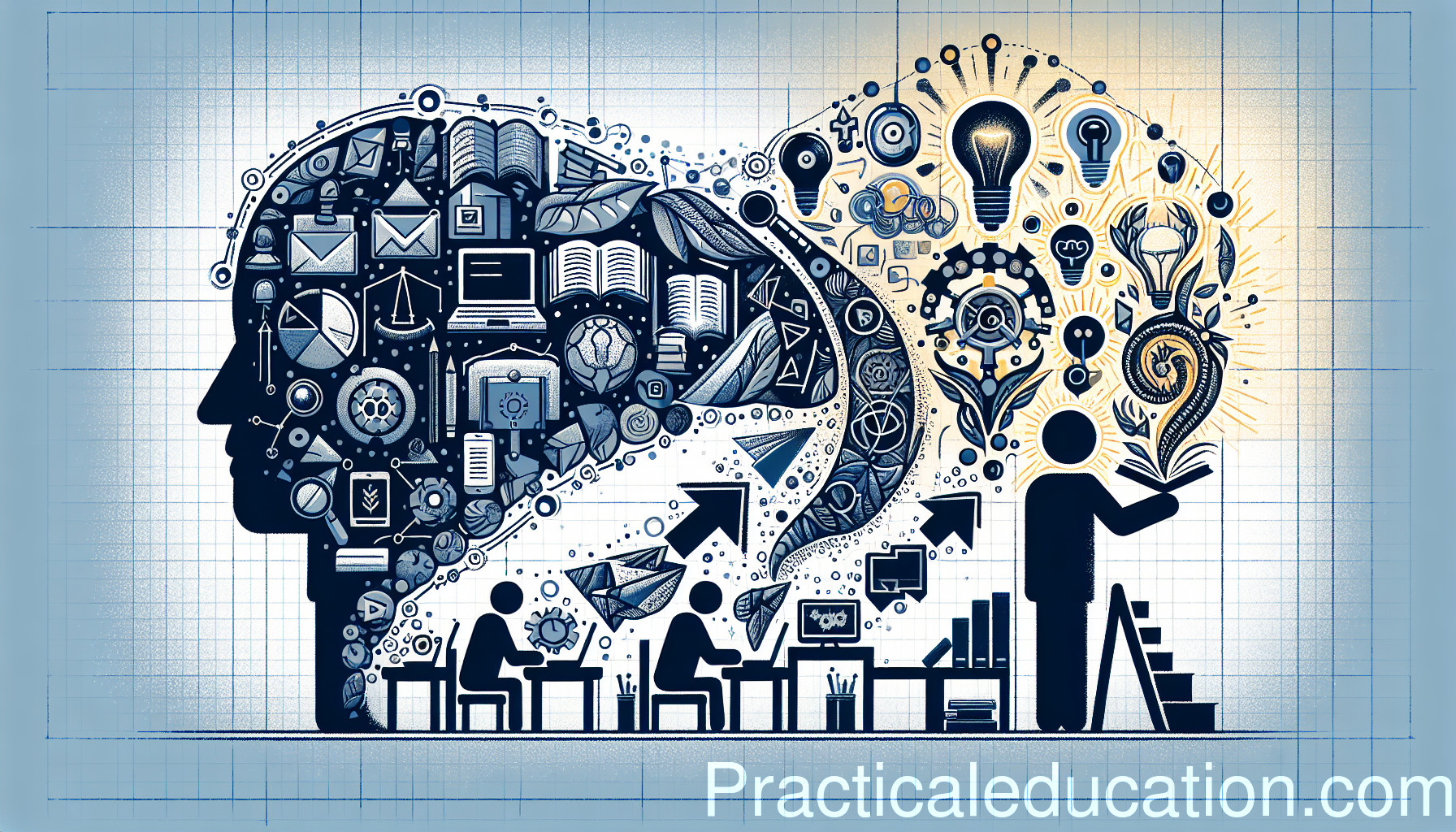
Any system where you pay hundreds of thousands to be told you’re “not ready” to earn is broken. We’ve glamorized suffering for education while hiding its bankruptcy. A smart system pays the learner—not the other way around. No one should go broke just to be unemployed. Education must become a wealth engine.
The current educational paradigm, heavily reliant on a traditional framework of memorization, obedience, and credentialism, has culminated in a system that often leaves students impoverished both financially and intellectually.This model promotes the notion that students must invest extensive resources—time, energy, and money—only to emerge with qualifications that many employers do not value.
It is a system that instructs students to endure years of learning under the false pretense that suffering equates to value.
Such conventional wisdom must be dismantled and replaced with an educational approach that recognizes learning as a pathway to immediate and tangible wealth creation, not as a preamble to it.
The dual crises of student debt and graduate unemployment highlight a dissonance between education and economic reality.
Millions of students graduate with substantial debt and face job markets that neither value their degrees nor prepare them for practical, income-generating opportunities.
This calls for a critical reevaluation of educational objectives.
Education should not merely prepare individuals for a future that is often uncertain; instead, it should enable real-world applicability and immediate impact in the workforce.
This demands an educational framework that prioritizes practical and profitable skills over abstract knowledge that rarely sees the light of economic viability.
To address this imbalance, a radical restructuring of curriculum design is necessary.
Educational institutions must shift from being mere providers of degrees to becoming facilitators of skill acquisition that directly correlates with market needs.
Curriculums must integrate practical learning experiences that align with the demands of the economy.
This can be achieved through partnerships with industries, creating a fusion between education and business where students engage in projects that yield real-world results.
Such experiential learning initiatives would give students exposure not only to theoretical constructs but also to the operational realities of businesses, thus equipping them with the skills needed to generate income.
Moreover, the learning experience should pivot toward a model that empowers students as active participants in their education.
By adopting a student-driven approach, learners can identify and pursue areas of interest that resonate with their career aspirations.
This autonomy transforms the learner from a passive consumer of knowledge to a proactive architect of their path.
Empowerment enhances the intrinsic motivation to learn, resulting in a deeper commitment to acquiring skills that can quickly be translated into financial stability.
Supporting this approach necessitates flexible educational structures that allow for custom pathways tailored to individual student aspirations and market dynamics.
On a global scale, this redefined educational model must also consider diverse economic contexts and cultural nuances.
For instance, in economies where entrepreneurship is pivotal, educational systems should emphasize business skills, innovation, and adaptability, enabling students to become job creators rather than just job seekers.
Conversely, in more traditional and stable economies, educational frameworks can buffer students against market volatility by instilling versatile skill sets and fostering resilience through continuous learning and adaptation.
Furthermore, the implementation of this practical education model requires the incorporation of technology as a vital enabler.
Digital platforms can facilitate access to resources, foster collaboration across global learners, and provide real-time feedback on projects.
By utilizing technology, educational institutions can break geographical barriers, allowing individuals from diverse backgrounds to engage with the same learning materials, collaborate on projects, and share insights borne from unique experiences.
This creates an enriched educational tapestry that acknowledges and celebrates global diversity while uncovering common areas of need that education must address.
To galvanize such a transformation in education, regulatory bodies should reconsider the criteria that define educational success.
No longer should metrics be solely based on graduation rates or standardized testing scores.
Measures of success should include rates of employment post-graduation, student satisfaction with their education in relation to career advancement, and the economic impact of education on communities.
By realigning accountability measures, educators and institutions can incentivize the creation of learning experiences that genuinely prepare students for the complexities of the modern workforce.
In conclusion, the prevailing educational system that imposes heavy costs on students while failing to equip them with relevant skills is fundamentally flawed.
A smarter system is one that recognizes education as a wealth-generating engine where financial responsibility shifts from the student to the educational institutions themselves.
Thus, it is not just the students who should pay in pursuit of knowledge but rather our educational institutions that should invest in the potential of their students.
By adopting a global mindset focused on practical, student-driven learning, we can dismantle outdated educational myths and reconstruct a system that ends the glamorization of suffering for credentials and instead fosters an environment of sustainable success.
“Education should be a catalyst for wealth, not a burden of debt.” — Eric Bach