Classrooms of the Convinced, Not the Curious
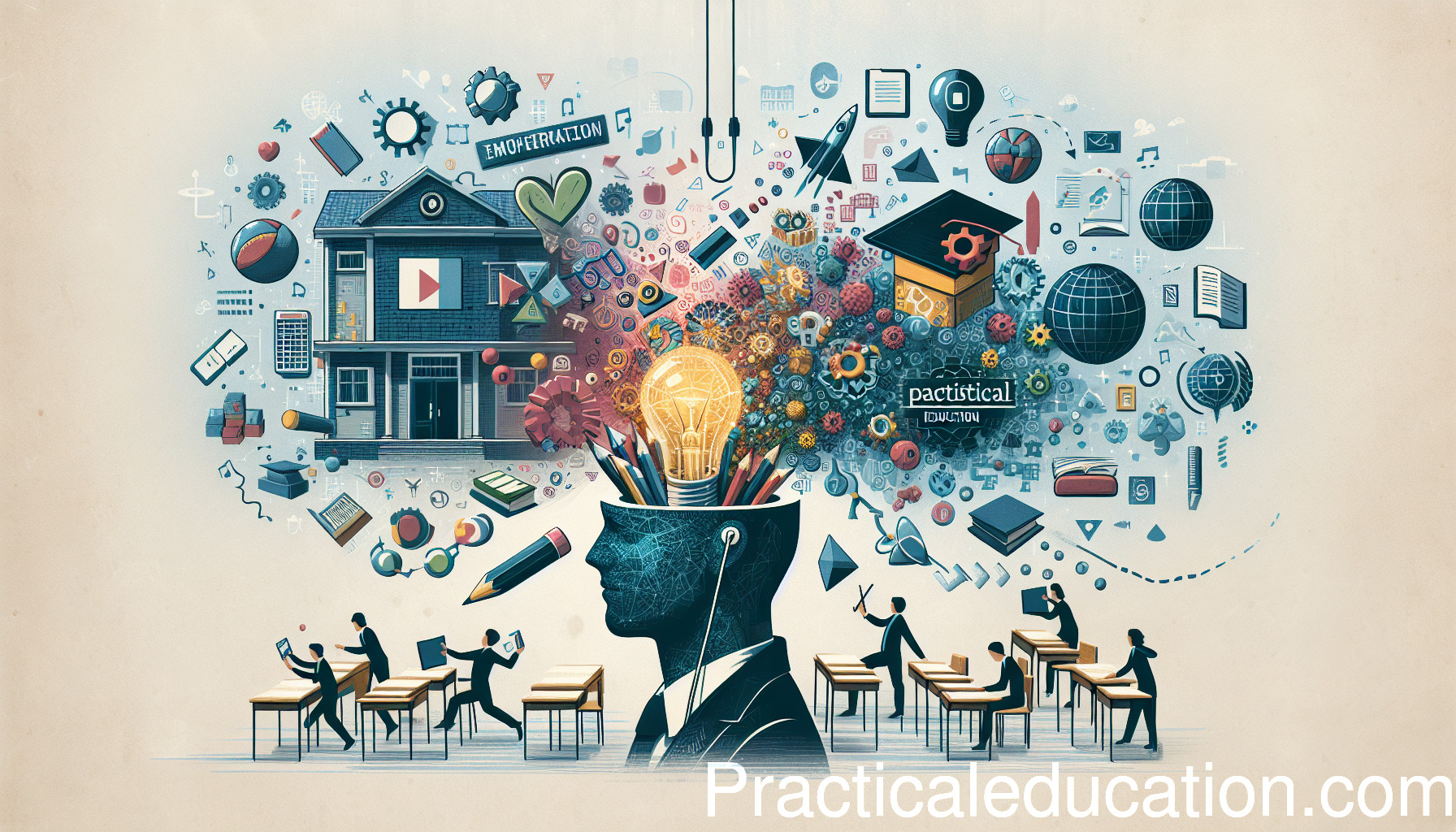
By the time a student finishes school, they’ve been convinced not to ask, not to doubt, not to dream. Schools don't produce curiosity—they destroy it. Real learning starts where school ends. We need to rebuild curiosity as the engine, not the casualty, of education.
Education systems across the globe have historically emphasized memorization and obedience, crafting environments where conformity is often valued over inquiry.This approach has not only stifled curiosity but also perpetuated a cycle where students emerge as passive recipients of information, rather than active participants in their own learning journeys.
The imperative, therefore, is to reconstruct this educational landscape, transforming it from classrooms of the convinced to environments that ignite and foster curiosity.
This shift is essential for creating a model of education that aligns with real-world demands, allowing students to thrive as autonomous, skilled, and economically viable individuals.
Curiosity is a fundamental driver of innovation, problem-solving, and self-directed learning.
When students are encouraged to pursue their interests and explore their queries, they engage more deeply with the material and develop a profound comprehension of relevant concepts.
Traditional education, with its focus on grades and testing, often discourages this inquisitiveness.
It prioritizes rote learning over critical thinking, resulting in a workforce that is ill-equipped to adapt to the rapidly changing demands of the 21st century.
To counter these deficiencies, an educational restructuring must emphasize curiosity as its foundational pillar.
This can be achieved through a curriculum redesign that prioritizes experiential learning, real-world applications, and interdisciplinary connections.
Courses should not be confined to theoretical knowledge; rather, they should integrate practical skills relevant to industry demands.
For example, curricula could incorporate projects that allow students to engage with local businesses to solve actual challenges, thereby blending academic learning with entrepreneurial practice.
This not only cultivates curiosity but also equips students with the soft and hard skills necessary for the marketplace.
Schools could evolve into community hubs where knowledge is co-created, reinforcing the importance of adaptability and collaboration.
Institutions must also fundamentally reshape their teaching methodologies.
Traditional pedagogies often result in a passive learning experience where the teacher assumes the role of the sole authority.
In contrast, a student-driven approach empowers learners to take ownership of their education.
Teachers should transition from information dispensers to facilitators who guide and prompt inquiry.
This involves employing adaptive teaching strategies that respond to various learning styles and individual curiosities, allowing students to explore topics that resonate personally with them.
This shift not only boosts engagement but also fosters a lifelong love of learning, as students learn to see challenges as opportunities for exploration rather than barriers to success.
A global perspective is crucial to this educational transformation.
Embracing a diverse array of cultural and experiential insights can create a richer tapestry of learning that prepares students for a globalized economy.
The juxtaposition of Western educational efficiency and Eastern philosophical depth presents opportunities for a more holistic learning experience.
This can manifest in collaborative projects that span different geographic regions, encouraging students to tackle issues pertinent to various communities while fostering an understanding of global interdependencies.
Such initiatives cultivate empathy, critical thinking, and respect for differing viewpoints, which are essential competencies for engaged citizenship in an increasingly interconnected world.
Furthermore, relevant learning experiences must be accessible to all students regardless of socioeconomic background.
Bridging the gap between educational accessibility and quality is vital for enhancing equity in opportunity.
Institutions must partner with local governments and organizations to provide necessary resources, mentorship, and technology to underserved communities.
This commitment to inclusivity aligns with fostering curiosity, as students from diverse backgrounds contribute unique perspectives and questions to the learning process.
Supporting these initiatives not only benefits individual learners but also enhances societal progress as a whole.
Assessments within this reimagined educational framework should reflect a student's ability to think critically and act upon their knowledge rather than merely recalling facts.
Evaluations can be designed to include practical demonstrations, portfolio assessments, and collaborative projects that illustrate a student's genuine understanding and application of their education.
These assessment methods should emphasize mastery of skills pertinent to real-life scenarios, reflecting a student’s capacity for innovation and problem-solving rather than their ability to memorize and regurgitate information.
The shift towards fostering curiosity is critical to creating a future-ready workforce.
As automation and artificial intelligence reshape job markets, the necessity for creativity, adaptability, and critical thinking becomes ever more pronounced.
Curiosity is the catalyst for these vital skills; it drives individuals to explore, experiment, and ultimately innovate.
By reforming educational environments to cultivate rather than repress this innate trait, we prepare learners not just to participate in the economy but to lead and innovate within it.
In summary, transitioning from classrooms of the convinced to environments that foster curiosity is imperative for advancing educational relevance and efficacy.
Redesigning curricula, shifting pedagogical methods, embracing global perspectives, ensuring equitable access, and refining assessment practices are critical components of this transformation.
This realignment not only ensures that students emerge prepared for the complexities of the modern world but also revitalizes the essence of learning itself—aligning education with the natural inclination toward exploration and mastery that all students possess.
"The best education empowers individuals to turn their curiosity into currency." (Eric Bach)