The Compliance Economy
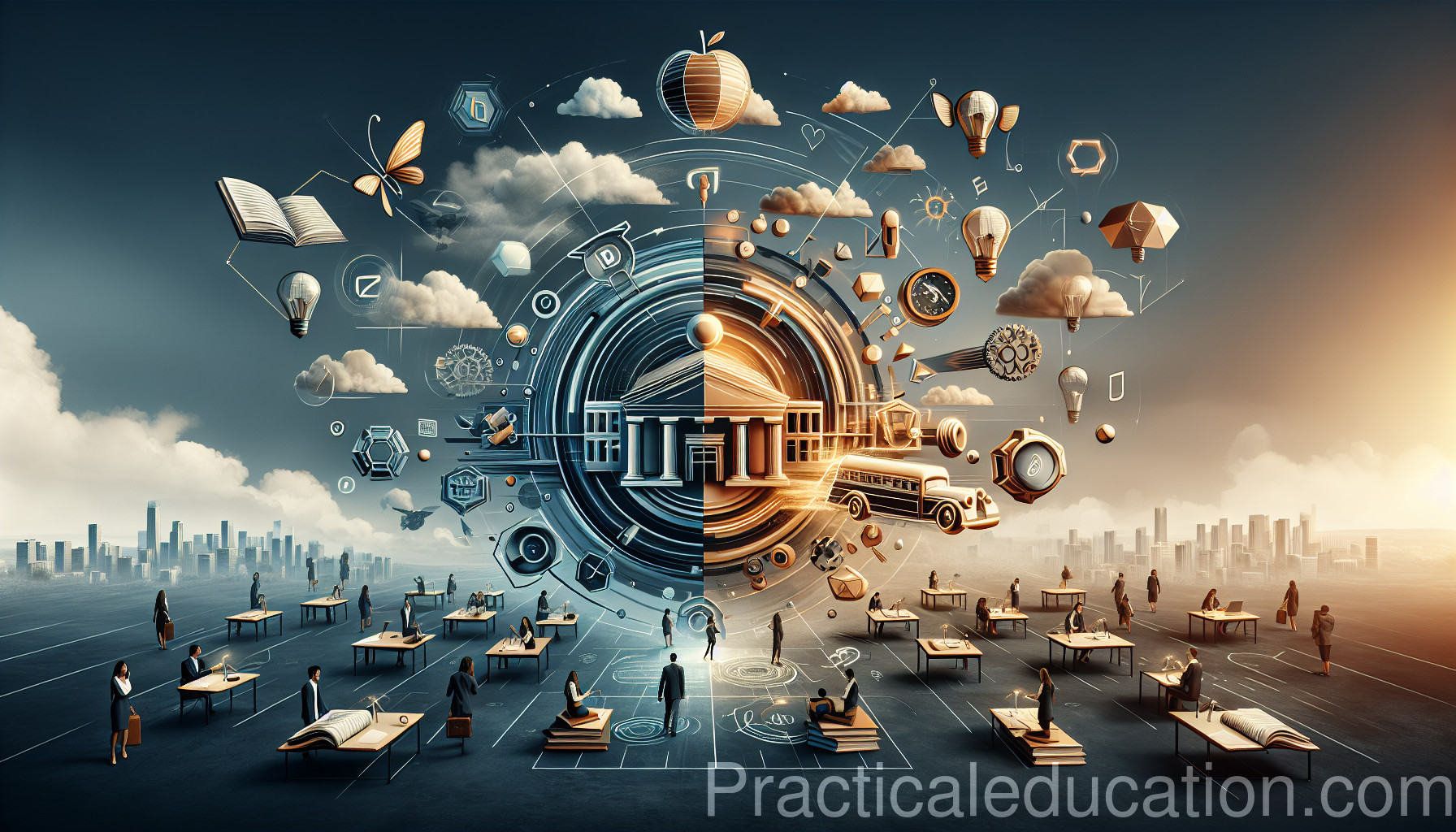
Students aren’t taught to think—they’re taught to comply. Teachers aren’t allowed to innovate—they’re trained to implement. Schools have become factories of compliance in a world that demands improvisation. If we want leaders, creators, and rebels—we must stop rewarding obedience.
The Compliance EconomyThe traditional education model has long operated under the premise that compliance is synonymous with success.
In this view, students are conditioned to follow established protocols, absorb content passively, and secure credentials as a means of demonstrating their worth.
This model stands in stark contrast to the competencies required in a rapidly evolving world that prizes innovation, adaptability, and critical thinking.
As such, dismantling this myth of compliance is not merely an educational imperative; it is essential for cultivating the leaders, creators, and independent thinkers of the future.
Students are often taught that the primary objective of education is to follow instructions and reproduce knowledge.
This approach not only limits their potential but also undermines the imperative for real-world application.
In an economy increasingly characterized by uncertainty and rapid change, compliance is no longer sufficient.
The ability to improvise, innovate, and respond dynamically to new challenges is paramount.
Educational institutions must pivot from a focus on rote memorization and passive compliance to fostering skills that facilitate exploration and creativity.
Curriculum design should shift towards experiential learning, where students engage with real-world problems.
This necessitates a departure from traditional subject-centered instruction towards a more integrated model that emphasizes cross-disciplinary projects.
For instance, rather than learning economics in isolation, students could tackle a real-world problem, such as local economic development, drawing on insights from sociology, environmental science, and political theory.
This more holistic approach would provide a richer educational experience and develop the critical skills necessary for navigating complex societal challenges.
Moreover, the role of the teacher must evolve beyond the traditional authority figure who disseminates information.
Educators should be empowered to act as facilitators and mentors, guiding students in their exploration and fostering an environment conducive to inquiry and experimentation.
This requires a significant recalibration of training programs for teachers, who should be equipped with pedagogical strategies that emphasize flexibility, adaptability, and the cultivation of a growth mindset.
A partnership model between teachers and students, where both parties learn from each other, can help foster an engaged and dynamic classroom atmosphere—one that mirrors the reality of collaborative work environments in the modern economy.
Assessment methods also require fundamental reform.
Current metrics of success, such as standardized testing and grading systems, primarily measure compliance rather than understanding, creativity, or adaptability.
Alternative assessment strategies should be developed that evaluate students' ability to apply knowledge in practical contexts, engage in critical thinking, and work collaboratively.
Portfolios, project-based assessments, and peer evaluations can provide a more comprehensive measure of a student’s capabilities and readiness for the complexities of the real world.
Institutions of higher education represent another critical domain for reform, especially in how they align with the needs of the labor market.
The business world increasingly seeks graduates who are equipped not just with theoretical knowledge, but with practical experience and entrepreneurial skills.
This can be addressed through partnerships between educational institutions and industry, where internship programs are integrated into the curriculum, and students are given opportunities to solve actual industry problems.
Such partnerships would not only enhance learning outcomes but also create a pipeline of innovation and talent that benefits both students and businesses alike.
A global perspective must also inform these reforms.
Educational systems should be designed to be culturally responsive, recognizing and valuing diverse viewpoints and approaches.
In a globalized economy, students must be prepared to engage with peers from various cultural backgrounds and navigate an increasingly interconnected world.
Programs that emphasize global citizenship, cultural intelligence, and collaborative problem-solving can better prepare students to thrive in such an environment.
Traditional Western educational practices, which often prioritize individual achievement, should be complemented with Eastern educational philosophies that emphasize collective success, ethical leadership, and lifelong learning.
It is essential that students are encouraged to perceive challenges as opportunities for growth rather than instances where compliance is enforced.
A curriculum that promotes inquiry, exploration, and experimentation will contribute to a culture where students feel empowered to take risks and learn from failure.
Organizationally, schools must create environments where innovation is not only accepted but expected.
This can be achieved through structures that allow for autonomy and flexibility in pedagogical approaches, ensuring that educators can adapt their methods to the needs of their students without fear of reprisal or restriction by administrations adhering to outdated compliance paradigms.
Emphasizing ownership over compliance empowers students to take charge of their learning pathways.
Engagement in practical skills, such as financial literacy, entrepreneurship, and community organizing, further promotes autonomy and prepares students for navigating the complexities of adult life.
When students are actively involved in shaping their educational experiences and are provided with the tools to transform their ideas into tangible outcomes, they are more likely to emerge as capable leaders and innovators.
The transition away from a compliance-driven education model is not without its challenges.
Institutional inertia, entrenched interests, and resistance to change can impede the adoption of new pedagogical frameworks.
However, the urgency of preparing students for an unpredictable future compels us to reconsider the fundamental goals of education.
As the landscape of work and societal contribution evolves, so too must the methods of learning that prepare individuals to meet those demands effectively.
In summation, moving beyond a compliance economy requires a deliberate shift towards an educational paradigm that emphasizes practical, student-driven learning.
By fostering an environment where inquiry thrives, empowering teachers to innovate, and integrating real-world expertise into curricula, educational institutions can equip students not only with knowledge but also with the capability to apply that knowledge in meaningful ways.
This fundamental redesign is essential for nurturing a generation that possesses the autonomy, creativity, and resilience necessary to lead in an increasingly complex world.
“In a world that demands improvisation, rewarding obedience serves only to stifle innovation.” (Eric Bach)