The Education-Delusion Complex
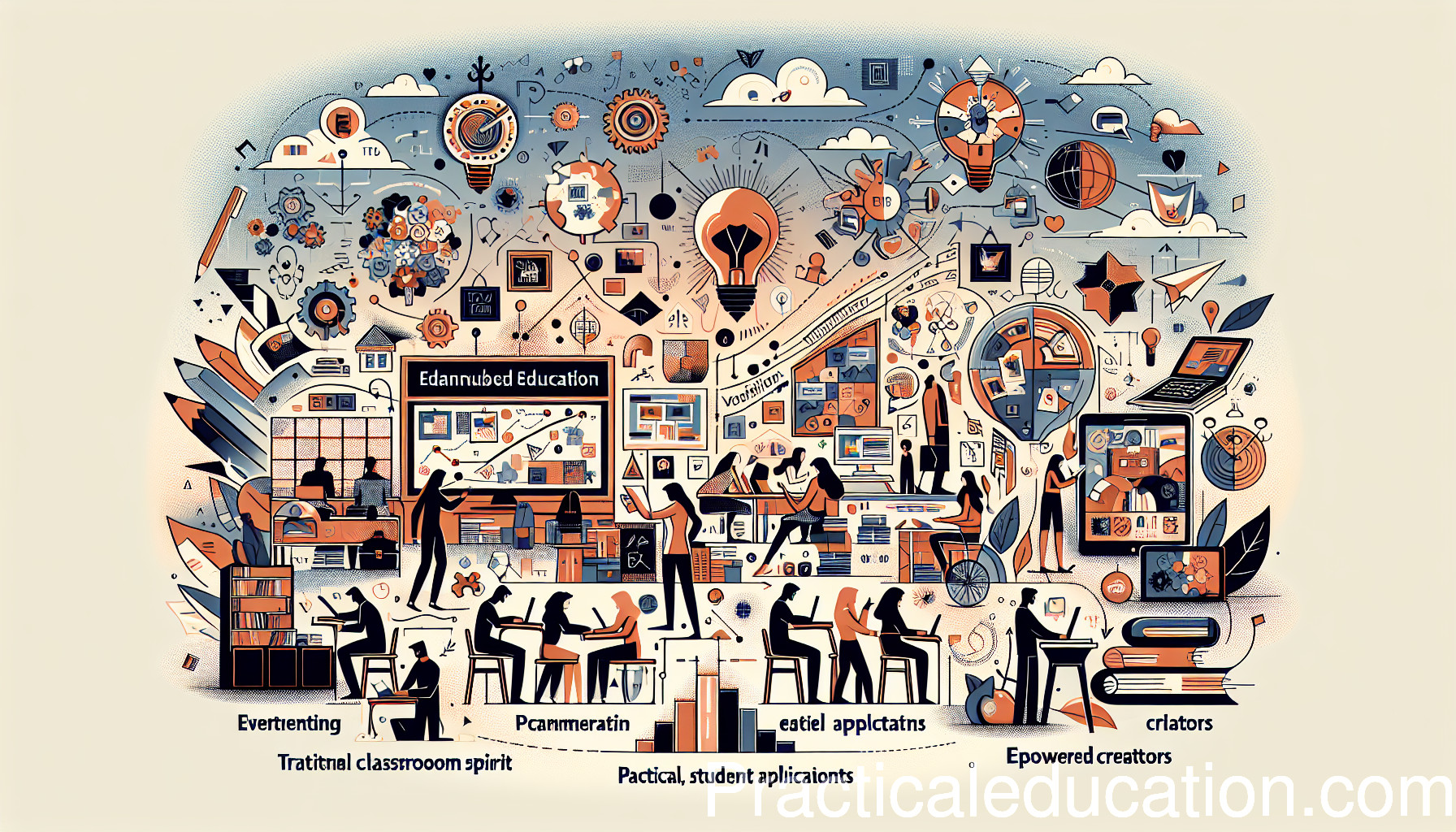
The more useless the degree, the more prestigious we make it. We’ve built an empire of illusions where empty knowledge is sold like gold. Students believe they’re getting ahead while falling years behind. The education system is a hall of mirrors—shiny, confusing, and built to distract. Time to break the glass.
The transformation of education requires a critical assessment of the existing paradigms that govern it.Central to the current system is what can be termed the Education-Delusion Complex, a cycle wherein the perceived value of credentials, derived largely from traditional academic institutions, far exceeds their actual utility in the marketplace and in life.
Degrees often symbolize compliance with an outdated framework rather than genuine understanding or capability.
This delusion is perpetuated by societal norms that equate educational verbosity with competence and success, disregarding the reality that many degrees offer only superficial insights devoid of practical application.
In dismantling this complex, we must first recognize that education should not exist merely to produce students who excel in memorization and compliance.
It must cultivate individuals capable of engaging with the complexities of the real world, fostering skills that are valuable and actionable.
The contemporary student must be equipped with the tools necessary for navigating a global landscape characterized by rapid change and diverse challenges.
This can only be achieved through a paradigm shift towards practical education that emphasizes real-world experience and student-driven learning.
Curriculum design must pivot away from rote knowledge and abstract concepts.
An effective educational model must integrate project-based learning, where students engage in real-life projects that require problem-solving and innovative thinking.
This reflects a dual recognition: first, that learning is most effective when students can apply knowledge in tangible scenarios; second, that the lingering emphasis on traditional exams and grades is misaligned with the demands of modern careers and economies.
By embedding practical skills and entrepreneurial thinking into the curriculum, educational institutions can better serve students' aspirations and the realities of their future workplaces.
Alongside curriculum reform, the institutions themselves must reconsider their roles within this framework.
Conventional universities often emphasize prestige over practical outcomes.
They have created bureaucracies that reward compliance, not creativity.
The imperative for institutional change lies in recognizing education as a service that must adapt to student needs and market realities.
Institutions should prioritize partnerships with industries, facilitating internships and collaborative initiatives that provide students direct access to employment opportunities and relevant experience.
This approach necessitates flexible, adaptable structures in educational organizations that can respond to shifts in labor markets and globalization.
The student experience must be redefined to place students at the center of their learning journey.
Rather than treating education as a passive process where students receive knowledge from authorities, the system should empower them to explore their interests, pursue their passions, and develop ownership over their educational experiences.
This requires mentorship models that allow for personalized pathways, supporting students as they navigate complex learning demands.
An emphasis on autonomy encourages the exploration of diverse methods and approaches, fostering a more profound engagement with knowledge and skill acquisition.
On a broader scale, there exists a crucial need for a global mindset within educational reform.
As economies become increasingly interconnected, learning must transcend regional and cultural boundaries.
Western models often prioritize rapid execution and entrepreneurship, while Eastern frameworks emphasize depth of knowledge and holistic understanding.
The integration of these perspectives can yield a comprehensive educational model that is adaptable and relevant across various geopolitical contexts.
This fusion allows students to acquire robust critical thinking skills and the ability to address both local and global challenges effectively.
As we progress towards a practical education framework, the implications are profound, affecting every layer of the learning ecosystem.
Educators must engage in continuous professional development to align their teachings with the demands of an evolving workforce.
Policymakers should advocate for reforms that promote funding structures tied to outcomes rather than enrollment numbers.
Finally, communities must embrace education as a lifelong endeavor, fostering a culture that values learning beyond the traditional confines of schooling.
In summary, dismantling the Education-Delusion Complex requires a concerted effort to redefine learning as a dynamic and practical pursuit.
Education must evolve into a system that prioritizes ownership, income, autonomy, and mastery of real-world skills.
By focusing on what is genuinely valuable in a complex world, we can design educational experiences that yield tangible results for students and society.
The merits of this transformation are clear: students will not only be equipped for employment but also for informed and engaged citizenship.
To encapsulate this chapter's message: "Education should lead to empowerment, not just a diploma; it is about acquiring the skills to navigate the world, not merely collecting certificates." (Eric Bach)