From Subject to Substance
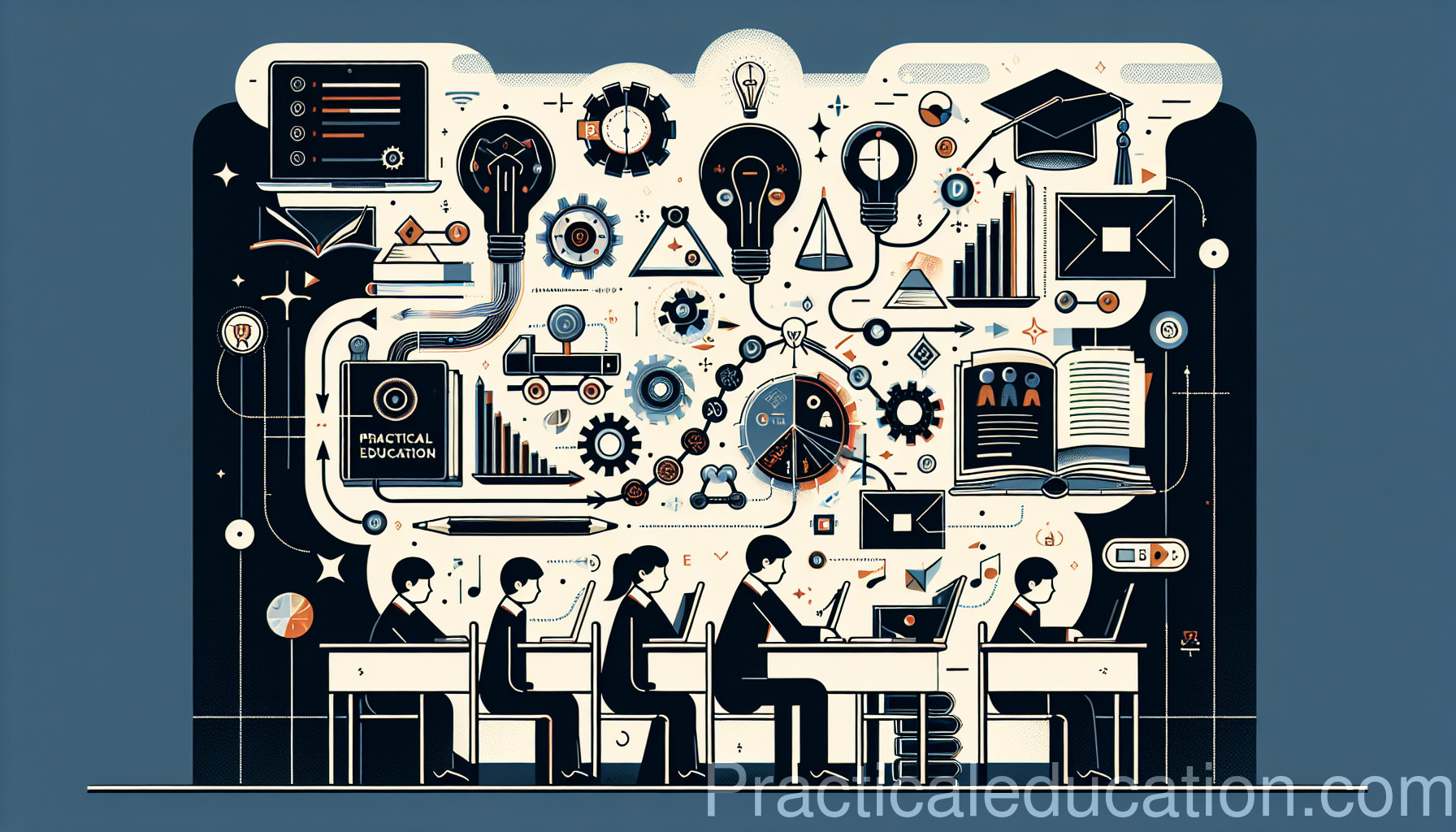
Why divide the world into “subjects” when real life doesn’t work that way? We don’t experience science without language, or politics without history. Every real problem is cross-disciplinary. It’s time for schools to stop teaching isolated topics and start teaching interconnected truth.
The current structure of education is deeply rooted in the compartmentalization of knowledge into distinct subjects.This traditional model, which segregates disciplines such as mathematics, science, language arts, and history, fosters a limited understanding of how these areas interact in real-world scenarios.
By presenting knowledge in isolated chunks, education systems inadvertently reinforce the outdated notion that we should approach problems in a similarly fragmented manner.
Such a paradigm limits student engagement and preparedness for the complexities of the contemporary world, where interdisciplinary collaboration and systems thinking are paramount.
In an interconnected world, knowledge does not exist in silos.
Real-life scenarios often demand integrated solutions that draw from multiple disciplines simultaneously.
For instance, consider the issue of climate change: addressing this global challenge requires an understanding of scientific principles, economic implications, political frameworks, and ethical considerations.
Students educated within a segmented curricular framework may find themselves ill-equipped to tackle such complex issues, as they lack the experience of synthesizing information from diverse fields to formulate viable solutions.
To dismantle the myth that subjects should be studied in isolation, educational institutions must reconsider curriculum design.
An effective educational reform would entail constructing programs that promote cross-disciplinary learning, thereby reflecting the complexities of real-world systems.
Rather than adhering to a rigid structure of classes segmented by subject matter, schools could implement thematic units that encompass multiple disciplines while focusing on a central problem or project.
For instance, a unit centered on urban sustainability could engage students in scientific experiments related to environmental science, economic evaluations of sustainability practices, historical analyses of urban development, and explorations of societal impacts through language arts.
Such a pedagogical shift would not only illuminate the interconnectedness of knowledge but also enhance the relevance of education for students.
By engaging in practical, project-based learning that is both rigorous and applicable to their lives, students would gain competencies that extend beyond rote memorization.
This hands-on approach fosters deeper mastery of concepts as students actively engage with materials and collaborate with peers to address real-world challenges.
Furthermore, integrating learning experiences in this manner cultivates essential skills such as critical thinking, creativity, and collaboration—skills that are highly valued in today’s economy.
The implications of this cross-disciplinary model for educational institutions extend to the collaborative training of teachers, curriculum developers, and educational leaders.
Professional development programs must be restructured to encourage educators to collaborate and design integrated curricula.
This approach not only equips teachers with the tools to break down the barriers between subjects but also fosters a culture of ongoing innovation within educational institutions.
Faculty members should engage in continuous dialogue about interdisciplinary teaching methodologies and share successful strategies that enable students to draw connections between diverse fields of study.
Moreover, the success of such educational reform relies heavily on a global mindset.
The current geopolitical landscape underscores the need for educational systems that equip students to navigate diverse cultural contexts and challenges.
By fostering programs that integrate multiple perspectives—drawing from both Western entrepreneurial approaches and Eastern philosophical depth—educators can prepare students for a globalized workforce that values adaptability and intercultural competence.
In this framework, international cooperation becomes a critical component of curriculum development and student-learning experiences.
Educational institutions could form partnerships across borders to share resources, methodologies, and insights that enhance interdisciplinary education.
This collaboration would not only expand the breadth of knowledge available to students but also facilitate a deeper understanding of global interconnectedness—allowing students to explore how local actions can have far-reaching impacts worldwide.
As we propose this radical transformation in educational design, it is imperative to assess continuously the output of such initiatives.
By establishing clear metrics to evaluate student learning outcomes in cross-disciplinary contexts, educators can gather data on the effectiveness of integrated approaches.
This evidence-driven assessment will provide insights on best practices, allowing educational systems to refine methodologies continually and ensure that they remain responsive to the evolving demands of students and society.
Ultimately, as education moves towards a model that emphasizes substance over subject, the objective is not merely to enrich the learning experience but to empower students with the skills necessary for leadership and innovation.
By fostering an environment where students are encouraged to engage with interconnected truths, we lay the groundwork for a generation that can navigate complexity with confidence and achieve mastery in real-world applications.
Such an educational paradigm shift transcends traditional models, positioning learning as a continuous journey of inquiry and application.
Students become not just passive recipients of fragmented knowledge but active participants in a dynamic exploration of how disciplines intersect to address contemporary challenges.
This approach emphasizes ownership of learning, enabling students to pursue passions that align with their strengths while developing a realistic understanding of the marketable skills they cultivate through their interdisciplinary studies.
In conclusion, the stark reality is that real-world challenges do not arrive neatly categorized by subject.
The complexity of life demands that we equip learners with the ability to see beyond artificial boundaries and to weave knowledge from multiple disciplines into actionable insights.
As educational reformers, our responsibility lies in creating frameworks that embrace this interconnectedness, aligning our practices with the realities of the 21st century.
"To teach is to engage the whole, not to divide the parts; only then can we know the substance of truth." — Eric Bach.