War on the Polymath
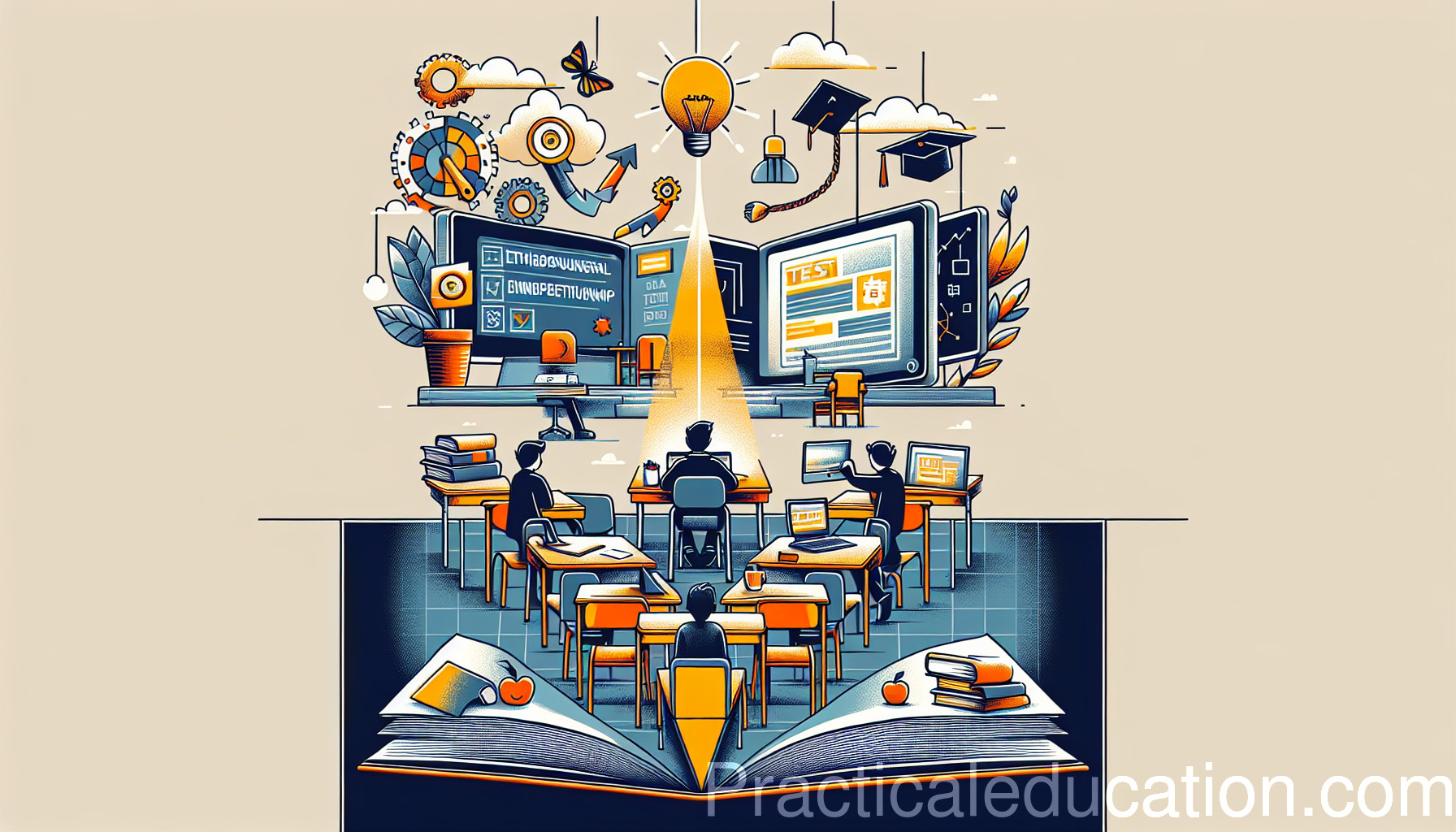
The system punishes students who are good at too many things. You must choose: science or art, tech or literature, logic or emotion. But the best minds of our era are hybrids. The polymath is the model of the future—not the exception. Stop slicing minds into categories and start training fusion.
The educational systems prevailing across the globe are largely predicated on the compartmentalization of knowledge and skills.Students are trained to specialize in narrow domains, often leading to the premature silencing of interests or aptitudes in other fields.
This division breeds compliance over creativity, and obedience over curiosity.
The underlying assumption is that mastery in a singular discipline is the pinnacle of educational achievement; however, this view not only oversimplifies the complexities of modern societal needs but also undermines the potential of countless students who embody the traits of a polymath.
The current educational framework actively discourages them from pursuing multifaceted interests, thus preparing them inadequately for an increasingly interconnected and complex world.
The notion of the polymath—the individual proficient in multiple domains—emerges as a salient antidote to the limitations of traditional schooling.
The global challenges we face, such as climate change, public health crises, and technological disruptions, require innovative solutions that draw from diverse fields of knowledge.
In this context, the integration of varied disciplines—science with art, technology with literature, logic with emotional intelligence—creates a fertile ground for innovative thinking and problem-solving.
Therefore, it is critical for educational institutions to dismantle the artificial barriers that separate knowledge, fostering instead an environment conducive to interdisciplinary exploration and synthesis.
Implementing an educational model centered around the polymath entails a radical re-evaluation of curriculum design.
Traditional curricula, with their rigidly defined subjects and linear progression, must transition to a framework that encourages exploration across disciplines.
A project-based learning approach, wherein students engage in real-world problems requiring multifaceted solutions, exemplifies this shift.
For instance, students could collaborate on projects that require both technical skill and artistic sensibility, such as designing an environmentally sustainable product that is also aesthetically appealing.
This experiential learning model cultivates not only practical skills relevant to diverse careers but also the cognitive flexibility necessary for adapting to changing environments.
The synergy between disciplines should also extend to assessment methods.
Traditional assessment techniques, which often rely on standardized testing and rote memorization, do not measure the competencies a polymath embodies.
Instead, performance-based assessments should be prioritized, allowing students to demonstrate their ability to integrate knowledge and skills from various fields.
Such assessments could take the form of portfolios showcasing interdisciplinary projects or collaborative presentations, which provide a more holistic view of a student's capabilities and preparation for real-world scenarios.
This shift in assessment not only reflects the varied proficiencies of students but also encourages ongoing engagement and ownership of the learning process.
Furthermore, educational institutions must foster a learning culture that values diversity in thought and creativity.
A pedagogical shift toward inclusivity involves recognizing and celebrating the diverse talents and interests of students, rather than pushing them into predetermined pathways.
This can be operationalized through mentorship programs that connect students with industry professionals from various disciplines, allowing them to explore the intersections of their interests in practical settings.
Engaging with real-world contexts empowers students to see the relevance of their multifarious skills and interests, reinforcing the idea that success does not conform to a singular narrative of specialization.
Globally, this approach to education promotes a mindset that can adapt to various cultural contexts.
In Western educational models, there has been a growing recognition of the importance of interdisciplinary studies; however, many Eastern educational systems still emphasize strict specializations.
A synthesis of these methodologies could harness the analytical rigor often found in Eastern models while incorporating the creative freedom prevalent in Western paradigms.
The result is a more holistic educational framework that prepares students not only to navigate their immediate socioeconomic landscapes but also to thrive in a competitive global marketplace.
The implications extend beyond individual student experiences; entire educational systems must shift to accommodate this polymathic potential.
Policymakers should prioritize funding for innovative educational models that promote interdisciplinary learning and foster environments conducive to exploration across subject areas.
Moreover, curricula should be regularly reviewed and updated to reflect emerging technologies and evolving societal needs, ensuring that education remains relevant and responsive to the challenges of the times.
Educators, too, must be equipped with the tools and training to cultivate polymathic curricula, encouraging students to embrace their unique combinations of interests.
In addition to reshaping institutional structures, a cultural shift is required.
Societal perceptions of education must evolve to recognize and value the contributions of polymaths.
This means celebrating a wider array of career paths and definitions of success, thus alleviating the pressure on students to conform to traditional notions of expertise.
The emphasis should shift to lifelong learning, encouraging individuals to continuously evolve their skill sets in response to changing societal needs.
Such a cultural transformation will support the development of individuals who are not only adaptable but also capable of generating innovative solutions across a spectrum of disciplines.
In conclusion, the traditional model of education, which has historically marginalized the polymathic mind, must be overhauled in favor of integrated learning systems that embrace interdisciplinary creativity.
By fostering an environment that encourages exploration beyond predefined categories and nurtures diverse interests, we prepare students not only for individual success but for collective societal advancement.
The polymath is not merely a model for success but a necessity for the future, capable of navigating and addressing the multifaceted challenges that lie ahead.
Education must evolve to reflect this reality.
“Advancing the future requires not specialists, but polymaths: those who embrace the fusion of knowledge.” — Eric Bach.