Schools That Punish Talent
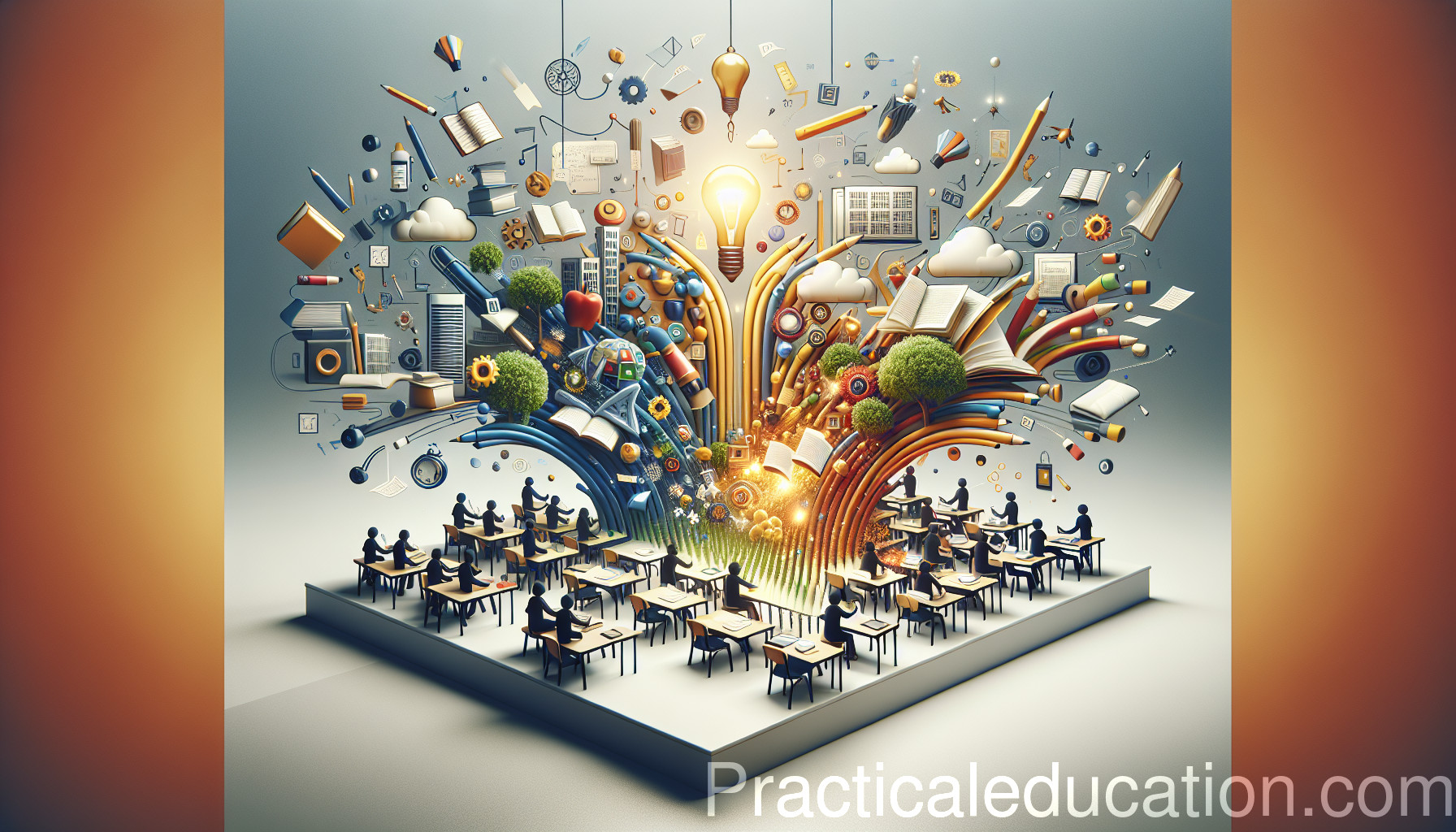
The fastest learners are told to slow down. The weirdest kids are sent to therapy. The loudest thinkers are shushed into silence. We punish what the world needs most. It’s time to make room for the gifted, the different, and the disruptive.
In the prevailing educational model, often characterized by standardization and rigidity, there exists a systematic tendency to suppress individual talents in favor of conformity and uniformity.This chapter argues for a radical reassessment of this framework, positing that the traditional schooling system unduly penalizes characteristics which are essential for innovation and progress: speed of learning, unconventional thinking, and audacious questioning.
To cultivate the capabilities necessary for a rapidly evolving global landscape, educational reform must prioritize individual strengths and initiate practices that foster a diverse array of talents, moving away from punitive structures and toward enabling environments.
The traditional model of education is predicated upon methods that enforce compliance through memorization, with an emphasis on standardized testing that favors rote learning.
This model inherently devalues the unique cognitive profiles of students who may think differently or learn at an accelerated pace.
Individuals identified as ‘gifted’ are often encouraged to slow their learning progression to match that of their peers, effectively punishing them for excelling and stifling their drive to engage with material at a deeper level.
This response conveys a critical misunderstanding of the nature of intelligence and creativity; it assumes a one-size-fits-all approach, thereby neglecting the individual learning needs that a diverse student body presents.
Moreover, addressing the trait of non-conformity poses a particular challenge in conventional schooling.
Students who exhibit unique interests or divergent thinking patterns are frequently advised to conform, often through seeking external validation in the shape of therapy or behavioral modification.
This practice not only impacts emotional well-being but also perpetuates a culture that discourages innovation.
The irony lies in the fact that society increasingly values adaptability and creative problem-solving as paramount skills, yet the educational framework remains rooted in homogenization.
As a global society grapples with complex challenges, it is essential to dismantle these antiquated practices and create room for those who dare to think differently.
Redesigning the curriculum to embrace genuine engagement with the real world serves as a pivotal step in addressing the gaps created by current educational practices.
Rather than presenting knowledge as a static body of information to be memorized, education should be viewed as a dynamic process where students actively participate in their learning.
Curricula must incorporate project-based learning that connects theoretical knowledge with practical applications.
This approach not only enhances retention but also encourages students to own their educational journeys.
Through real-world projects, students can explore problems pertinent to their communities or interests, sharpening critical thinking and collaboration skills.
Furthermore, educational institutions must strive for environments that celebrate diversity in thought and learning styles.
Creating spaces where students are encouraged to voice their opinions and take risks is fundamental to nurturing creativity.
Peer-led discussions, mentorship programs, and interdisciplinary projects could be encouraged to allow students to engage with various viewpoints and develop autonomy.
Such practices must be integral to the institutional philosophy, promoting intrinsic motivation rather than reliance on extrinsic validation, such as grades or diplomas.
This shift in perspective not only benefits student experience but aligns educational institutions with the demands of a global economy increasingly defined by rapid change and technological advancement.
Effective education in the 21st century must break down traditional barriers, fostering an environment in which entrepreneurial spirit thrives.
Schools can leverage partnerships with businesses and non-profits to create opportunities for internships and hands-on projects in real-world settings, boosting student engagement and relevance.
These connections can facilitate experiential learning, exposing students to diverse scenarios that require innovative thinking and adaptable skills.
Across cultural contexts, the principles outlined above maintain their relevance.
While teaching methods may differ, the need for an educational model that recognizes individual capabilities transcends geographic and economic boundaries.
Eastern philosophies often emphasize holistic learning and the importance of developing a deep understanding of concepts through contextual practice.
By combining these insights with Western methods that emphasize entrepreneurship and practical application, a powerful educational model can emerge.
One that prioritizes mastery through experience and encourages a growth mindset geared toward lifelong learning.
Hierarchical structures within educational systems, which often diminish student agency, need to be reevaluated.
Educators should act as facilitators rather than mere transmitters of knowledge.
Encouraging student agency through participatory governance in classrooms—allowing students to voice concerns, suggest improvements, and even participate in decision-making—can lead to greater investment in their education.
Moreover, cultivating an atmosphere of mutual respect and shared ownership among students and educators fosters a culture where risk-taking is not only allowed but encouraged.
In conclusion, the imperative to dismantle punitive structures in education is clear.
As the world increasingly demands diverse skill sets that challenge traditional norms, the educational system must evolve.
By amplifying the voices of the gifted, the different, and the disruptive, we position students not just as learners but as future leaders capable of navigating the complexities of a global society.
The traditional schooling model that penalizes talent must be replaced with a framework that celebrates and cultivates it, ensuring that education is not merely a preparation for life but a vital tool for mastering it.
"It is not talent that needs punishment, but a system that fails to recognize it." — Eric Bach.