Educated but Unemployable
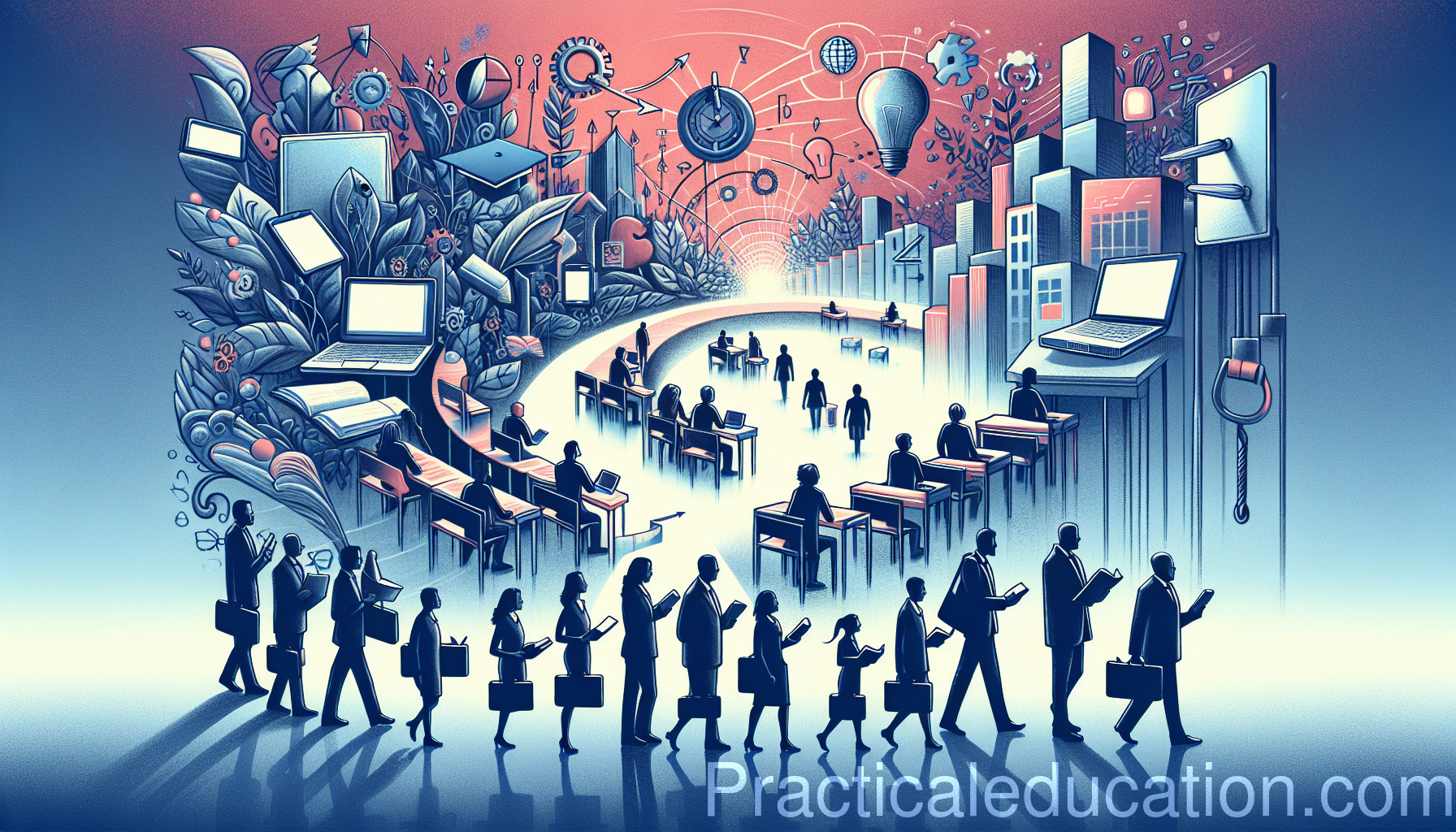
Billions are spent on education systems that produce unemployable graduates. The disconnect between classroom and real life is no accident—it’s by design. Why teach entrepreneurial thinking if you want obedient workers? But we don’t need employees—we need creators. Let’s teach skills that print paychecks, not regrets.
The reality of higher education today is marked by a staggering paradox: billions of dollars are allocated to educational frameworks, institutions, and systems that yield graduates often ill-equipped for the modern workforce.These individuals find themselves ensnared in a cycle of unemployment or underemployment, armed with degrees that, while perhaps prestigious, bear little relevance to market needs.
This disconnect between academia and the demands of real-world employment is not merely coincidental; it is the product of an established educational paradigm designed to produce compliance rather than creativity.
The prevailing historically rooted model prioritizes rote memorization, standardized testing, and conformity, neglecting the essential skills needed in today’s economy.
The pressing question, then, is how to transition this rigid system into a model that fosters ownership, income, autonomy, and mastery through practical, student-driven learning.
At the heart of this transition lies the urgent need to introduce entrepreneurial thinking into the curriculum.
Entrepreneurial thinking emphasizes innovation, problem-solving, and adaptability—qualities essential for thriving in an increasingly dynamic global economy.
Rather than solely preparing students to be passive recipients of information, educational programs must cultivate their ability to identify opportunities and address challenges.
When students recognize their ability to navigate uncertainty and generate value, they are more likely to develop the ownership mentality necessary to create their pathways to success.
Consequently, curricula must prioritize experiential learning, encouraging students to engage in projects that have real-life implications.
This includes integrating elements like internships, service-learning, and entrepreneurial ventures into the educational experience.
Realignment of the curriculum extends beyond mere subject matter; it requires a fundamental restructuring of how educational institutions operate.
Traditional metrics of success—grade point averages, standardized test scores, and credentialing—must be critically re-evaluated.
Instead, educational institutions should focus on concrete output: projects, innovations, and enterprises that students successfully develop, which directly correlate to their readiness for the workforce.
Institutions can implement competency-based assessments that measure students’ abilities in deploying knowledge and skills effectively rather than their capacity to memorize and regurgitate information.
By redefining excellence in educational outcomes, institutions can better prepare graduates to seize opportunities and contribute meaningfully to their communities and economies.
The implications of adopting a practical education framework extend beyond individual curriculum design; they encompass broader structural changes within educational institutions.
Schools must foster environments that encourage collaboration, interdisciplinary projects, and active engagement with local businesses and communities.
For example, partnerships with local enterprises can provide students with mentorship, resources, and firsthand experience, bridging the gap between theoretical knowledge and practical application.
Such collaboration can lead to co-op programs or accredited on-site training initiatives, where students not only learn but also apply their knowledge in real-world scenarios.
In transforming schools into incubators of innovation, we foster an ecosystem that nurtures creativity and entrepreneurship.
Globalization further complicates the educational landscape, necessitating an adaptable approach that factors in geopolitical and cultural contexts.
Global economies are interconnected, and as such, students must be equipped with a worldview that appreciates diversity while maintaining a focus on entrepreneurial applications.
This means that curricula should incorporate teachings from varied cultural backgrounds—combining Western entrepreneurial tactics with Eastern philosophies of continuous improvement and deep-rooted logic can yield robust educational frameworks.
Encouraging global literacy and competence among students allows them to navigate international markets effectively, thus amplifying their employability.
Educational institutions must reshape their mission to include preparing students not only for local challenges but for an increasingly globalized economy.
Even with structural and curricular changes, the success of this initiative hinges significantly on the student experience.
Students must be active agents in their learning, empowered to take risks, make decisions, and learn from failures.
This student-driven approach diminishes the prevalent anxiety associated with finding employment after graduation, as they will possess relevant experience and skillsets sought by employers.
Furthermore, fostering a culture of experimentation in educational settings allows students to develop resilience, creativity, and confidence—qualities that are paramount in navigating today’s complex job market.
In embracing these changes, the educational community must recognize that they are not merely revamping a curriculum but redefining the purpose of education itself.
The ultimate goal is to transform learners into creators—individuals capable of generating their income through innovative thinking and persistent hard work.
As such, educational institutions should serve as platforms that support entrepreneurial endeavors rather than simply conduits of information.
This reimagination of education can lead to a generation of learners who are not just educated but empowered, capable of contributing to economic development and societal progress.
The transition from an educational model rooted in memorization and compliance to one focused on skill acquisition and entrepreneurial thinking is significant but necessary.
It requires a commitment from educators, policymakers, and institutions to truly prioritize preparing students for the realities of life beyond the classroom.
This shift is not merely a reaction to economic shifts; it is a proactive approach to ensure that education aligns with the rapid changes occurring in the global economy.
In conclusion, the current educational paradigm, which favors the creation of obedient workers over innovative creators, must be completely transformed.
By embedding entrepreneurial thinking into the fabric of education, we can dismantle long-standing myths about what constitutes meaningful learning and replace them with a focus on practical skills that lead directly to ownership, autonomy, and real-world mastery.
As we reshape the educational landscape to reflect these values, we craft a future where the next generation is not only educated but, more importantly, employable and equipped to build the world they envision.
“Education should not be a waiting room for employment but a launching pad for creativity and enterprise.” — Eric Bach.